


How to Decorate Jewish Home with Wall Art | Ben Ari Art Gallery
How to Decorate Jewish Home with Wall Art | Ben Ari Art Gallery
If you're wondering how to decorate jewish home with wall art, the short answer is: treat every piece as a serious design decision first, scale, placement, palette, what the piece is actually saying, and let the Jewish meaning deepen from there. The challenge most people run into is not finding Jewish art for home decor but knowing how to display it so it feels personal and current rather than ceremonial. This guide works through that room by room, style by style, with the specific details that make the difference between a wall that looks intentional and one that just looks decorated.
Why Jewish Wall Art Belongs in a Modern Home
Identity is one of the oldest reasons people put art on walls. A home that reflects who you are, what you value, and what you carry forward reads differently than a home decorated by trend alone. Jewish wall art does that work while also functioning as serious visual design, which is why it belongs in spaces that are otherwise minimal, contemporary, or even Scandinavian in feel.
The most common hesitation is that Jewish artwork will feel liturgical or museum-heavy in a modern interior. That concern dissolves when you look at what contemporary Judaica actually looks like now: abstract interpretations of Hebrew letters, photographic studies of Jerusalem stone, painterly Western Wall compositions, and personalized name art anchored in Torah text. These are not synagogue prints. They are works made for living rooms, hallways, and children's rooms by artists who understand both the tradition and the interior.
For a broader look at the distinction between these two worlds, the guide on modern Judaica versus traditional Jewish decor is worth reading before you start shopping.

Understanding the Core Styles of Modern Judaica Wall Art
Before you think about rooms and walls, get clear on the visual language you want to live with. Modern Jewish artwork for walls tends to fall into a few distinct families, and knowing which one speaks to you saves hours of browsing.
- Typography and Hebrew letter art. Works built around Aleph-Bet letterforms, biblical passages, or names rendered in a clean typeface or expressive calligraphy. These suit minimalist and contemporary interiors because the composition is usually high-contrast and graphic.
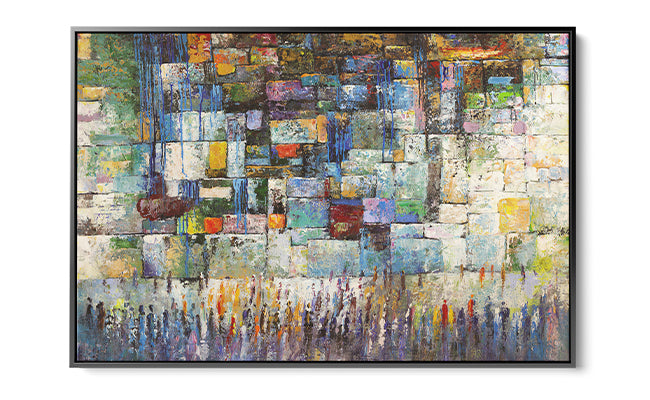
- Jerusalem and holy site photography or painting. Stone textures, light-washed alleyways, the Kotel plaza at dusk. These carry enormous emotional weight and work as anchor pieces in dining rooms and living rooms. The Jerusalem art collection covers this range well.
- Figurative and narrative Judaica. Scenes from Jewish life, rabbi portraits, market days, Shabbat tables. Warmer in tone, they suit traditional, transitional, and even Japandi interiors where there is already texture and wood.
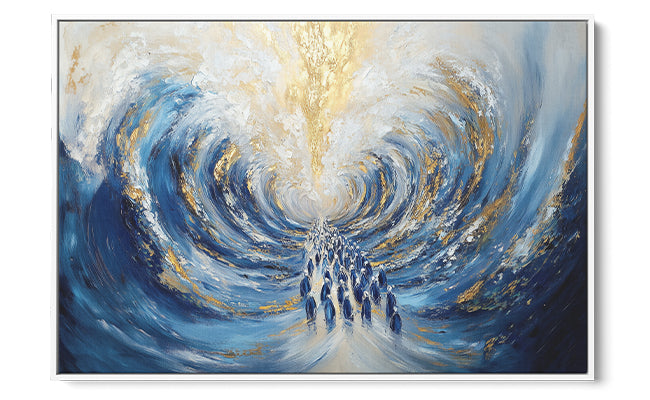
- Abstract spiritual art. Works that evoke Shabbat, prayer, or kabbalistic ideas through color field, texture, and form rather than literal imagery. These are the easiest to pair with contemporary furniture because they do not read as "Jewish" at a glance, but they carry that depth for anyone who knows.
- Personalized name art. A growing category where a person's Hebrew name is embedded in a Torah verse structured around the letters of that name. More on this below, because it deserves its own section.
You do not have to choose only one style. A Jerusalem photograph as a living room anchor paired with personalized name art in the hallway is a coherent combination because both pieces are rooted in the same cultural vocabulary.
One framing that consistently helps: abstract and typographic Judaica gives you control over how explicitly Jewish a room reads. Narrative or liturgical imagery, a Shabbat table scene, a rabbi portrait, a dense Hebrew blessing, makes the cultural statement more direct. Neither is better; the choice depends on how much you want the room to announce itself.
Room-by-Room Guide: Where to Hang Jewish Wall Art

The Entryway
The entryway is the most consequential wall in a Jewish home. It sets tone before a guest says a word. A single strong piece works better here than a gallery arrangement because the sightline is usually narrow and the viewing time is brief. For a standard entryway wall (roughly 36 to 48 inches wide), a vertical or square piece in the 24 x 24 to 24 x 36 inch range holds the wall without crowding it. Hang the center of the piece at 57 to 60 inches from the floor, which is eye level for most adults.
Personalized name art is an especially good fit here. A piece anchored in your family name or the names of your children signals immediately that this home has a specific story. It functions as a visual mezuzah of sorts, marking the threshold as a Jewish household without requiring any further explanation.
The Living Room
This is where scale matters most. A piece hung above a sofa should span roughly two-thirds of the sofa's width. For a standard 84-inch sofa, two-thirds puts you at approximately 56 inches wide. Going smaller reads as an afterthought; going wider than the sofa width can feel aggressive unless the piece has a very light, open composition.
A large Western Wall composition or a painterly Jerusalem cityscape is a natural fit above a sofa: the horizontal format mirrors the furniture line and the subject matter has enough detail to reward sustained attention. The Western Wall art collection includes pieces in the large-format range suited to this placement.
If you prefer a gallery wall over a single statement piece, anchor the arrangement with one large Judaica work (the Kotel, a Jerusalem panorama, or a figurative scene) and build around it with smaller complementary pieces. For detailed advice on structuring that kind of arrangement, the article on gallery walls with Jewish art using the Kotel as anchor walks through the process step by step.
The Dining Room
Dining rooms reward emotional and narrative art. People sit here for extended time, conversation turns to family, tradition, and memory, and the art on the wall participates in that without anyone consciously noticing. A single large figurative piece, a Shabbat table scene, or a blessing in expressive Hebrew typography above a credenza is a classic placement. Keep the bottom edge of the art at least 8 to 10 inches above the top of the furniture beneath it so the two objects relate without crowding each other.
The Bedroom
Calm and restraint are the guiding principles here. Abstract spiritual work in a soft palette, a peaceful Jerusalem landscape at dusk, or a single-name piece in quiet tones all suit a bedroom better than high-contrast graphic art. Size down slightly from the living room: a piece spanning about half the headboard width reads as intentional rather than dominant, giving the room breathing room.
Styling note: In a bedroom, neutral-toned Hebrew typography art can serve as a nightly visual meditation without feeling heavy. Look for pieces where the letterforms are rendered in warm whites, soft golds, or muted earth tones rather than stark black on white.
The Children's Room
Children's rooms are an opportunity to build a visual relationship with Jewish identity from the start. Art here should be age-appropriate in color and energy without being infantile. Bright, illustrative pieces with Hebrew letters, animals, or scenes from Jewish stories work for younger children. As kids grow, personal name art anchored in a Torah verse becomes meaningful in a different way: it gives a child a sense that their name has a story in the tradition.

How to Choose Art That Reflects Your Jewish Identity and Aesthetic
A simple three-step framework keeps the decision from becoming overwhelming. Start with mood, then consider color temperature, then scale.
- Mood first. Ask what emotional quality you want the room to carry: spiritual gravity, warm family memory, quiet contemplation, or joyful energy. The mood of the art should match or gently extend the mood of the room, not contradict it.
- Color temperature second. Warm-toned art (ochre, terracotta, warm gold, deep burgundy) integrates naturally with wood furniture, linen upholstery, and warm-white walls. Cool-toned pieces (steel blue, grey, crisp white, black) read cleanly against painted walls and lacquered or metal furniture. A mismatch here is the most common reason a piece that looked beautiful online feels wrong on the wall.
- Scale last. Once you know what you want emotionally and chromatically, the sizing decision almost makes itself. Measure the wall and the furniture it sits above, apply the proportions described in the room-by-room section above, and you have a clear target range.
Beyond these three, think about medium. Canvas has a softer, more painterly presence. Framed prints are crisper and more graphic. Aluminum and acrylic prints catch light and give a contemporary edge to any composition. Each has its place; the choice depends on whether you want the art to feel integrated into the room or to stand out from it as an object.
For more guidance on placing sacred art with intention, the article on Jewish home decor ideas and displaying sacred art covers the conceptual side in depth.
Name by Pasuk Art: Personalized Judaica That Tells Your Story

Name by Pasuk is a category of personalized Judaica where a person's Hebrew name is embedded in a Torah verse structured around the letters of that name, the verse begins with the first letter of the name and ends with its last letter. The result is a piece of art that is simultaneously typographic, spiritual, and deeply personal, and the artwork presents both name and verse in a composition that works as a wall piece independent of its meaning to anyone who does not know the person named in it.
These pieces land in the $99 to $149 range, which makes them one of the most practical choices for a newborn gift, a bar or bat mitzvah present, or a housewarming for a new Jewish family home. The format is flexible: there are versions designed for children's rooms with playful color palettes, quieter versions in a more minimal style for adult spaces, and compositions that lean into the spiritual weight of the connection between a name and the Torah text.
The range of Name by Pasuk pieces available as modern judaica wall art for your home includes both the colorful "Blossoming Faith" style suited to nurseries and children's rooms and the more composed "Divine Script" and "Tranquil Blessings" versions that work in adult bedrooms or hallways.
What makes this category distinctly useful in a design context is that it personalizes without being sentimental in a visual way. The art does not look like a commemorative plaque. It looks like considered typographic work in a thoughtful palette. Guests who know the tradition will understand what they are looking at; those who do not will simply see a well-designed piece.
Curator's note: When choosing a Name by Pasuk piece for a child's room, pay attention to the background palette rather than just the text style. A warm yellow or soft botanical green will integrate better with painted furniture than a stark white ground.
How to Mix Jewish Art with Contemporary Decor Without Losing Meaning

The fear most design-conscious buyers have is that mixing Judaica with a modern interior will produce a collision: the art will look like a religious insert into a secular room. The solution is to treat Jewish art the way you would treat any strong graphic or figurative work and let the quality of the piece do the justifying.
A few principles that consistently work:
- Limit the narrative load per room. One room, one thematic anchor. A living room with a Jerusalem panorama does not also need a Hebrew alphabet print on the adjacent wall. Repetition of Judaica motifs in a single space tips from intentional into didactic.
- Let the frame do the bridging. A contemporary brushed-aluminum or thin black frame around a traditional Judaica composition brings it into a modern interior effortlessly. Conversely, a warm natural wood frame on an abstract spiritual canvas softens an otherwise cool, hard-edged room.
- Match the abstraction level of the room. Minimalist interiors with clean lines and few objects pair most naturally with abstract or typographic Jewish art. Rooms with more texture, pattern, and layering can carry narrative or figurative Judaica without tension.
- Use palette as the connector, not subject matter. A piece does not need to match the room's style; it needs to share at least one color from the room's palette. Pull a secondary wall color or an accent from your upholstery and look for that tone in the artwork's background or letterforms.
The contemporary Jewish wall art collection is a useful starting point if you are working in a modern or transitional interior and want pieces that have already been selected for their visual sophistication.
Designer's tip: If you are uncertain whether a piece will read as "too Jewish" for a mixed-style room, ask whether you would hang it based on the composition and palette alone. If yes, the subject matter adds depth without creating visual noise.
Simple Rules for Hanging and Displaying Judaica Wall Art
The mechanics of hanging matter as much as the art itself. A beautiful piece hung at the wrong height or in poor light reads as an afterthought.
Height
The center of any piece should sit at 57 to 60 inches from the floor in a standing-traffic space (living room, hallway, dining room). In a bedroom where most viewing happens from a seated or lying position, drop the center to about 52 to 54 inches so the piece reads naturally from the bed.
Lighting
Track lighting or a picture light that throws a warm beam across the surface of the art does more for a piece than the art itself sometimes. Avoid hanging art directly across from a bright window: the glare flattens the colors and makes the piece hard to read. Side light, whether natural or artificial, creates depth and brings out texture in canvas and brushwork.
Grouping
When hanging multiple pieces together, treat the group as a single unit. The outer edges of the arrangement should follow the same proportional rules as a single large piece. Gaps between frames in a gallery wall are usually most cohesive between 2 and 4 inches. Going wider creates visual disconnection; going tighter makes the wall feel dense.
Common mistakes to avoid
- Hanging too high. This is the single most frequent error in home installation. Err lower rather than higher.
- Choosing a piece that is too small for the wall. A 12 x 16 inch print on a 10-foot wall disappears. When in doubt, go one size up.
- Mixing too many styles in one gallery wall. Two or three style families maximum, united by frame color or palette.
- Ignoring the light source. The best art in poor light is wasted. Assess where natural and artificial light hits the wall before you commit to a placement.
For renters or anyone who cannot drill into walls: adhesive-backed picture-hanging strips rated to 16 pounds or more handle most medium-format prints safely. For heavier canvas pieces, look for products that anchor into the wall stud through a single small nail, which most leases permit. Keep the piece weight under 10 pounds if you are relying entirely on adhesive.
For a thoughtful look at how placement decisions affect meaning as well as aesthetics, the article on displaying Jewish art in a modern home without losing meaning goes deeper on the conceptual side.

A Closing Word on the Art Itself
The room-by-room rules and the framework above will take you a long way, but the foundation is always the quality and character of the individual piece. The Jewish life art collection covers a wide range of moods and subjects, from intimate domestic scenes to large-scale spiritual compositions, and is worth exploring once you have a clear sense of the mood and palette you are working toward.
For Name by Pasuk pieces specifically, the $99 to $149 entry point is one of the few categories of Judaica where personalization and visual quality reinforce each other rather than trade off against each other. The piece carries meaning because of the name and verse; it earns its place on the wall because of the composition.
Frequently Asked Questions
What is the best room to hang Jewish wall art in a modern home?
The entryway and living room both have strong claims, for different reasons. The entryway makes an immediate identity statement and works with a single focused piece. The living room allows for larger format art and extended visual engagement. If you can only choose one room to prioritize, the entryway tends to have the highest impact per square foot because it sets the tone for the entire home before anything else is seen.
How do I decorate my Jewish home without it feeling too traditional or religious?
Choose abstract or typographic work over narrative or liturgical imagery. A Hebrew name in a clean typeface or an abstract spiritual composition in a contemporary palette reads as design-forward first. Reserve figurative or text-heavy pieces for rooms where you want a more explicitly Jewish atmosphere, like a study or dining room, and keep the rest of the home to more oblique references.
What is Name by Pasuk art and how does it work as home decor?
Name by Pasuk art takes a person's Hebrew name and pairs it with a Torah verse structured around the letters of that name, the verse begins with the name's first letter and ends with its last. The artwork builds a typographic composition around both name and verse. It reads as meaningful to anyone familiar with the tradition and as accomplished typography to anyone who is not, which is what makes it effective in a room designed for multiple audiences.
Can Jewish wall art work in a minimalist or contemporary interior design style?
Yes, specifically when the piece is typographic, abstract, or photographic rather than narrative or ornate. High-contrast Hebrew letter art in a two-color palette is structurally similar to the kind of graphic work that anchors a minimalist Scandinavian or Japandi interior. The key is choosing pieces where the composition is confident and restrained, and where the frame, if there is one, is thin and modern rather than ornate.
What size wall art works best for a Jewish home entryway or living room?
For a standard entryway wall between 36 and 48 inches wide, a piece in the 24 x 24 to 24 x 36 inch range holds the space without overwhelming it. For a living room sofa wall, the art should span roughly two-thirds of the sofa's width. On an 84-inch sofa, two-thirds puts you at approximately 56 inches wide. These are starting proportions; if the ceiling is unusually high or the wall particularly bare, scale up by one standard size.
Where can I find modern Judaica wall art that feels artistic rather than decorative?
Look for collections organized by artist rather than by occasion or product type. Artist-curated collections signal that the work has been selected for its visual integrity, not just its subject matter. At Ben Ari Art Gallery, collections by individual artists like those in the Avigdor Ben Ari collection offer a consistent artistic voice rather than a mix of unrelated prints grouped by theme.
If you are ready to start choosing, the range of personalized and artist-made pieces in the Name by Pasuk collection gives you a clear entry point, with options suited to children's rooms, adult bedrooms, entryways, and gift-giving, each anchored in a specific artistic approach rather than a generic Judaica template.
Read more
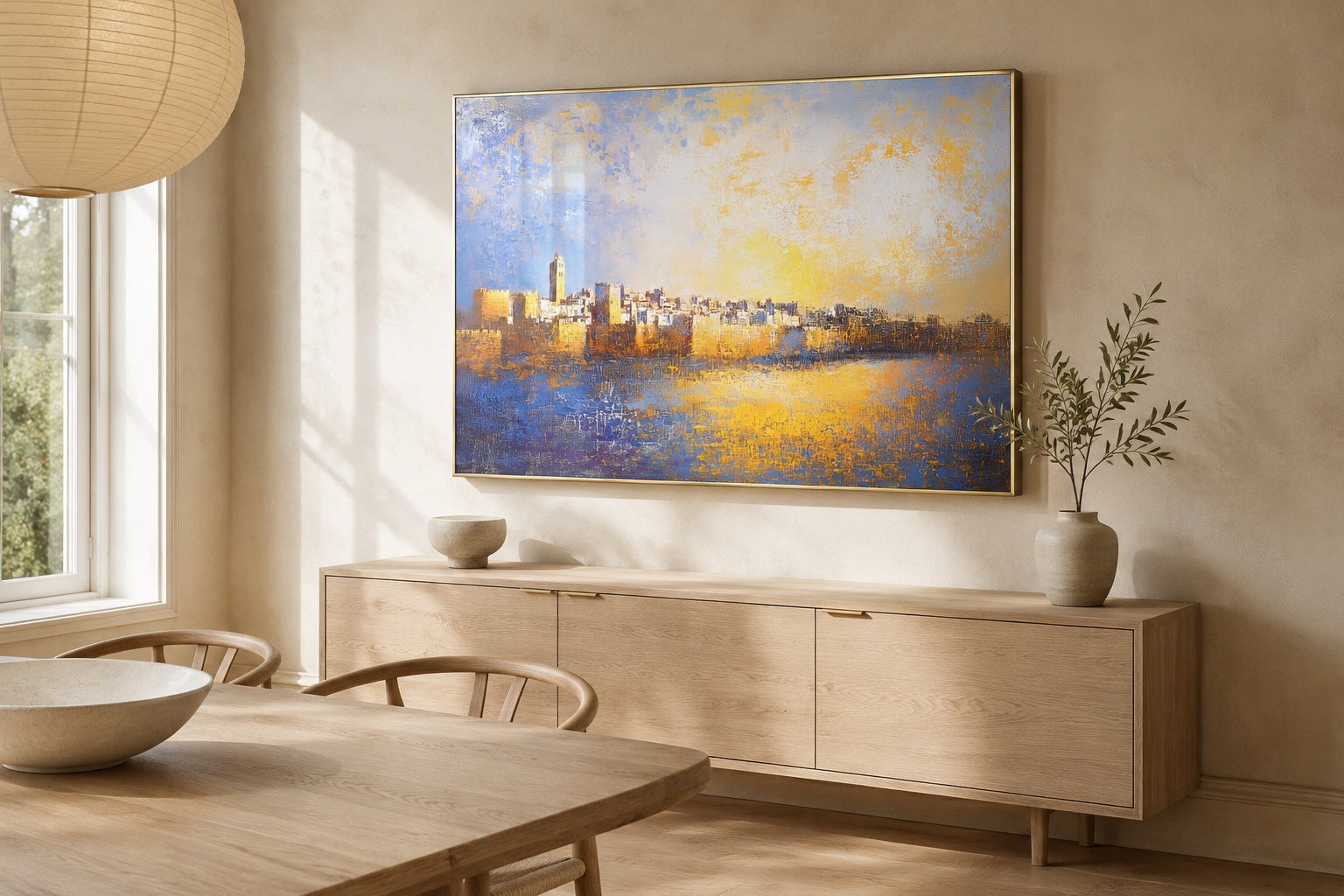
How to Choose Jewish Art for Home That Honors Holy Sites
A designer's framework for choosing Jewish holy-site art: pick a meaningful site, confirm the artist treats it with respect, and size and place it well.
Read more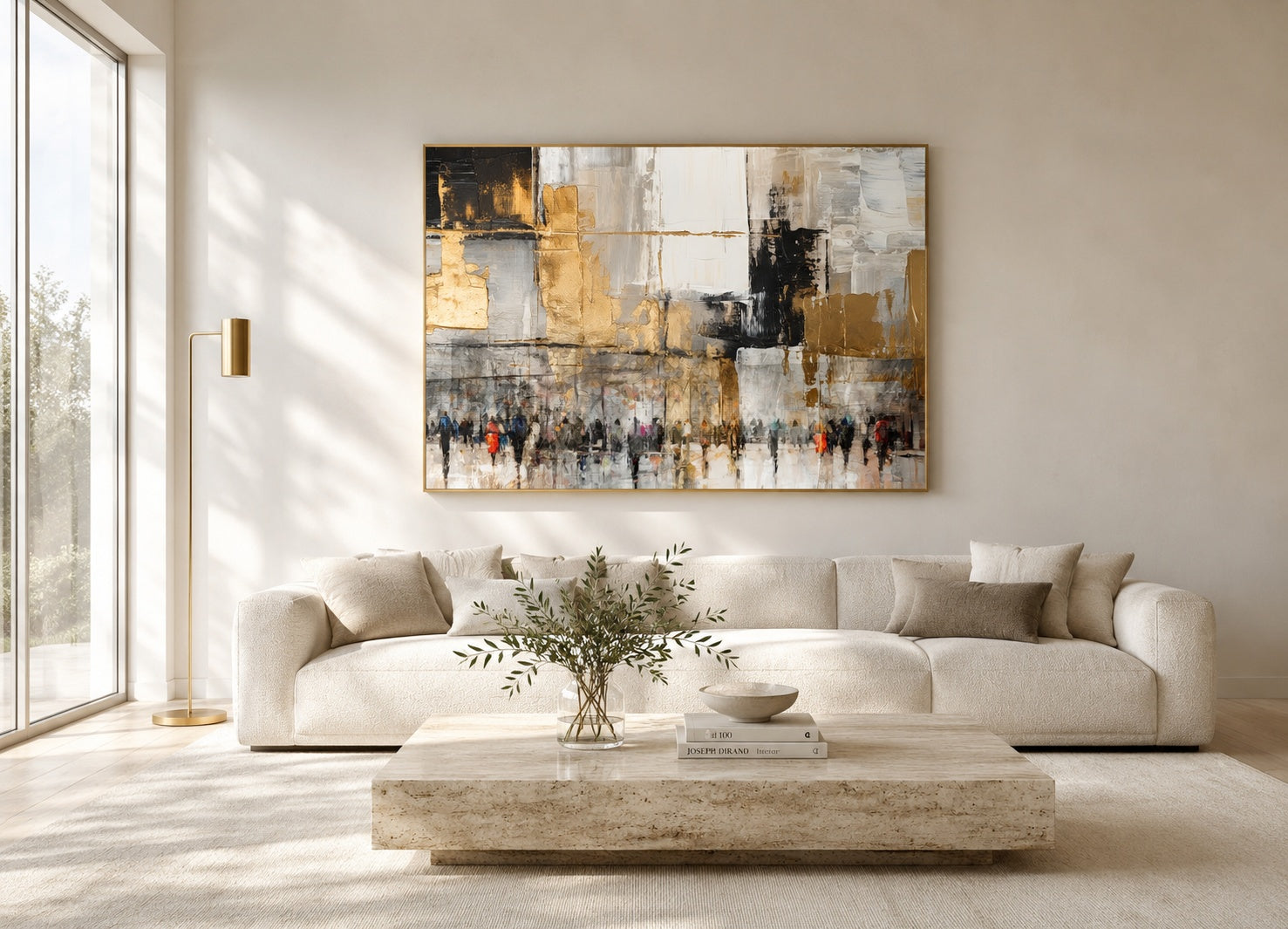
How to Display Jewish Art in Modern Home Without Losing Meaning
Treat the work as art first and symbol second. A room-by-room guide to placement, framing, scale, and pairing for contemporary Jewish wall art.
Read more