


How to Choose Jewish Art for Home That Honors Holy Sites
How to Choose Jewish Art for Home That Honors Holy Sites
To choose Jewish art that honors holy sites, start with meaning and accuracy, then match style, scale, and placement to the room. Pick a site that holds personal weight (the Kotel, the Old City, Rachel's Tomb), confirm the artist treats it with respect rather than as decoration, and size the piece to its wall so the imagery reads as a focal point, not an afterthought. The right work feels grounded and quiet, not loud.
Most buyers come to this with a clear feeling and a fuzzy plan: they want Jerusalem on the wall, they want it to feel sacred, and they are not sure how to make that happen without the room turning into a museum. This guide walks through how to choose Jewish art for home that carries genuine religious meaning, from the sites worth knowing to the practical decisions about color, medium, and where the piece lives.
Why Holy Sites Deserve a Place in Your Jewish Home
A holy site on the wall does something a generic landscape cannot. It anchors the home to a shared story, gives guests and children a daily point of reference, and turns a hallway or living room into a space that quietly states what the household values. For many families, an image of the Kotel is the closest they can keep Jerusalem when they live far from it.
This is where choosing meaningful Jewish wall art for the home differs from buying a print to fill space. The subject carries history, prayer, and longing. That weight is the point. When the piece is chosen well, the room feels more rooted, and the art earns a second look every time someone walks past.
If you are starting from a bare wall and want the full range of sites and treatments in one place, the Jewish holy sites art collection is the most direct way to see how different artists handle the same sacred subjects.
Curator's note: A holy-site piece works hardest when it is the room's emotional center, not one of six competing images. Give it breathing room and let the rest of the wall stay calm.
Understanding the Holy Sites Most Often Depicted in Jewish Art
Knowing the sites helps you choose with intention rather than picking the first Jerusalem scene you find. A short orientation:
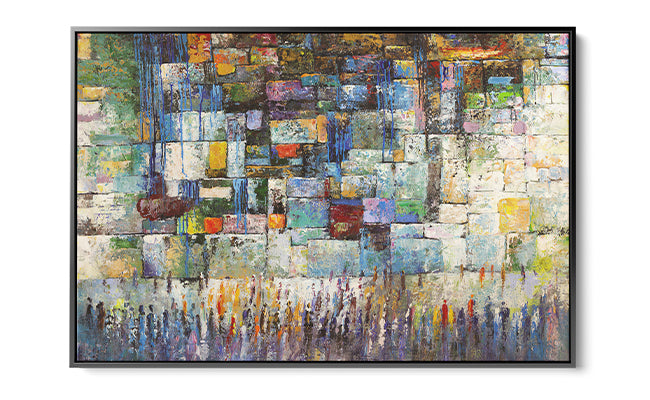
- The Western Wall (the Kotel). The retaining wall of the Temple Mount and the most depicted site in Jewish home art. Its weathered stones, the prayer notes, and the figures in front of it carry centuries of devotion. This is the default choice for a reason.
- The Old City and the Jerusalem skyline. Domes, ramparts, and golden stone read as place and identity at once. Good for buyers who want Jerusalem broadly rather than one specific stone.
- The Temple Mount / Moriah. The site of the binding of Isaac and both Temples, the spiritual axis of the city. Pieces named for Moriah lean toward reverence and history.
- Rachel's Tomb. A site of prayer, especially for mothers and those hoping for children. Its small domed structure is instantly recognizable.
- The Tower of David and the Machpelah Cave (Hebron). Often appear in multi-site graphic works that gather several sacred places into one composition.
For collectors who want Jerusalem in its widest sense rather than a single landmark, the Jerusalem modern art collection shows how artists treat the city as a whole subject.

How to Choose Jewish Art That Honors a Site's Meaning and Spirit
Picking Jewish art depicting holy sites is partly about taste and partly about respect. Here is a simple framework I use with clients, in this order: meaning first, then mood, then medium.
Meaning. Choose the site that means something to your family. A couple married in Jerusalem, a grandparent who prayed at the Kotel, a personal connection to Hebron: that link is what makes the piece sacred rather than scenic. If no single site stands out, the Western Wall is the safest emotional anchor for a Jewish home.
Mood. Decide whether you want the work contemplative and still, or warm and alive with figures. Both honor the site; they set very different tones. A quiet, near-abstract Kotel reads as prayer. A piece full of worshippers and movement reads as community.
Medium. The surface changes how the imagery feels. Acrylic art carries light and gives stone a depth that flatter prints lose, which is why so many of the Kotel works in our range are produced on acrylic. A poster suits a child's room, a study, or a sukkah where you want the image without the investment.
One angle most guides skip: check how the artist handles the people. Faces turned to the Wall, hands on the stones, figures in prayer shawls. These details signal that the work treats the site as living and sacred rather than as a postcard. A respectful piece almost always shows the site as a place where devotion happens, not just a tourist view.
For deeper guidance on subject choice across the broader Judaica range, the framework in our guide to choosing Jewish wall art by style and scale pairs well with the meaning-first approach here.
Matching Style, Color, and Medium to Your Home
Now the article shifts from meaning to the practical work of fitting the piece into a real room. Sacred subject matter does not exempt a work from basic design logic; it still has to live alongside your sofa, your floors, and your light.
Start with the room's color temperature. Jerusalem stone reads as warm gold and sand, so holy-site art slides naturally into homes with wood tones, cream walls, brass, and warm neutrals. If your palette is cool (gray, navy, crisp white), look for a piece where the stone is rendered in muted or grayed tones, or where the artist leans into blue shadow, so the warmth does not fight the room.
For medium, here is how the main formats compare in practice:
| Format | Feel | Best room | Notes |
|---|---|---|---|
| Acrylic art | Luminous, depth, gallery-grade | Living room, entry, dining | Carries light; stone gains dimension |
| Canvas | Soft, matte, textural | Bedroom, study | Quieter presence, less reflection |
| Poster / print | Graphic, light, affordable | Kids' room, sukkah, hallway | Easy to swap and frame yourself |

When you choose a piece for a warm, layered room, look for art that keeps its stone tones in the gold-to-amber range and lets one shape (the Wall, a dome) dominate the composition. The acrylic work The Western Wall by Avigdor Ben Ari does exactly this: a single iconic structure rendered with enough warmth and light to hold a wall in a luxury or traditional interior. It runs from about $330 for smaller sizes up to the largest statement pieces.
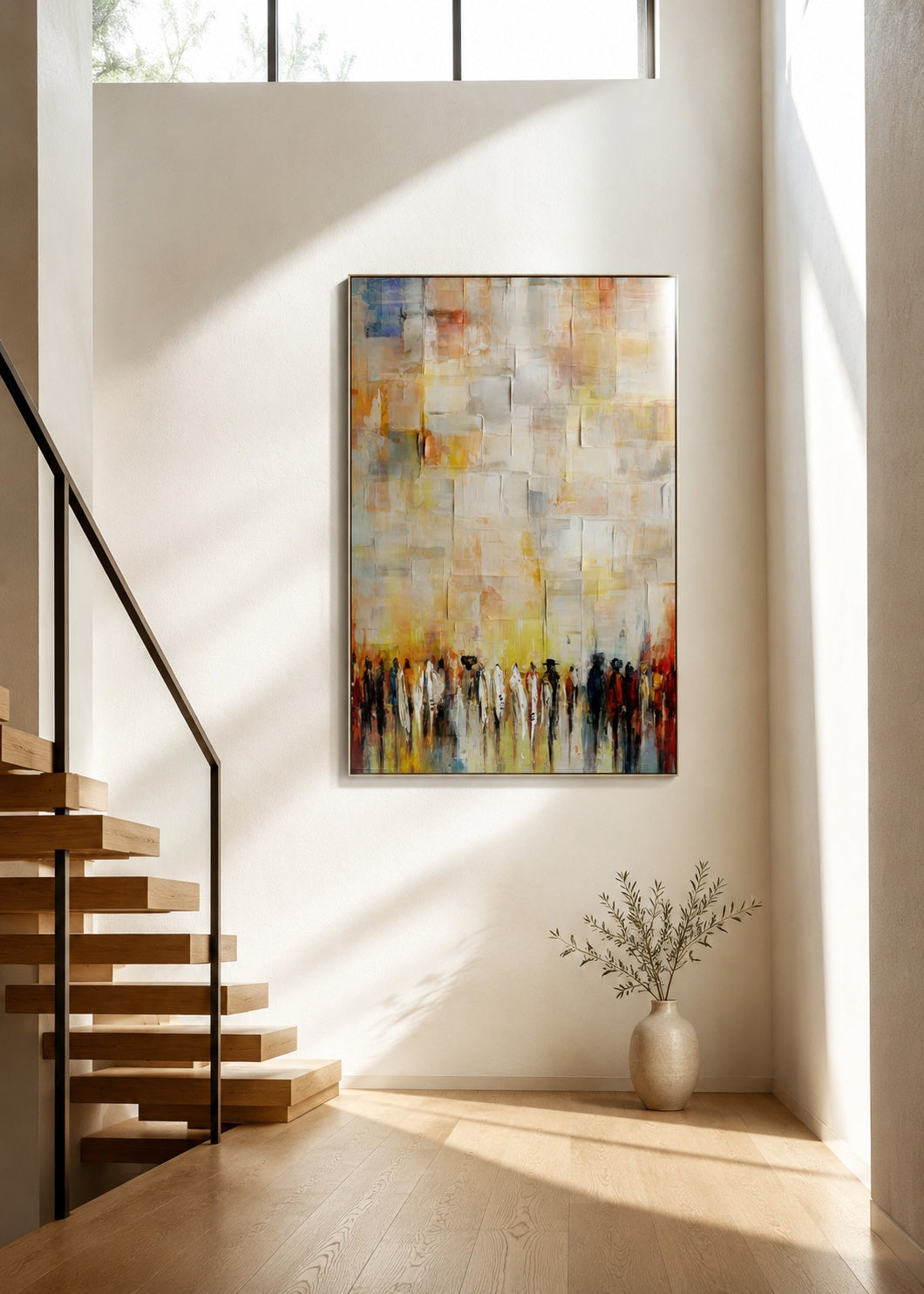
For interiors leaning modern, minimalist, or japandi, an abstracted treatment reads cleaner than a literal one. A near-abstract Kotel, where the stones dissolve into texture and color, sits comfortably against plaster walls and pared-back furniture. The work Eternal Stones of the Kotel takes this route, turning the Wall into form and feeling rather than a precise rendering.
Styling note: Pull one accent in the room from the artwork (a cushion, a vase, a book spine) in the same warm gold or muted blue. That single echo makes the piece read as planned rather than dropped in.
Buyers worried about a bold piece dating quickly can relax here: Jerusalem and the Kotel have been painted for centuries, and a well-composed holy-site work does not follow trends the way an abstract color-field print might. The subject is the opposite of a fad.
Getting Scale and Placement Right for Sacred Imagery
Scale is where good intentions go wrong. A meaningful piece hung too small looks like an apology. Use these proportions as a starting point:
- Over a sofa or sideboard: the artwork should span roughly two-thirds the width of the furniture below it. A 72-inch sofa wants a piece (or grouping) around 48 inches wide.
- Hanging height: center the work so its midpoint sits about 57 to 60 inches from the floor, eye level for most people. Above furniture, leave 6 to 10 inches between the top of the sofa and the bottom of the frame.
- As a solo focal point: on a large empty wall, go bigger than feels safe. A piece that fills a generous share of the wall commands the room; a small one floats.
Room by room, the placement logic shifts:
- Entryway. The first thing guests see. A Kotel or Jerusalem piece here sets the tone for the whole home and works even on a narrow wall if you choose a vertical composition.
- Living room. The natural home for a statement piece above the main seating. This is where acrylic art earns its keep, catching lamplight in the evening.
- Dining room. A holy-site work over a buffet or facing the table gives Shabbat and holiday meals a backdrop with meaning.
- Study or bedroom. Quieter, more personal. A softer canvas or a contemplative treatment suits a space meant for reflection.
If you rent and cannot drill, you have real options. Heavy-duty adhesive strips rated for the artwork's weight hold framed prints and lighter acrylic pieces without marking the wall. For heavier acrylic works, a single small picture hook leaves a hole easily filled at move-out, which most leases allow. Always check the weight rating on the strips against the piece before committing.

For an entry or any wall where you want the site to read clearly from a distance, choose a composition with a strong, simple silhouette and high contrast between the structure and its background. Moriah, Jerusalem by Yossi Bitton holds up at a distance for this reason: the Wall stands clear against its surroundings, so the image registers the moment someone walks in. Bitton's broader body of work in the Yossi Bitton Judaica collection follows the same legible, contemporary style.
Common mistakes to avoid
- Going too small. The single most frequent error. Sacred imagery on a postage-stamp scale loses all presence.
- Crowding it. Surrounding a holy-site piece with unrelated art dilutes its weight. Let it lead.
- Ignoring glare. Acrylic art is luminous but reflective; hang it where it faces soft light rather than directly opposite a bright window.
- Hanging too high. A piece floating well above eye level disconnects from the room. Trust the 57-to-60-inch midpoint.
- Treating it as filler. If you would not feel the meaning of the site, choose a different subject. Sacred art chosen for decoration alone tends to feel hollow over time.
Curating Holy Sites Pieces From Our Collection
Selecting Jewish home art with religious meaning gets easier once you know your room's temperature, the site that matters to you, and the scale your wall needs. A few editorial pairings, each tied to a principle above:
For the meaning-first buyer who wants the Western Wall as the emotional anchor of a living room, Western Wall Wall Art - Modern Jerusalem Kotel Jewish Art Print renders the site with the warmth and reverence that lets it lead a wall. It reflects the contemplative end of the mood spectrum.

When the goal is a single dominant structure for a focal wall, prioritize a piece where one form clearly governs the composition. Yossi Bitton's The Western Wall does this with a contemporary palette, making it a strong statement choice for modern and luxury interiors where you want the Kotel to command the room rather than blend in.
For a child's room, a study, or a sukkah, a poster that gathers several sites in one graphic frame teaches and decorates at once. The Israel's Sacred Sites Poster brings together the Western Wall, Rachel's Tomb, the Tower of David, and the Machpelah Cave, priced from $11.99, which makes it easy to frame yourself and swap as a room evolves. It also suits seasonal display alongside other sukkah decor inspired by Israel's holy sites.
If you are drawn to abstraction over literal rendering, the Avigdor Ben Ari art collection is where to look. His treatments of the Kotel lean toward form and light, the approach that reads cleanest in minimalist and japandi rooms.

For buyers building a wall around a holy-site anchor, choose surrounding pieces in a related palette and a quieter subject so nothing competes. Western Wall Wall Art - Modern Jerusalem Jewish Wall Art sits well at the center of such a grouping, with its restrained tones giving smaller works room to support rather than fight it. Our guide to building a gallery wall around the Kotel walks through that arrangement in detail.
Caring for and Living With Sacred Art Respectfully
Living with sacred imagery comes with a few small responsibilities. Keep acrylic and canvas works out of direct, sustained sunlight to protect color over the years. Dust acrylic with a soft, dry microfiber cloth; skip household sprays, which can haze the surface. Hang pieces away from kitchen grease and bathroom steam.
There is also a question of placement dignity. Many families avoid hanging holy-site art in bathrooms or directly facing one, and prefer not to position sacred imagery where it sits beneath clutter or in a neglected corner. The principle is simple: give the piece a place of honor that matches the place it depicts.

For the texture of the stone to stay vivid, choose a wall with even, indirect light rather than a spot that swings from glare to shadow through the day. Soft, consistent light keeps an acrylic surface reading as luminous rather than reflective, and it lets the warm and cool tones in the work hold their balance. If you are styling several sacred pieces together, our notes on displaying sacred art with intention cover grouping and spacing.
Frequently Asked Questions
How do I choose Jewish art that honors holy sites without it feeling too somber?
Lean toward works with figures, warm light, or movement rather than empty, shadowed stone. A Kotel scene with people in prayer or a Jerusalem skyline in golden light reads as alive and hopeful, not heavy. Warm gold and amber tones do most of this work; cool, dark palettes are what tip a piece toward solemn.
Which holy sites are most popular in Jewish home art?
The Western Wall is by far the most common, followed by the Old City skyline and the Temple Mount. Rachel's Tomb, the Tower of David, and the Machpelah Cave appear regularly too, often gathered together in a single multi-site graphic work for buyers who want several sacred places in one frame.
Where is the best place to hang art of the Kotel or Jerusalem in my home?
The living room above the main seating and the entryway are the strongest spots, since both give the piece prominence and set the tone for guests. A dining room facing the table also works for homes where Shabbat and holiday meals matter most. Avoid bathrooms and dim, cluttered corners.
Should I choose abstract or realistic art of holy sites?
Realistic renderings suit traditional, warm, and layered interiors and read clearly from across a room. Abstract or near-abstract treatments fit modern, minimalist, and japandi spaces and emphasize feeling over precise detail. Both honor the site; the choice depends on your room's style, not on which is more respectful.
Is it appropriate to display sacred Jewish art in a living room or entryway?
Yes, and these are among the most fitting rooms for it. Public-facing spaces give holy-site imagery a place of honor and let it speak to everyone who enters. The one thing to watch is treating it as mere decoration; chosen for its meaning, it belongs in the rooms you live in most.
What size holy sites artwork works best as a focal point?
Bigger than most people first reach for. On a generous empty wall, choose a piece that fills a substantial share of the space so it commands attention. Above a sofa, aim for roughly two-thirds the furniture's width. A piece that feels slightly too large in the showroom usually reads as just right on the wall.
To see how different artists treat the Kotel, Jerusalem, and other sacred places across acrylic, canvas, and prints, spend time in our collection of holy-site Judaica. You will find pieces from contemplative to vibrant, in sizes built for both intimate corners and a room's main wall.
Read more
How to Choose Kotel Painting for Home: Style, Scale & Placement
A practical guide to choosing a Kotel painting for your living room, covering style, sizing math, color palette, and placement, with specific artist and framing recommendations.
Read more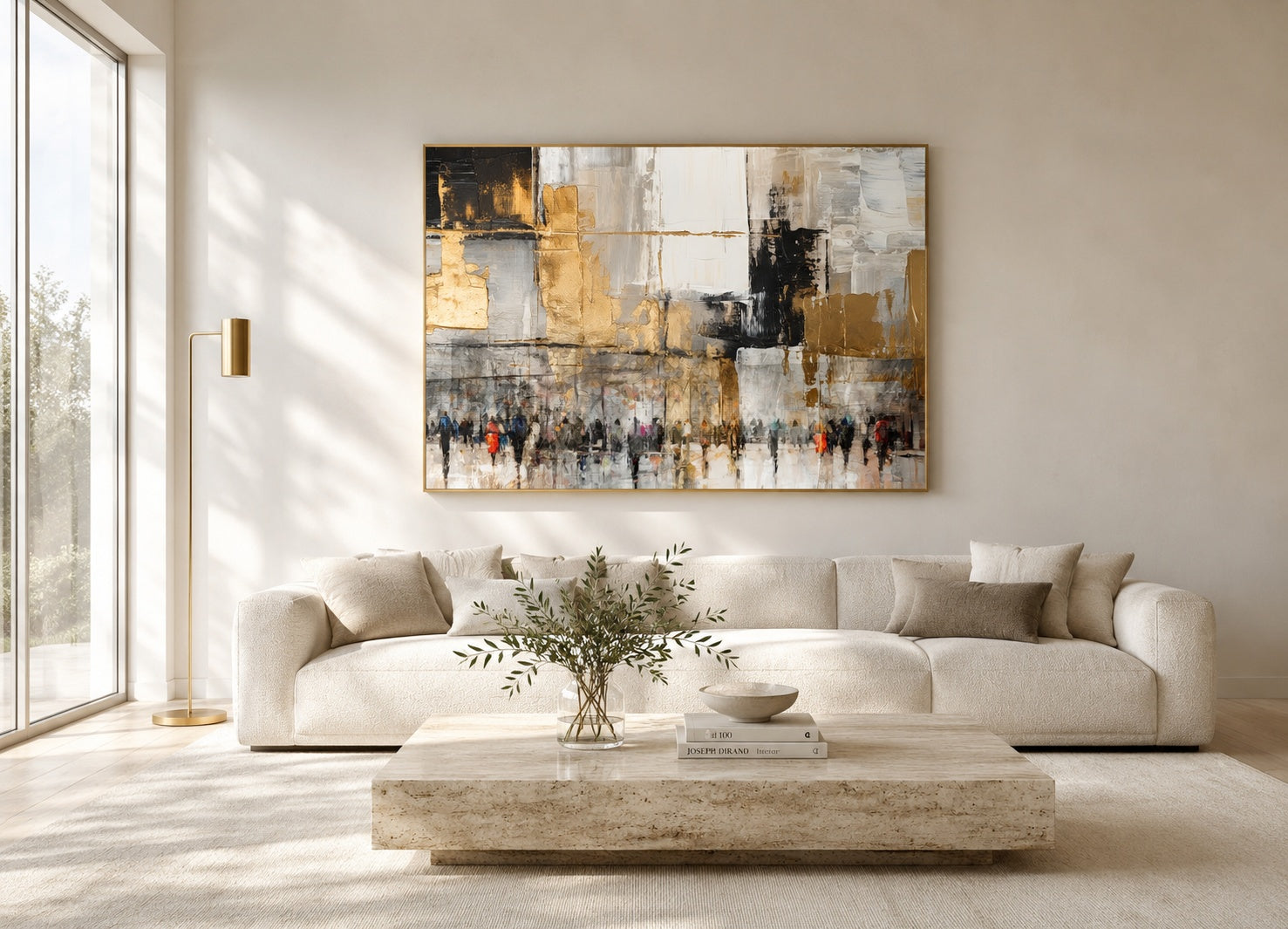
How to Display Jewish Art in Modern Home Without Losing Meaning
Treat the work as art first and symbol second. A room-by-room guide to placement, framing, scale, and pairing for contemporary Jewish wall art.
Read more