


How to Choose Jewish Artwork for Your Home: Tips from a Fine Art Gallery
How to Choose Jewish Artwork for Your Home: Tips from a Fine Art Gallery
Choosing Jewish artwork for your home is a question of three things working together: personal meaning, visual fit, and craftsmanship. The right piece does not need to announce itself as religious art to carry weight in a room. It earns its place through color, composition, and the story it holds for you. This guide covers every practical decision you will face, from style and symbolism to placement and quality, so you can buy with clarity instead of guesswork.
What Makes Jewish Artwork Different From Other Religious Art
Jewish art carries a particular interpretive tension that most other religious traditions do not. Because Jewish law historically restricted figurative representation in sacred spaces, artists found expressive freedom in text, symbol, abstraction, and landscape rather than icon or idol. That heritage shapes the field today.
What you will find in Jewish art ranges from calligraphic Hebrew lettering treated as pure visual composition, to landscapes of Jerusalem painted in deep sienna and gold, to abstract expressionism grounded in Kabbalistic numerology. Portrait work exists too, particularly of revered rabbinical figures, and it carries a devotional weight similar to portraiture in other traditions, without the theological conflict.
That breadth is genuinely useful for home buyers. If your interior reads as contemporary, traditional, or somewhere in between, there is a style of Jewish wall art that belongs there without compromise.
Curator's note: The aniconic tendency in Jewish visual culture is not a limitation but a design asset. It is the reason so much Jewish art integrates into modern and minimalist interiors more naturally than devotional art from other traditions.

Understanding the Main Styles of Jewish Artwork: Traditional, Modern, and Abstract
Before thinking about where a piece will hang, get clear on which visual language speaks to you. Three broad categories cover most of what you will encounter.
Traditional and Devotional Art
This category includes Torah scenes, ritual object imagery, rabbi portraits, and illuminated text in styles derived from centuries of manuscript tradition. The palette tends toward warm ochres, deep burgundies, and aged gold. These pieces read formally and pair well with wood-paneled studies, traditionally furnished dining rooms, and rooms with antique or Persian rugs. A portrait of a revered scholar in deep study, for example, carries a meditative gravity that suits a home library or a hallway leading to a study area.
Modern and Contemporary Judaica
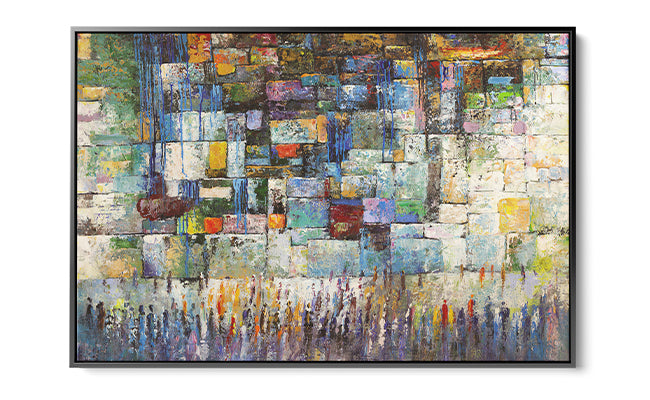
Contemporary Jewish artists treat Jewish themes with the full vocabulary of modern painting: loose brushwork, photographic realism, graphic design principles, and mixed media. Jerusalem cityscapes with bold geometric simplification, Shabbat candle scenes in cool blues and whites, and abstract takes on the Western Wall are all common. These read naturally in spaces with clean lines, neutral walls, and contemporary furniture. Artists working in this register often use high-resolution printing on canvas or acrylic, which holds color fidelity in bright rooms.
Abstract and Conceptual Jewish Art
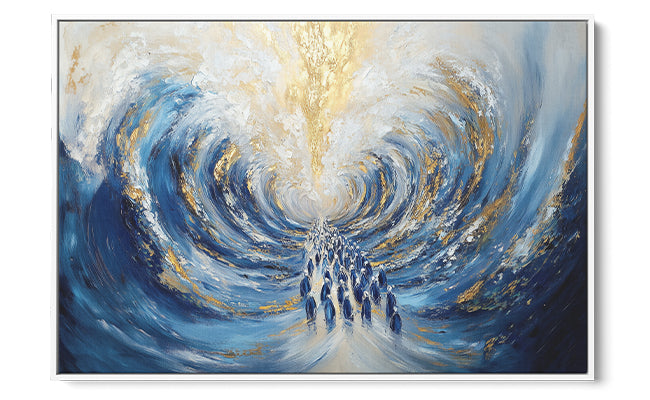
Abstract Jewish art uses Kabbalistic geometry, Hebrew letterforms as visual shapes, and color fields with symbolic weight, deep blue for heavenly transcendence, white for purity, gold for divine light. The subject matter may not be immediately legible as Jewish, which is sometimes exactly what a design-conscious buyer wants: something that holds symbolic depth for the family but reads as serious contemporary art to any visitor. This is the category most at home in Scandinavian, Japandi, and minimalist interiors.
If you are unsure which direction fits your aesthetic, the article comparing modern Judaica to traditional Jewish decor lays out the distinction with useful visual examples.

How to Match Jewish Artwork to Your Home's Aesthetic and Scale
Style category narrows your field. Scale and color close the decision. Here is a practical three-step method: first settle the emotional mood you want the room to carry, then check the color temperature of the art against your existing palette, then confirm the dimensions work with your wall and furniture.
Step 1: Mood Before Subject
A piece showing dancing Hasidim is joyful and kinetic. A quiet Jerusalem dawn in soft rose and gray is contemplative. A calligraphic blessing in bold black on white is assured and clean. Decide what the room needs emotionally before you reach for a subject. The subject can then reinforce rather than fight the atmosphere you already have.
Step 2: Color Temperature
Warm-palette rooms (creams, terracottas, warm grays, honey woods) absorb warm-toned art, golds, ochres, deep reds, without visual conflict. Cool-palette rooms (whites, cool grays, navy, natural linen) carry cool-toned pieces, blues, silvers, stark blacks, more cleanly. Clashing color temperatures are the single most common reason an otherwise good piece feels wrong on a wall.
Step 3: Scale and Proportion
A single statement piece should cover roughly two-thirds of the width of the furniture it sits above. Above a 72-inch sofa, aim for art between 42 and 54 inches wide. Leave 6 to 8 inches of air between the top of the sofa and the bottom of the frame. On an empty wall without anchor furniture, the art's visual center should sit at eye level, approximately 57 to 60 inches from the floor to the center of the piece. These are the proportions that look considered rather than accidental.
Styling note: On walls taller than 10 feet, the instinct to hang art at standard eye level often produces a piece that looks marooned. Raise it slightly, or group two horizontal pieces vertically, to close the visual gap between art and ceiling.
Canvas, Print, or Acrylic: A Quick Format Comparison
| Format | Best room fit | Key characteristic | Watch out for |
|---|---|---|---|
| Canvas print (gallery-wrapped) | Living room, bedroom, study | Warm texture, no glare | Humidity in kitchens and bathrooms |
| Framed fine-art print | Formal dining, hallway, office | Finished, archival appearance | Reflective glass in bright rooms |
| Acrylic face-mount | Modern living room, entryway | Depth, luminosity, vivid color | Fingerprints on surface; needs secure mounting |
| Paper poster | Sukkah, kids' room, study nook | Affordable, easy to swap | Not archival; frame to protect |

Symbolism That Matters: Choosing Subject Matter With Intention
Jewish art is dense with visual vocabulary. Knowing what the symbols carry helps you choose pieces that mean something specific rather than something vague.
- Menorah: The seven-branched Temple menorah is one of the oldest Jewish symbols, predating the Star of David by centuries. It represents divine light and God's presence, a statement of heritage and continuity rather than seasonal decor. (The nine-branched Hanukkiah, by contrast, commemorates the Hanukkah miracle and is a distinct object.)
- Star of David (Magen David): Protection, identity, the unity of divine and earthly. Common in both abstract geometric compositions and figurative work.
- Hebrew text and blessings: When calligraphy is the subject itself, the words matter. A Shema, a Birkat Habayit (home blessing), or a verse tied to a specific moment in your family's life carries a different emotional register than decorative text chosen for visual effect alone.
- Jerusalem: Return, longing, spiritual center. Jerusalem landscapes occupy their own category in Jewish art; the golden light over the Old City is almost a compositional language in itself. The Jerusalem modern art collection covers this subject in detail, with both painterly and graphic interpretations.
- The Western Wall (Kotel): Prayer, collective memory, presence at a physical threshold between the human and the sacred. Works depicting the Kotel tend to carry a quiet emotional weight that is hard to replicate with other subject matter.
- The Four Species (Arba Minim): Unity, Sukkot celebration, the diversity of the Jewish people. Colorful depictions of etrog, lulav, hadas, and aravah read with warmth and vitality.
- Twelve Tribes emblems: Lineage, collective identity, the full story of the Jewish people rather than a single moment or figure.
- Rabbi portraits: Scholarship, devotion, connection to living memory. A portrait of a specific rav carries personal resonance if he was significant to your family or community.
For a deeper look at how subject matter intersects with room placement and intention, the guide on displaying sacred art with intention is worth reading before you finalize a choice.

Room-by-Room Guide to Placing Jewish Artwork in Your Home
Placement is not just logistics. The room shapes how the art reads, and the art shapes how the room feels. Here is how to think through each space.
Entryway
The first wall a visitor sees sets the tone for everything that follows. A Birkat Habayit in strong calligraphy, or a bold Jerusalem cityscape in a 24x36-inch format, works well here because it communicates something immediate and specific about the household. Keep the palette to two dominant colors so it reads clearly from a distance. Avoid pieces with fine text detail that requires close reading: entry lighting is usually not bright enough to reward it.
Living Room
The living room is the room most visitors experience longest, so it can carry more visual complexity. A statement canvas of 40 inches or wider above the sofa is a natural anchor. Abstract Jewish art with layered color fields tends to reward sustained looking in a way that a quick-read graphic does not. This is also the room where framing finish matters most: brushed brass or matte black reads current; ornate gold frames require a specifically traditional interior to land without looking dated.
Dining Room
The dining room, particularly the Shabbat table, is already a space of ritual. Art here deepens that ritual atmosphere. Figurative work showing a Shabbat scene, a seder table, or a scene from Jewish life works naturally because it mirrors what happens in the room. Keep sizing centered on the wall rather than anchored to furniture, and choose pieces where the figures face into the room rather than away from it.
Study or Home Office
A portrait of a scholar in deep Torah study is the obvious choice here, and it earns its place precisely because the subject echoes the room's purpose. Scale down for studies: a 16x20-inch framed print often reads better in a smaller room than an oversized canvas that overwhelms a desk. Consider pairing a text-based piece, a Pirkei Avot verse or a wisdom saying, with a figurative portrait on an adjacent wall.
Bedroom
Bedrooms call for quieter subject matter. Abstract pieces with soft blues, warm whites, or muted gold work better here than high-contrast graphics. A small Shema in elegant calligraphy above the headboard is a long-established choice that holds up visually because the proportions, typically 18 to 24 inches wide, suit a standard wall above a bed without competing with headboard detail.
Designer's tip: In children's bedrooms, choose pieces with clear imagery and limited text. The Twelve Tribes emblems, the Four Species in bright color, or a simple menorah in bold graphic form hold a child's attention and open conversation without the room feeling like a classroom.
Sukkah
The Sukkah is its own design challenge because the art must work in an outdoor or semi-outdoor structure, often in varying weather. Poster formats in the $11.99 to $29.99 range are practical here: easy to swap, seasonally appropriate, and available in subjects specifically tied to the holiday. Colorful graphic depictions of the Four Species or the Twelve Tribes work at poster scale because the compositions are designed to be read quickly in a festive, social setting. The Sukkah decorations collection gathers these seasonal formats in one place.

How to Evaluate Quality When Buying Jewish Artwork From a Gallery
Quality in art reproduction and fine art printing comes down to a handful of testable criteria. Here is what to look for before committing to a purchase.
Print and Production Standards
Archival-quality giclée printing on acid-free canvas or fine-art paper uses pigment-based inks that resist fading for decades under normal indoor light. Ask specifically whether inks are pigment-based (archival) or dye-based (less stable). For canvas pieces, check whether the stretcher bars are solid kiln-dried wood: warping is the most common quality failure in stretched canvas, and it almost always traces back to the frame, not the print.
Artist Attribution and Provenance
A reputable gallery attributes each work to a named artist and can explain who they are. Anonymous "Jewish art" without attribution is a warning sign. Knowing the artist, whether a contemporary painter like Avigdor Ben-Ari working in modern Judaica, or a classical draftsman whose work has been faithfully reproduced, gives you a basis for understanding the piece's visual context and long-term value.
Edition and Reproduction Transparency
For limited editions, a reputable seller will state the edition size and provide a certificate of authenticity. For open-edition prints and posters, the honest seller makes that status clear rather than implying exclusivity that does not exist. Opacity about edition status is a red flag in any gallery, online or physical.
Return Policy and Customer Support
Quality confidence shows in policy. A gallery confident in its production offers clear return and exchange terms. Vague or non-existent return policies suggest the seller does not stand behind the product after the sale.
The contemporary Jewish paintings collection demonstrates what artist attribution looks like in practice, with each piece credited and contextualized.
Common Mistakes to Avoid
- Buying too small: The most frequent decorating error. A 12x16-inch print on a large wall reads as an afterthought. When in doubt, go one size larger than feels comfortable in the store; it will look right on the wall.
- Ignoring the undertone of your wall color: Warm white walls (cream, ivory, off-white with yellow or pink undertone) cool a warm-toned piece; a pure white wall intensifies it. Hold a color swatch of your wall paint against any art you are considering before purchasing.
- Grouping too many symbols in one room: A room with a menorah, a Magen David, a Hebrew blessing, and a Kotel portrait can feel like a gift shop rather than a home. Choose one or two focal symbolic pieces and let them do the work.
- Choosing subject matter for its religious correctness rather than personal resonance: Art that you feel obligated to display rarely looks right. The pieces that hold their power over years are the ones that meant something specific to you on the day you bought them.
- Neglecting lighting: Even the best piece looks flat under the wrong light. Warm-white bulbs (2700-3000K) bring out the gold and ochre tones in traditional Jewish art. Cool-white or daylight bulbs (5000K+) suit stark contemporary work. A picture light or adjustable track fixture aimed at the art rather than the room makes a measurable difference.

Where to Find Jewish Artwork From Trusted Sources
The gallery context matters as much as the piece itself. A source with named artists, transparent production details, and subject-matter depth gives you confidence that what you are buying holds up over time, both visually and structurally.
For rabbi portraits and devotional figurative work, pieces that carry the meditative quality described in the study and dining room sections above, the rabbi portraits collection brings together scholarly subject matter executed with genuine visual care.
Artists like Avigdor Ben-Ari and Yossi Bitton represent the serious contemporary end of the field. Ben-Ari's work operates with a distinctive visual logic rooted in modern painting, while Bitton's compositions draw on graphic boldness and color contrast in ways that integrate cleanly into contemporary interiors. Both are good starting points if you want work that rewards sustained engagement rather than a single reading.
For Western Wall imagery specifically, the Kotel art collection covers a range of treatments, from photorealist to abstract, so you can find the emotional register that fits your space.
If your interest runs toward Jewish life scenes, community, and character, the Jewish life art collection covers that territory with specificity.
Frequently Asked Questions
What is considered Jewish artwork?
Jewish artwork includes any visual work created by Jewish artists, depicting Jewish themes, sacred texts, ritual life, historical events, or places of spiritual significance to the Jewish people, particularly Israel and Jerusalem. The category spans religious iconography, calligraphy, portraiture of rabbinical figures, abstract work rooted in Jewish thought, and secular Israeli painting. The breadth is wider than most buyers expect.
How do I choose the right size Jewish artwork for my wall?
For pieces hung above furniture, aim for art width roughly two-thirds of the furniture width below it. Above a 72-inch sofa, that means art between 42 and 54 inches wide. For an isolated wall without anchor furniture, center the piece visually and ensure it occupies at least half the wall's height to avoid looking lost. If you are choosing between two sizes, the larger one is almost always the better decision on an interior wall.
Can Jewish artwork work in a modern or minimalist home?
Yes, and often better than buyers assume. Abstract and contemporary Judaica, particularly work using Hebrew letterforms as pure composition or Kabbalistic geometry in limited color palettes, reads as serious modern art to the untrained eye while carrying full symbolic depth for the family. The key is restraint: one strong piece on a white wall in a minimalist room outperforms three competing pieces by a wide margin.
What symbols are most commonly found in Jewish artwork and what do they mean?
The menorah, Magen David, and Hebrew text are the most prevalent. The seven-branched Temple menorah signifies divine light and God's presence; the Magen David represents protection and identity. Hebrew calligraphy, especially when drawn from blessings or Torah passages, carries the weight of the specific words chosen. Jerusalem as a landscape subject carries themes of longing and return. The symbolism section covers the full range, including the Four Species, Twelve Tribes emblems, and the Western Wall, with more detail on each.
Is it appropriate to hang Jewish artwork in any room of the house?
Generally yes, with one nuance. Most poskim (halachic authorities) advise against hanging Torah verses or divine names in bathrooms. Abstract work with no explicit sacred text has no such restriction. For any room where you are uncertain, choose an abstract or symbolic piece over one with written Torah text, and you avoid the question entirely.
How do I know if a Jewish art gallery is reputable?
Look for three things beyond what this article has already covered: named artists with verifiable backgrounds, clear edition transparency (open edition vs. limited edition stated up front), and a physical or documented address rather than an anonymous storefront. Galleries that publish artist biographies, production details, and clear return policies have nothing to hide. Galleries that rely only on subject-matter keywords and low prices as selling points usually do.
For a wide selection of meaningful Jewish artwork across styles, formats, and price points, browse Jewish artwork for sale at Ben Ari Art Gallery, where each piece is attributed to a named artist and organized by subject, so you can find the right fit for your space without having to sort through generic inventory.
Read more
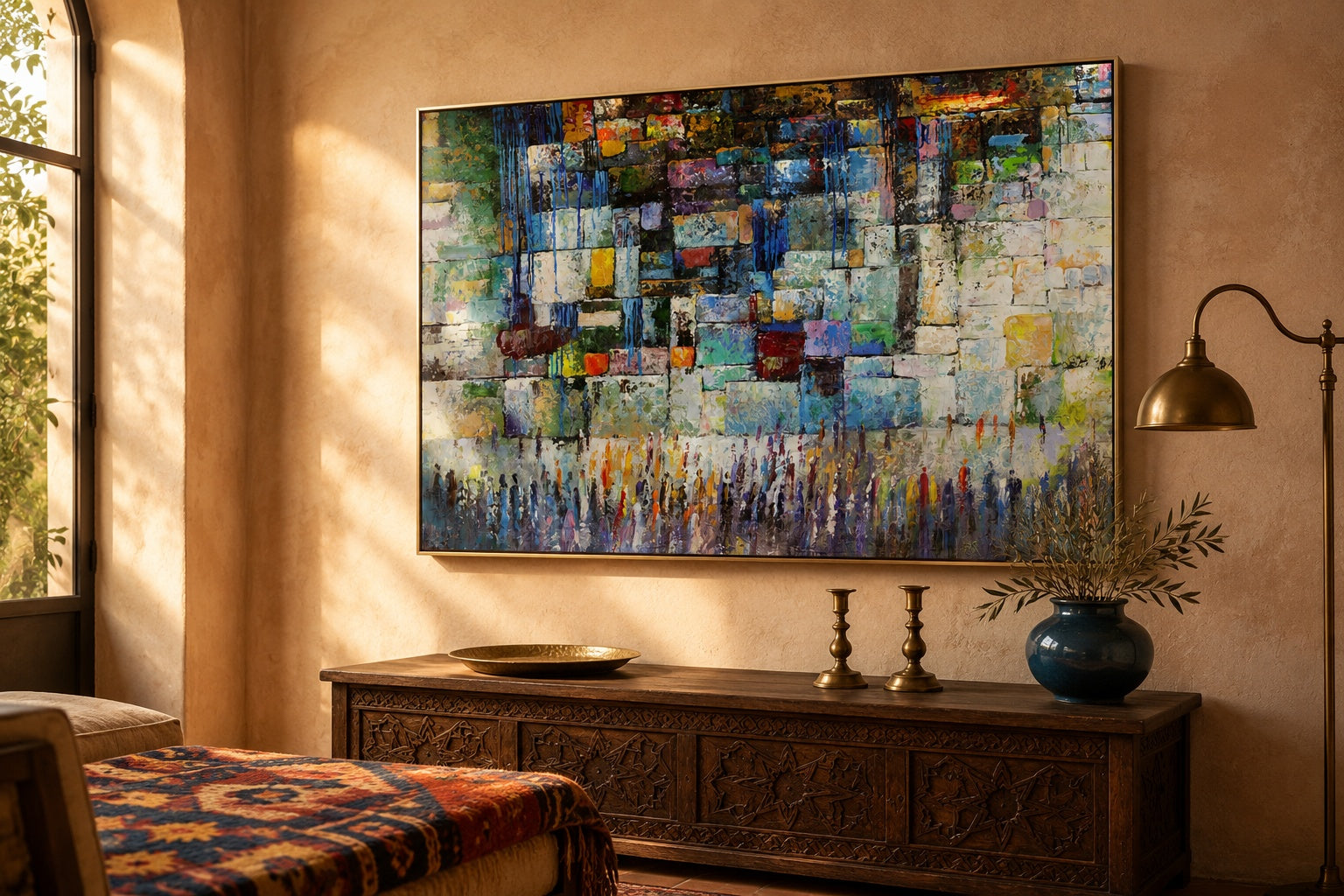
What Is Contemporary Judaica and How Has It Evolved
A practical and historical guide to contemporary Judaica, what defines it, how it evolved from traditional craft, and how to choose pieces that work in a sophisticated modern home.
Read more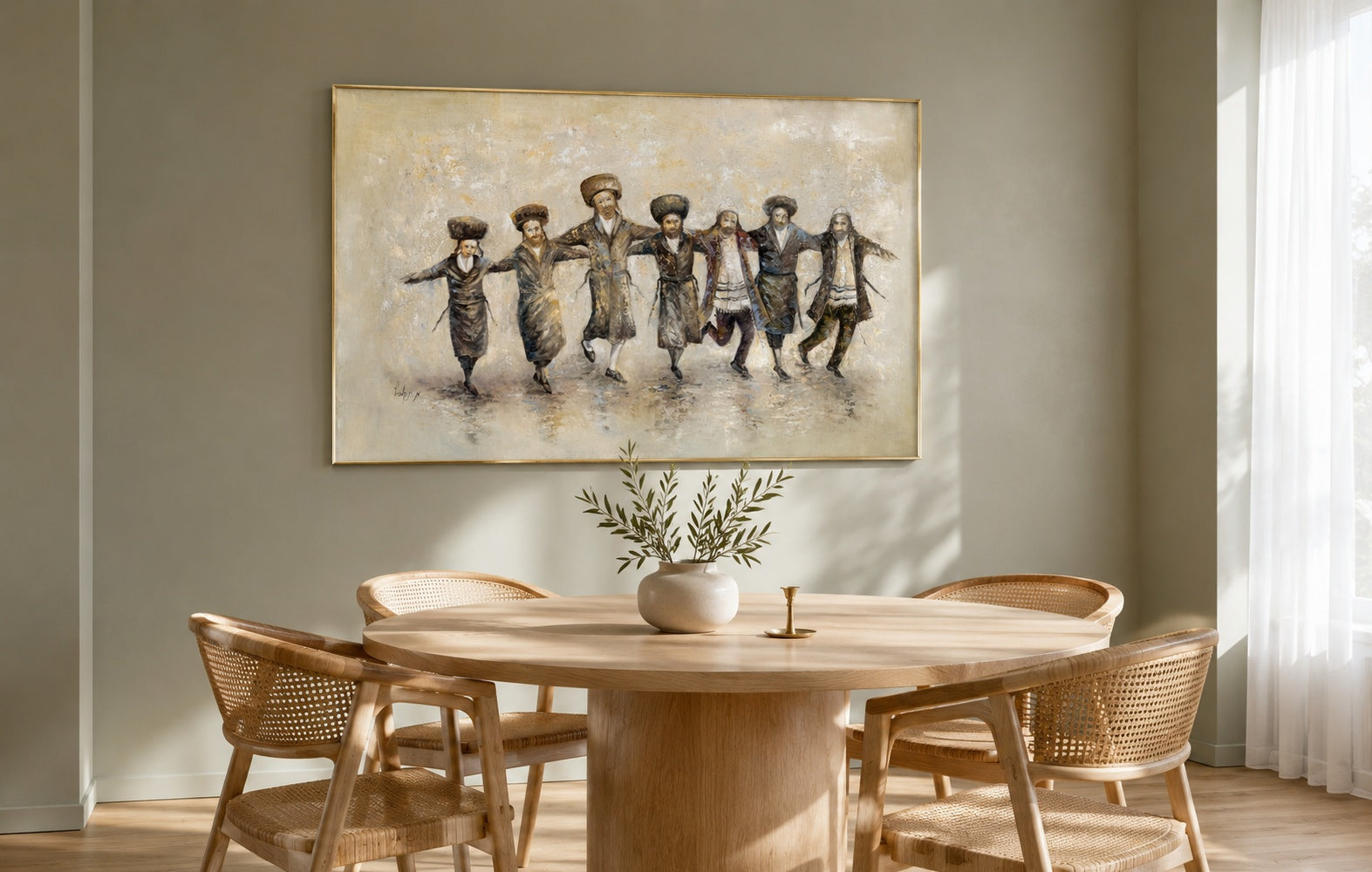
Best Ways to Display Religious Art at Home | Ben Ari Art Gallery
A room-by-room guide to displaying Jewish and religious art at home, covering wall selection, framing, scale, lighting, and gallery arrangements with specific measurements and placement guidance.
Read more