


Best Ways to Display Religious Art at Home | Ben Ari Art Gallery
Best Ways to Display Religious Art at Home | Ben Ari Art Gallery
The best ways to display religious art at home come down to three decisions: choosing the right wall, getting framing and scale right, and placing pieces where they'll be seen at eye level in natural or layered light. Done thoughtfully, Jewish and sacred art fits naturally into modern, minimalist, or contemporary interiors without looking out of place or museum-stiff. The subject matter carries weight; the display simply needs to match that seriousness with good design thinking.
This guide walks through every practical layer of that process, from single-statement pieces to gallery arrangements, room by room, with specific sizing guidance and styling notes drawn from real interior work.
Why Religious Art Belongs in a Modern Living Space
There's a persistent misconception that religious art belongs in a dedicated prayer room or a traditional setting, not a design-forward living space. That thinking confuses style with subject matter. A modern Kotel painting executed in deep blues and gold on high-gloss acrylic has the same visual authority as any abstract work. The subject is sacred; the medium and composition are entirely contemporary.
What makes religious art work in a modern interior is the same thing that makes any art work: clarity of intention. A piece chosen because it genuinely means something to the person who lives there reads very differently from a piece chosen to fill a wall. In a minimalist or modern space, where every object carries more visual weight because there are fewer of them, that personal legibility becomes a design advantage rather than a complication.
If you want a broader foundation for thinking about this before getting into placement specifics, the article what modern Judaica art actually is covers the movement's history and why contemporary artists are producing work that holds up against any secular gallery wall.
Modern Jewish art has also shed the stylistic limitations that once made it feel like a category apart. Artists like Avigdor Ben Ari and Yossi Bitton work in abstract expressionism, bold color fields, and dramatic light and shadow, visual languages that share vocabulary with many contemporary interior styles.

Choosing the Right Wall for Your Religious Art
The wall you choose does more work than the frame. A few principles that consistently produce good results:
- Anchor walls opposite seating. In a living room, the wall your eye lands on when you sit down is the most powerful position in the room. A single large religious print placed here gets absorbed slowly rather than glanced at in passing.
- Follow the light. North-facing walls get even, cool light all day, which is ideal for prints with high contrast or deep color saturation. South-facing walls get strong directional light that can wash out pale or pastel work. Acrylic-mounted pieces handle direct light better than paper prints because the surface gloss adds depth rather than flattening the image.
- Avoid the wall directly above a heat source. Radiators and vents cause fluctuating humidity that ages paper prints prematurely. This applies to any fine art, religious or secular.
- Consider eye-level from a seated position. The standard art-hanging guideline places the center of a piece at 57 to 60 inches from the floor. In a room where people mostly sit, drop that center point to around 54 to 56 inches so the piece lands at eye level when you're in a chair, not when you're standing in the doorway.
For Jewish art specifically, the eastern wall (mizrach) carries traditional significance as the direction of Jerusalem. If your layout allows it, hanging a Jerusalem scene or Kotel print on the eastern wall adds a layer of meaning that the informed eye will notice. It also tends to be a natural focal wall in many room configurations. Don't force the orientation at the expense of light quality or visual balance; a beautifully placed piece on the wrong compass wall beats a poorly lit one on the right.
Curator's note: In open-plan spaces, a large religious art print can do double duty as a room-divider signal. Consider a 36 x 48-inch acrylic piece placed on the half-wall or column between a kitchen and dining area: it creates a visual boundary that reads as deliberate rather than decorative, and in a space without natural thresholds, that sense of arrival matters. A Western Wall or Jerusalem panorama is a strong choice here, the horizontal sweep of the composition reinforces the spatial separation.

Framing and Finishing: How Presentation Shapes Meaning
Framing is the point where religious art either integrates with a modern interior or clashes with it. Most of the mismatches people see in homes come down to this one decision.
Frame styles that work in contemporary settings
For modern and minimalist interiors, the clearest options are:
- Thin metal frames in brushed gold, brass, or matte black. A 1- to 1.5-inch profile keeps the focus on the art and reads as contemporary rather than traditional. Brushed gold suits warm-toned work (amber, ochre, terracotta); matte black suits high-contrast or cool-palette pieces.
- Frameless acrylic mounting. This is where acrylic art pieces have a significant advantage. Works like "Before the Presence" by Avigdor Ben Ari and Yossi Bitton's "A Dance of Devotion" arrive mounted on acrylic, which means the edge of the piece is part of its presentation. No frame is needed. The result integrates into a modern interior the same way a frameless mirror does, with clean lines and a slightly floating quality.
- Wide linen or cotton mat with a slim frame. For paper prints like the Israel's Holy Places poster series (from $11.99), a generous mat, at least 3 inches wide, creates visual breathing room and makes a modest print feel considered rather than casual.
Glass vs. no glass
Museum-grade anti-reflective glass is worth the cost for any print you're keeping long-term, especially in rooms with strong natural light. For acrylic-mounted pieces, the acrylic surface itself acts as protection, and adding a frame with glass in front creates an odd visual doubling. Skip the glass on acrylic works entirely.
Color temperature of the mat matters more than most people realize. A bright white mat makes colors pop but can feel clinical. Off-white or natural linen reads warmer and suits pieces with earthy or golden tones, including many Jerusalem and Western Wall scenes.
For more on choosing between styles, formats, and subject matter, the guide to choosing Jewish wall art by style, scale, and subject covers the decision-making process from the beginning.

Gallery Walls and Grouping: Making Multiple Pieces Work Together
A gallery wall of Judaica prints is one of the more rewarding ways to display religious art, but it requires more planning than most people expect. The pieces that look cluttered are almost always the result of random sizing and inconsistent framing, not too many pieces.
A three-step method for building a cohesive arrangement
- Establish a visual anchor first. Choose your largest or most significant piece, ideally at least 24 x 30 inches for a standard living room wall, and position it slightly above the center of your arrangement. Everything else arranges around it. For a Judaica gallery wall, this anchor could be a large Jerusalem scene or an acrylic Kotel piece that carries clear emotional weight.
- Build around consistent color temperature. A mix of warm-toned pieces (gold, amber, ochre) and cool-toned ones (blue, silver, gray) pulls the eye in two directions at once. Pick a temperature and hold it across at least 70 percent of the pieces. The outlier creates interest; more than that creates noise.
- Unify framing, not sizing. Different sizes work well together. Different frame finishes in the same arrangement almost never do. Choose one frame style, whether matte black, brass, or natural wood, and apply it to every piece in the grouping. The consistency holds the wall together visually even when subjects and sizes vary considerably.
Spacing also matters. Six inches between frames is a reliable default. Tighter than four inches and the pieces start to feel like a single cluttered block. More than eight inches and the grouping loses cohesion and starts to look like individual pieces that happen to share a wall.
Styling note: Before putting a single nail in the wall, lay the whole arrangement on the floor in front of the wall and live with it for a day. The proportions that looked right on paper rarely match what your eye actually wants to see at scale.
For groupings that involve narrative Jewish art across multiple subjects, the contemporary Jewish wall art collection has a range of formats and subjects that lend themselves to multi-piece arrangements. The diverse Jewish artistry collection is worth browsing alongside it for pieces that share a color temperature but differ in subject, exactly the mix a gallery wall needs.

Room-by-Room Guide to Displaying Jewish and Religious Art
Moving from general principles to specific rooms, the guidance shifts because each space has different proportions, lighting conditions, and viewing distances.
Living room
The living room supports the largest scale and the most visual ambition. A single large acrylic piece on the primary focal wall reads best from a viewing distance of 8 to 12 feet, which is typical for most living rooms. At that distance, pieces smaller than 24 x 24 inches tend to get lost. The sweet spot for a solo statement piece in a standard living room is 30 x 40 inches or larger.
Warm incandescent or warm LED picture lighting (2700K to 3000K color temperature) brings out the gold and amber tones in Jerusalem and Western Wall subjects without the clinical quality of cool-white light.
Dining room
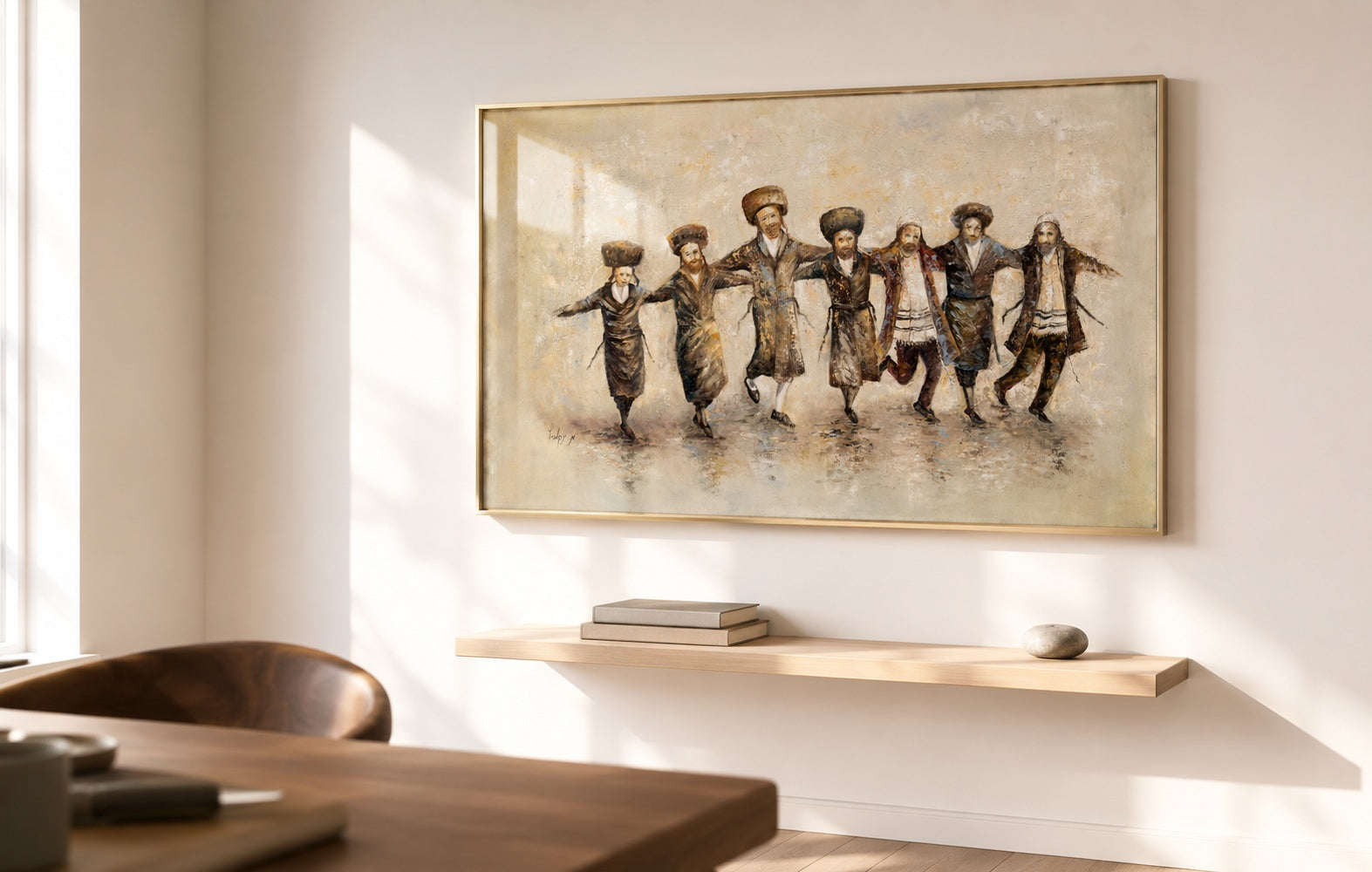
The dining room is an underused location for meaningful religious art. People sit for extended periods at the table and actually look at the walls, which is different from glancing at art in passing. A single piece centered on the wall opposite the primary seating is a reliable approach. Subjects with a sense of communal joy, like Chassidic dance scenes, suit the atmosphere of a dining space. Keep sizing proportional to the wall: no wider than two-thirds of the table length below it.
Entryway and foyer
The entry sets the tone for the whole home. In Jewish tradition, the entrance already carries the mezuzah, so a piece of art here participates in a longer visual conversation. A vertically oriented print or single acrylic block in a foyer is well-suited to narrow walls. Opt for something with immediate visual impact since viewing time is short. Jerusalem skylines, Western Wall scenes, or bold figurative pieces all read quickly and clearly. The Western Wall art collection has several vertically oriented formats sized for exactly this use.
Bedroom
The bedroom calls for restraint in scale and contrast. A piece like Ben Ari's "Before the Presence" in a 20 x 24-inch format, with its deep blues and warm gold, gives the wall above the headboard a quiet focal point without dominating the room. For most beds, the artwork should be at least two-thirds the width of the headboard, for a standard queen, that means a minimum of 40 inches wide; for a king, closer to 50. Light source matters here: a 2700K warm-white picture light or adjustable sconce brings out depth in acrylic work without the alerting quality of cooler bulbs. Avoid high-contrast black-and-white or intensely geometric pieces in a room designed for rest.
Home office or study
A study is one of the most natural rooms for Jewish religious art, particularly pieces that reference learning, Torah, or spiritual intensity. The close viewing distance (often 4 to 6 feet from a desk) means the detail in the work becomes visible. This is where a medium-format piece, 18 x 24 to 24 x 30 inches, earns its place more than a large-scale statement piece would. The Jerusalem art collection includes pieces at this scale that hold their detail at close range.
For a more complete room-by-room breakdown that includes style matching and color guidance, Jewish art styles for each room covers the full decision tree.

How to Find Modern Pieces That Honor Tradition
The challenge most buyers describe is the same: they want art that holds genuine religious meaning but doesn't look like it was bought in a synagogue gift shop. The answer is to buy from contemporary artists who take the subject seriously as both faith and visual art, not as illustration.
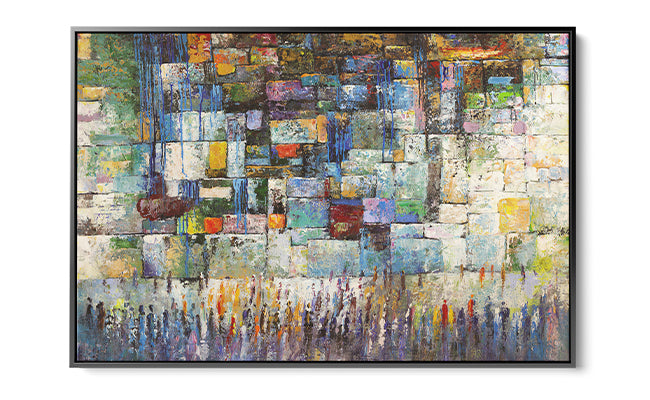
Avigdor Ben Ari's "Before the Presence" is a useful reference point for this. The piece is centered on the Western Wall, a subject that could easily slide into documentary literalism. Instead, the composition treats the Kotel as a field of light and weight and human scale, the kind of work that rewards long looking. The acrylic format (available from $330 up to $1,350 for larger sizes) means it arrives ready to hang, and the surface depth reads differently at different times of day as light shifts across the room. The Avigdor Ben Ari collection shows the full range of formats and scales available.
Yossi Bitton's "The Moment of Revelation" takes a different approach to a different subject: Mount Sinai rendered with the kind of atmospheric drama that makes the viewer feel the scale of the event rather than simply recognize it. His "A Dance of Devotion," showing Chassidic men in movement, handles figurative religious content in a way that connects with japandi and warm-modern interiors because the palette stays restrained even as the energy is expressive. The Yossi Bitton collection includes both pieces alongside his broader body of work.
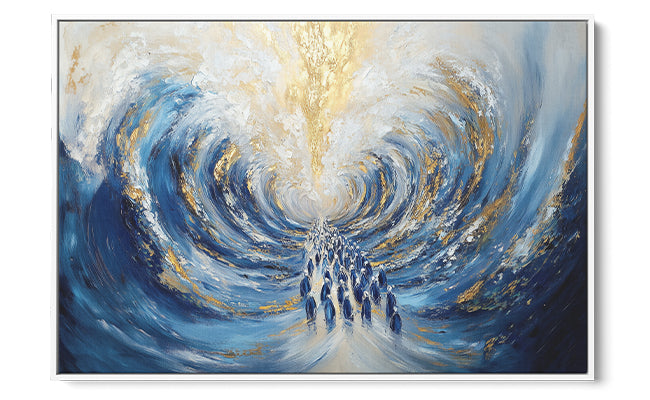
For narrative biblical art, Ben Ari's "Dramatic Opening of the Sea" and Bitton's "Splitting of the Sea" both interpret the same moment, and placing them together creates a visual dialogue between two artists' responses to it, a curatorial choice worth making deliberately.
The Israel's Holy Places poster, at $11.99 to $29.99, is worth mentioning separately because it handles the challenge of illustrative religious content well: a single print featuring the Western Wall, Rachel's Tomb, and the Tower of David that, with the right mat and frame treatment described earlier, can anchor a study or entryway with much more presence than its price suggests.
Designer's tip: When mixing multiple sacred site subjects in one room, keep the color palette consistent across frames and mats rather than trying to match each piece's individual tones. A uniform frame finish does more to unify a mixed-subject grouping than any other single decision.

Common Mistakes to Avoid When Displaying Religious Art at Home
Most display problems follow predictable patterns. These are the ones that come up most consistently:
- Hanging too high. Art hung at standing eye level rather than seated eye level is the single most common mistake in residential interiors. In a room used primarily for sitting, the center of the piece should be at 54 to 56 inches from the floor, not the standard 57 to 60 inches cited for galleries.
- Choosing a size that's too small for the wall. A 16 x 20-inch print on a 10-foot wall looks apologetic. The piece should fill at least 60 percent of the wall's width to read as intentional. When in doubt, go larger.
- Mixing frame finishes in a gallery grouping. Brass, black, silver, and natural wood on the same wall fight each other. Pick one and commit.
- Placing meaningful art in low-traffic areas. A beautiful piece at the end of a rarely used hallway gets no attention. Religious art in particular deserves to be placed where people actually pause, not just pass.
- Ignoring the relationship between art and furniture. Art hung above a console or sofa needs to be centered on that piece of furniture, not on the wall behind it. A piece centered on a 72-inch sofa should be centered on those 72 inches, even if the wall is 120 inches wide.
- Choosing subject over composition. Before buying on the basis of religious subject alone, ask yourself whether the piece holds up if you cover the recognizable imagery. Does the color, line, and light still work? If the answer is no, the print will lose its presence in a well-designed room within weeks. Strong composition and meaningful subject matter are not mutually exclusive, hold out for both.
If you're thinking about how these principles apply to a specific seasonal context, the guidance on displaying sacred art with intention covers placement decisions for different occasions and settings.
Frequently Asked Questions
Can religious art look good in a minimalist or modern interior?
Yes, and often more powerfully than in a heavily decorated room. Minimalist interiors give each piece more visual real estate. The key is choosing art with a clear, strong composition rather than busy, decorative work. Acrylic-mounted pieces with bold color fields or strong geometric structure integrate into minimal interiors naturally because the visual language already speaks that dialect.
What is the best room in the house to display Jewish religious art?
There's no single answer, but the dining room is underrated. People spend extended, unhurried time there, which means the art actually gets looked at rather than glanced at. The eastern wall of any room also carries traditional significance for Jewish art, particularly Jerusalem and Western Wall subjects, so if your dining room's east-facing wall gets good light, that's a compelling combination.
How do I create a gallery wall with Judaica prints without it looking cluttered?
The most reliable guardrail is limiting yourself to one frame finish across all pieces. After that, keep your spacing consistent at around 6 inches between frames and make sure your largest piece is clearly the anchor, meaningfully bigger than the others rather than incrementally larger. Lay the full arrangement on the floor first. What feels balanced horizontally on the ground usually translates well to the wall.
What frame styles work best for contemporary Jewish and religious art?
Thin metal frames in brushed gold or matte black suit most contemporary and modern interiors. For acrylic-mounted works, no frame at all is usually the right call since the acrylic edge is part of the piece's presentation. Avoid ornate, carved, or heavily gilded frames unless the room is explicitly traditional or maximalist in style; they pull the work away from a modern context rather than into it.
How large should a religious art print be for a living room wall?
For a solo statement piece in a standard living room, aim for 30 x 40 inches or larger. As a rule of thumb, the art should span at least 60 percent of the wall width above the furniture it anchors. A piece smaller than 24 x 24 inches on a wall visible from 10 or more feet away tends to disappear rather than hold the space.
Is there a traditional or preferred placement for Jewish art such as Jerusalem scenes?
The eastern wall holds historical significance in Jewish practice as the direction of Jerusalem, and positioning a Jerusalem or Kotel scene there adds a layer of intentionality that resonates for observant families. It's a convention, not a rule, and practical considerations like light quality and furniture placement should factor in. Many designers treat it as the preferred starting point and adjust from there rather than a requirement that overrides everything else.
Good religious art display is ultimately an act of editing: fewer pieces placed with real intention outperform a wall covered in works that haven't been thought through. Get the wall, the scale, and the light right, and the meaning takes care of itself.
Read more
How to Choose Jewish Artwork for Your Home: Tips from a Fine Art Gallery
A practical guide to choosing Jewish artwork for your home, covering style, symbolism, scale, placement, and quality, so you can buy with confidence.
Read more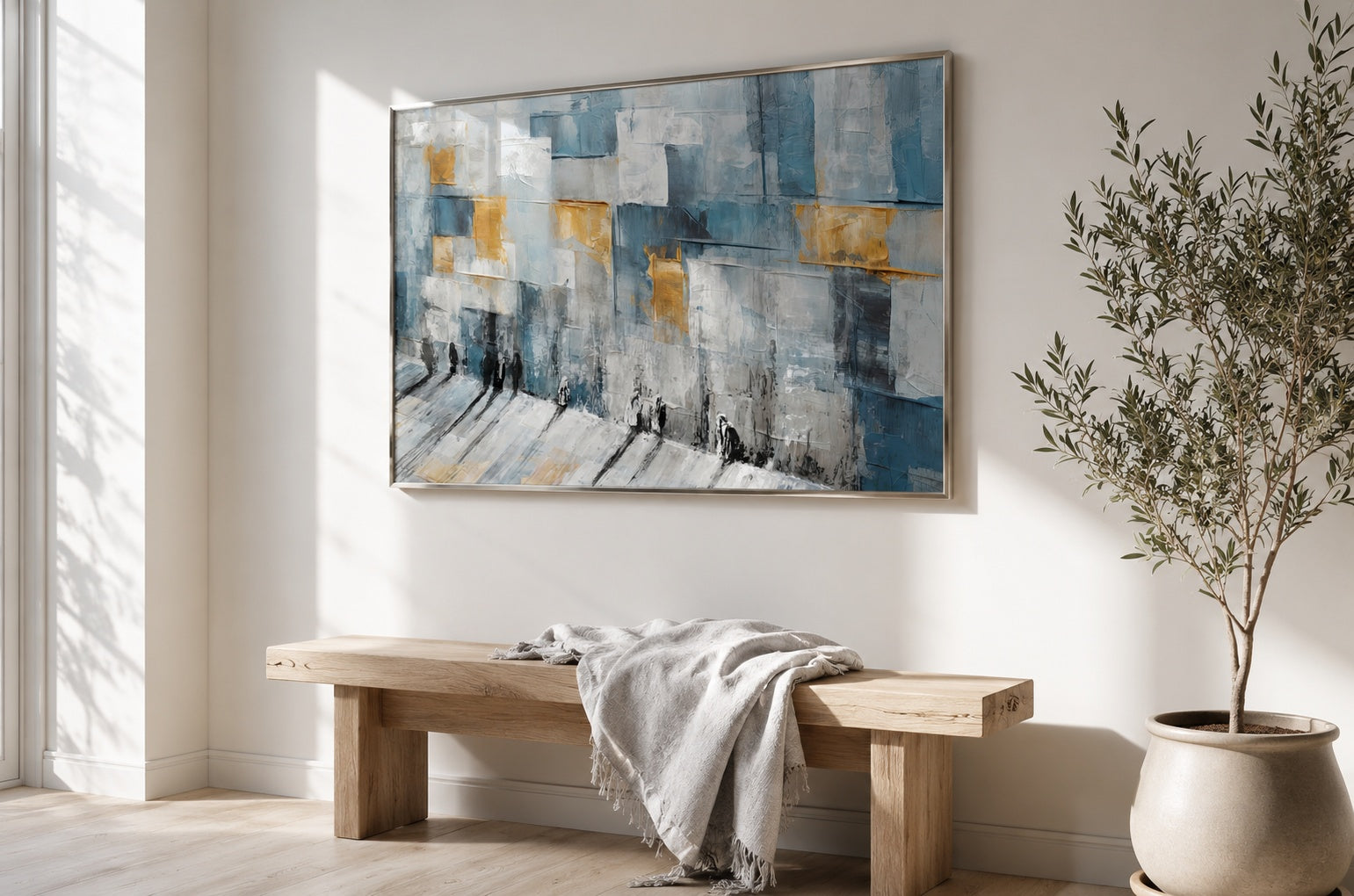
Gallery Wall Ideas With Jewish Art: Kotel as Your Anchor
How to build a gallery wall around a focal Kotel artwork, layout, framing, companion-piece selection, and room-by-room placement with specific measurements.
Read more