


How to Decorate Sukkah with Judaica Art and Textiles
How to Decorate Sukkah with Judaica Art and Textiles
The most direct answer to how to decorate sukkah with Judaica art: choose one visual theme, anchor the walls with large fabric panels or canvas prints that carry that theme, then layer smaller art pieces and textiles that echo the same colors and symbols. Done right, the result feels intentional rather than assembled from whatever was available.
A sukkah is a temporary structure, but the experience inside it does not have to feel temporary. Families gather there for a full week, guests arrive for meals, and children form memories in that space. The way the walls look and feel shapes all of that. This guide walks through the practical decisions: how to pick a theme, match colors, choose the right formats and sizes, and hang everything so the walls read as a unified whole rather than a patchwork of leftover holiday decor.
Why a Cohesive Sukkah Theme Matters and Where to Start
Most sukkot that feel cluttered share one common problem: the decorations were chosen independently, with no common thread connecting them. A Jerusalem poster here, a paper chain there, a fruit garland, a paper lulav banner. Each piece may be charming on its own, but together they compete rather than converse.
A cohesive theme solves this by giving every element a job. The wall art sets the visual vocabulary. The textiles repeat the colors. The lighting reinforces the mood. When those three layers align, a modest 10 by 10 sukkah feels like a considered room rather than a tent draped in whatever fit the shopping cart.
Start with one question before you buy anything: what feeling do you want your sukkah to create? Reverent and Jerusalem-focused? Natural and earthy, tied to the harvest roots of Sukkot? Warm and familial, centered on prayer and gathering? The answer to that question is your brief for every purchase that follows.
Curator's note: Decide your theme before measuring your walls. Choosing art first, then fitting it to the space, almost always produces a more intentional result than buying to fill a measured gap.
Choosing a Central Art Theme: Jerusalem, Nature, or Jewish Symbols
Three themes consistently produce the most visually coherent sukkahs, each with its own palette, symbolism, and emotional register.
Jerusalem and the Western Wall
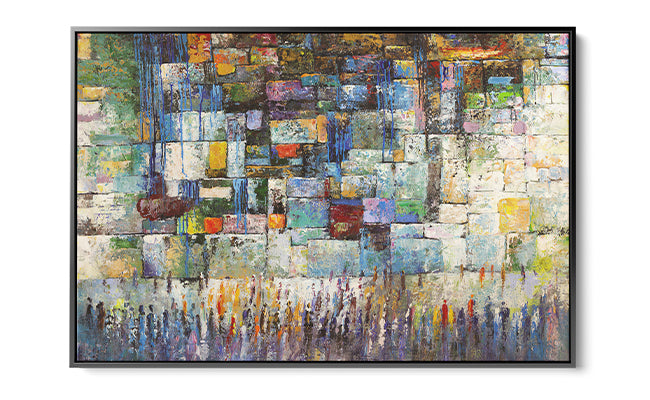
The Western Wall is the most popular single subject in sukkah wall art, and for good reason. It carries layered meaning: exile and return, prayer and presence, the physical and the spiritual. Visually, it offers strong architectural lines, warm stone tones (cream, sand, warm gray, gold), and a built-in vertical scale that reads well on a tall wall. Western Wall compositions also pair naturally with the prayer fabrics that belong in a sukkah: the Kiddush blessing, the Netilat Lulav prayer, and the Ushpizin invitation all reference the spiritual weight that the Kotel imagery carries. The Western Wall modern Judaica art collection shows the range of interpretations available, from photorealistic to painterly abstraction.
Israel Landscapes and the Seven Species
For a sukkah that leans into the agricultural origins of the holiday, Israel's natural landscape is an ideal anchor. Olive groves, vineyards, rolling hills, and the Seven Species (wheat, barley, grapes, figs, pomegranates, olives, dates) all connect directly to the harvest themes of Sukkot. This theme reads particularly well in color palettes of deep green, terra cotta, and warm gold. It also bridges the art and the physical elements of the sukkah: fresh fruit, hanging gourds, and schach made from palm fronds all become part of the same visual story.
Jewish Symbols and Prayer-Centered Compositions
Menorah, Star of David, lulav and etrog, the four species, these symbols have survived centuries as sukkah decoration because they are legible, meaningful, and visually flexible. Prayer-centered art, which incorporates the Hebrew text of blessings into the composition, serves double duty: it is both decor and a liturgical resource that guests actually use during the holiday. This approach suits families who want the sukkah to feel more like a sacred space and less like a harvest tableau.
For sukkah decorating ideas that integrate all three themes in one browsable place, the Sukkah Decorations collection organizes art and textiles by style so you can see how the pieces sit together before committing.

How to Match Judaica Wall Art with Sukkah Textiles and Color Palette
A practical three-step method makes color matching faster and more reliable than trying to eyeball it from product thumbnails.
Step 1: Identify the dominant color in your anchor art piece. That is the one color that covers the most area, not the most saturated one. For a Western Wall composition, it is usually warm cream or sand. For an Israel landscape fabric, it might be deep olive green.
Step 2: Choose a secondary color from the art's palette to repeat in your textiles. If your large wall fabric uses deep blue sky as an accent, bring that blue into a smaller prayer panel, a tablecloth, or a hanging garland. Repetition is what makes a palette read as intentional.
Step 3: Pick one neutral to unify everything. White, warm linen, or natural wood tones work in almost any theme. They give the eye somewhere to rest between the richer elements.
For example, the Elegant Sukkot Fabric with Framed Prayers in the Blue Sky and Red Roses design (available in the 10x5 foot format) uses a serene blue sky background with deep red floral accents. That palette points to a clear secondary selection: a white or cream linen tablecloth, blue candles, and fresh pomegranates on the table. The red roses in the fabric echo the pomegranates; the blue sky connects to any blue glassware or serving ware. The whole room starts to rhyme.
Styling note: Avoid mixing warm-toned art (gold, amber, orange) with cool-toned art (silver, slate blue, cool gray) on adjacent walls. The temperature clash is subtle but it registers. Pick one temperature and stay in it.
Selecting the Right Scale and Format: Prints, Canvases, and Fabric Panels
The format question is often the most confusing for first-time sukkah decorators. Here is a direct comparison to help:
| Format | Best Wall Size | Weather Tolerance | Reusability |
|---|---|---|---|
| Full-wall fabric panel (10x5 ft) | Covers a full sukkah wall in one piece | High: designed for sukkah conditions | Folds and stores easily for multiple years |
| Mid-size fabric panel (5x3 ft) | Accent wall or half-wall | High: same material as large panels | Folds flat; works as a layering piece |
| Gallery canvas print | Statement piece on inner wall | Moderate: protect from direct moisture | Works year-round in Jewish home decor |
| Poster/paper print | Small accent or children's decor | Low: paper is vulnerable to humidity | Single-use or very limited reuse |
For the walls of a standard 10 by 10 sukkah, the most efficient approach is one large 10x5 fabric panel on the focal wall (the wall guests face when they enter), paired with one or two 5x3 foot panels on the side walls, and then canvas prints as accent pieces on the remaining surfaces. This layering creates visual hierarchy: one wall reads as the "headline," the others as supporting context.
The full-wall fabric panels from the judaica-inspired sukkah wall fabrics collection are designed specifically for outdoor sukkah use, with the material and grommets to handle the environmental conditions of a week-long installation. That matters more than most buyers realize until they have had a canvas buckle or a poster warp in the autumn humidity.

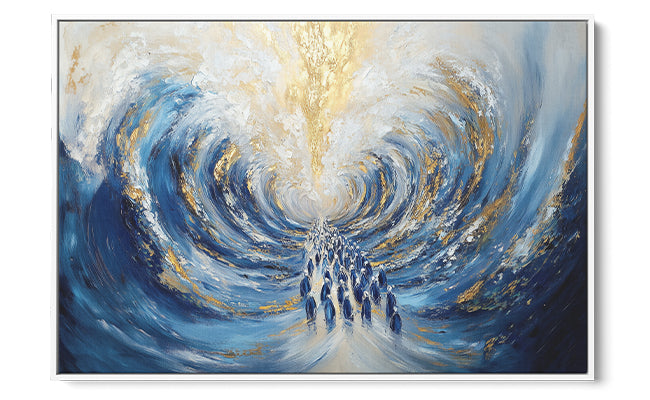
Canvas prints bring a different quality to the space: they have dimensional depth and a textured surface that fabric panels lack. For an interior corner or a wall that gets less direct exposure to wind or moisture, a gallery canvas from the Jerusalem modern Jewish art collection adds a painterly richness that printed fabric cannot replicate. Use them where conditions allow; use fabric where protection matters.
Placement Guide: Hanging Art and Textiles on Each Sukkah Wall
Think of the sukkah's four walls the way a stage designer thinks about a set: one wall is the backdrop, one is the entrance, and two are the wings. Each plays a different role.
The Focal Wall (Opposite the Entrance)
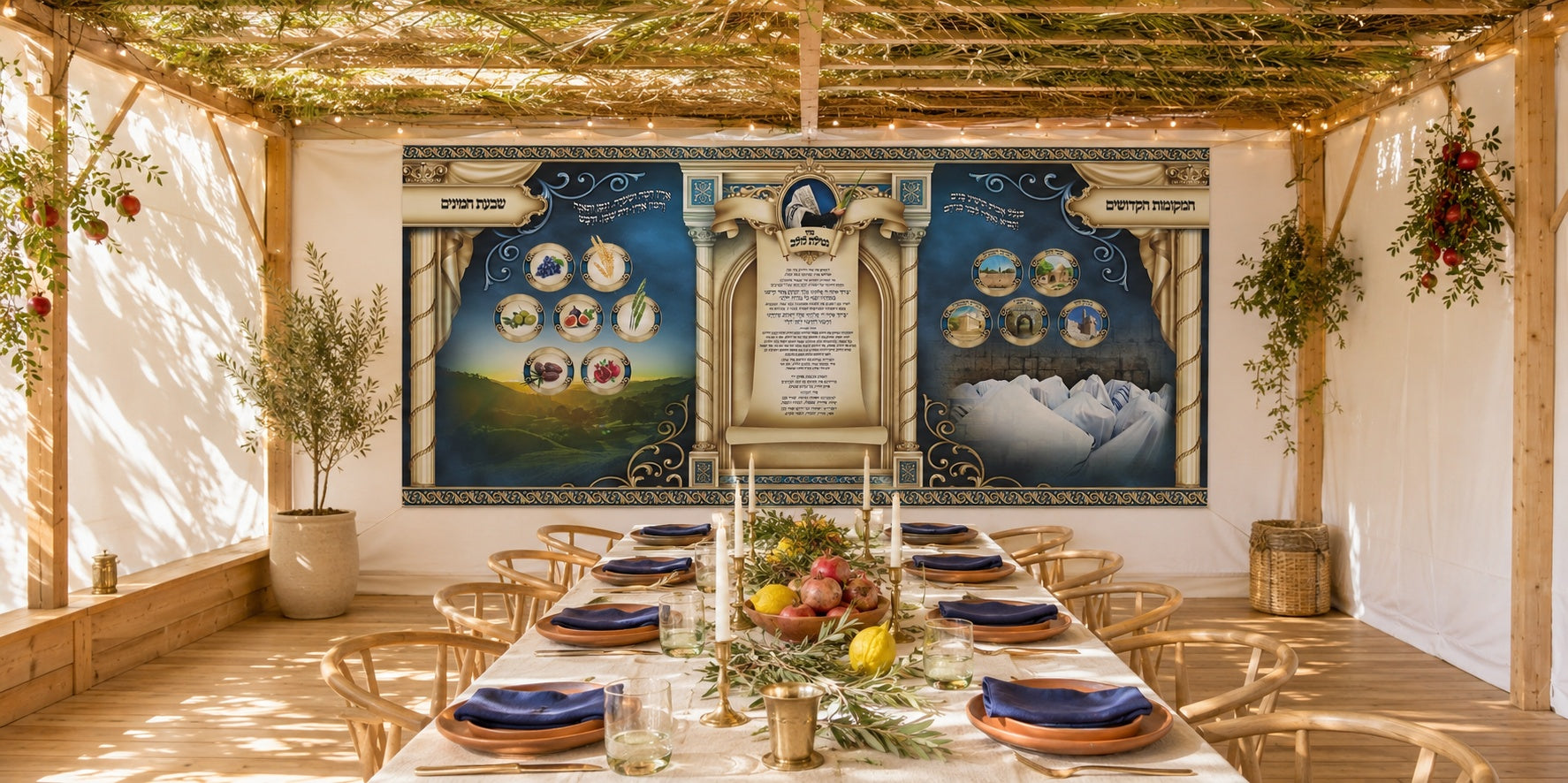
This is the wall guests see first when they enter and the wall visible throughout the meal. It deserves your largest, most visually complete piece. A full 10x5 fabric panel centered at eye level (roughly 5 to 6 feet off the ground at center) is the most effective choice. The Netilat Lulav and Ushpizin Sukkot Fabric in the 10x5 format, for instance, places the three central ceremonial elements of the holiday in a single composition, making it a natural anchor for any prayer-centered or Israel-themed sukkah.
The Side Walls
Side walls should reinforce the focal wall's theme without repeating it exactly. A 5x3 foot prayer panel on each side wall, offset slightly lower than the focal piece to create a natural visual flow, does the job cleanly. If your focal wall is Jerusalem-themed, the 5x3 Sukkot Kidush and Entrance Prayer Fabric with the Western Wall design connects the prayer text to the architectural imagery on the main wall.
The Entrance Wall
Many families leave the entrance wall relatively light since it is interrupted by the door opening. A single smaller canvas or a hanging sign works better here than a large panel. This is also the right wall for a mezuzah and any decorative garland that frames the entrance itself.
Designer's tip: Hang fabric panels so their top edge is 7 to 7.5 feet from the ground when the sukkah ceiling allows. This fills vertical space without crowding the visual field at standing eye level, and it lets schach or overhead garlands sit at a comfortable distance above the art.

Layering Inside the Wall Surfaces
Once the large panels are placed, introduce canvas art at eye level in the spaces between panels. A portrait of a Rebbe or spiritual figure from the rabbi portraits for sukkah decor collection can anchor a quiet corner without competing with a full-wall fabric composition. Keep at least 12 to 18 inches of visual breathing room between any two framed pieces. The goal is conversation between the elements, not crowding.
If you want a step-by-step reference for getting the panel dimensions right before you order, the guide on how to measure sukkah walls for fabric panels covers the exact process, including how to account for sukkah frames, connectors, and overlap.
Mistakes to Avoid When Decorating a Sukkah
- Mixing too many competing colors. Three colors maximum in any sukkah palette. More than that and no single element reads cleanly.
- Hanging art too low. Children's height is the instinct, but art hung below 4.5 feet at center gets obscured by seated guests at a table. Aim for center at 5 to 5.5 feet for seated viewing, slightly higher for standing guests.
- Using paper prints on exterior-facing walls. Even partial exposure to evening humidity will warp and stain paper within a few days. Reserve paper for interior-facing, sheltered surfaces only.
- Overloading the schach zone. Hanging heavy decor from schach creates a top-heavy visual weight that makes the space feel oppressive. Light garlands and small ornamental pieces are fine; large banners belong on the walls.
- Ignoring the table surface. The sukkah table is a fifth "wall" in terms of visual impact. A tablecloth that repeats one color from your wall art ties the whole room together at the most-used level of the space.

Finishing Touches: Lighting, Table Decor, and Schach That Tie the Theme Together
The art and textiles set the visual structure. These finishing elements complete it.
Lighting
Warm white string lights (2700K to 3000K color temperature) are the most forgiving choice for any sukkah art theme. They enhance the warm stone tones of Jerusalem imagery, make green landscape fabrics glow, and add a festive warmth without competing with any color palette. Avoid cool white (5000K and above); it flattens warm-toned art and makes the space feel clinical rather than celebratory.
Run lights along the top perimeter of the sukkah interior, just below the schach, rather than hanging them down the walls. This frames the space without interrupting the art panels below.
Table Decor
Choose a tablecloth in your palette's neutral or secondary color. Place the lulav and etrog in a visible spot, not tucked away: they are both ritual objects and natural sculptural elements. Fresh fruit in the colors of your wall art (pomegranates for red-and-gold themes, grapes for green-and-purple themes) bridges the art on the walls and the harvest tradition on the table.
Schach Framing
Natural schach, palm fronds, bamboo reeds, or cedar branches, has its own visual texture that either harmonizes or clashes with the art below. For Jerusalem-themed sukkahs with warm sand tones, pale bamboo schach is the most natural complement. For Israel landscape themes in deep greens, leafy palm fronds extend the greenery from the walls upward. The schach is not neutral: treat it as part of the design.

Shop the Look: Sukkah Wall Fabrics and Judaica Art That Work Together
The earlier discussion of prayer-centered themes comes to life most clearly in the fabric panels that incorporate Hebrew text directly into the composition. The Netilat Lulav and Sukkah Prayers Fabric with the Western Wall design (10x5 feet) is a strong anchor for any Jerusalem-themed sukkah: the architectural imagery and the prayer text occupy the same visual plane, so the piece functions as both decor and liturgical reference during the meal. It pairs naturally with a 5x3 Sukkot Kidush and Entrance Prayer Fabric on a side wall, which repeats the Western Wall motif at a smaller scale.
For families drawn to the Israel landscape approach outlined earlier, the Netilat Lulav Sukkot Fabric featuring Israel's landscape and holy sites (10x5 feet) brings in the green countryside and the Seven Species simultaneously. Place one of the 5x3 Ushpizin and Netilat Lulav panels beside it to maintain the same palette and symbolic vocabulary without duplicating the main composition.
Contemporary Jewish paintings make a compelling addition when a sukkah needs visual depth beyond fabric. Artists like Yossi Bitton and Avigdor Ben Ari work in styles that read well in both modern and traditional sukkah settings, with compositions that hold their own against the more literal prayer fabrics. The Yossi Bitton contemporary Judaica collection and the Avigdor Ben Ari Judaica collection include pieces suited to minimalist or modern interior styles as much as to traditional ones: clean line work and abstracted symbolism rather than literal illustration.
For an overview of all the prayer and blessing-specific pieces available for sukkah walls, the prayers and blessings sukkah decor collection groups them in a way that makes the pairing decisions described above much clearer to visualize before you commit.

If you are approaching this for the first time and want a reference for how sacred art integrates into a Jewish home beyond the sukkah itself, the article on how to decorate a sukkah with meaningful Jewish prints and placement covers complementary ground, and the broader guide to displaying sacred art with intention applies the same principles to the Jewish home year-round.
Frequently Asked Questions
What kind of art works best for decorating a sukkah?
Art with clear symbolic or narrative content, Jerusalem imagery, the Four Species, biblical landscapes, or prayer text, tends to hold up best in a sukkah environment. Visually complex abstract pieces can get lost in a space with many competing elements (schach, garlands, table decor). The practical rule: choose art where the central subject reads clearly from 8 to 10 feet away, which is roughly the distance across a standard sukkah interior.
Can I use canvas prints outside in a sukkah without damaging them?
Canvas prints can survive a week in a sukkah if they are on a sheltered, interior-facing wall away from direct moisture and wind. The main risks are high humidity causing canvas to sag or warp, and any condensation on cooler nights. A light coat of UV and moisture-resistant spray applied before the holiday adds meaningful protection. For walls with any outdoor exposure, purpose-made fabric panels are a safer choice because they are designed to handle exactly these conditions.
How do I choose a color scheme for my sukkah decorations?
A reliable shortcut: look at the dominant and secondary colors in your largest wall piece, then use only those two colors (plus one neutral) across every other element in the sukkah. Introduce the secondary color in textiles, candle holders, and fresh fruit rather than adding a third unrelated color. The most versatile palettes for Sukkot tend to be warm gold and cream, deep blue and white, or forest green and earth tones, because all three align with either Jerusalem stone, sky imagery, or harvest themes.
What Jewish symbols or scenes are most popular for sukkah wall art?
The Western Wall is the single most requested subject, followed by Jerusalem cityscapes, the Four Species (lulav, etrog, hadassim, aravot), Israel's natural landscape, and Ushpizin guest portraits. Prayer text compositions, which integrate the Hebrew of the Kiddush, Netilat Lulav, or Ushpizin invitation into the visual design, have grown significantly in popularity because they add functional liturgical value rather than purely decorative value.
How many wall panels or art pieces do I need to decorate a standard sukkah?
For a standard 10 by 10 sukkah with four walls: plan for one large panel (10x5 feet) on the focal wall, one or two mid-size panels (5x3 feet) on the side walls, and one to two canvas accent pieces for the remaining surfaces. That totals four to five pieces for full coverage without overcrowding. A smaller 8 by 8 sukkah typically needs one large panel and two smaller ones, with the entrance wall left relatively open.
Is fabric or canvas better for sukkah wall decoration?
They serve different needs. Fabric panels are purpose-built for Sukkot: they are lightweight, fold flat for storage, install quickly with grommets, and handle outdoor humidity far better than stretched canvas. Canvas prints bring artistic depth and texture that printed fabric cannot replicate, and they work well on sheltered interior walls or in a covered sukkah. The practical answer for most families: use large fabric panels as the structural layer and add one or two canvases as accent pieces where conditions allow.
The full range of purpose-made panels and coordinating art for the holiday is gathered in the full sukkah wall fabrics collection, organized so you can see how large and small pieces sit together before ordering. Both the 10x5 and 5x3 formats are represented, covering the sizing combinations described throughout this guide.
Read more
Best Sukkah Decoration Ideas for a Meaningful and Beautiful Holiday
Practical guidance on sukkah decoration themes, wall art formats, lighting, and layout, from poster prints to full fabric murals, so your sukkah feels intentional every year.
Read more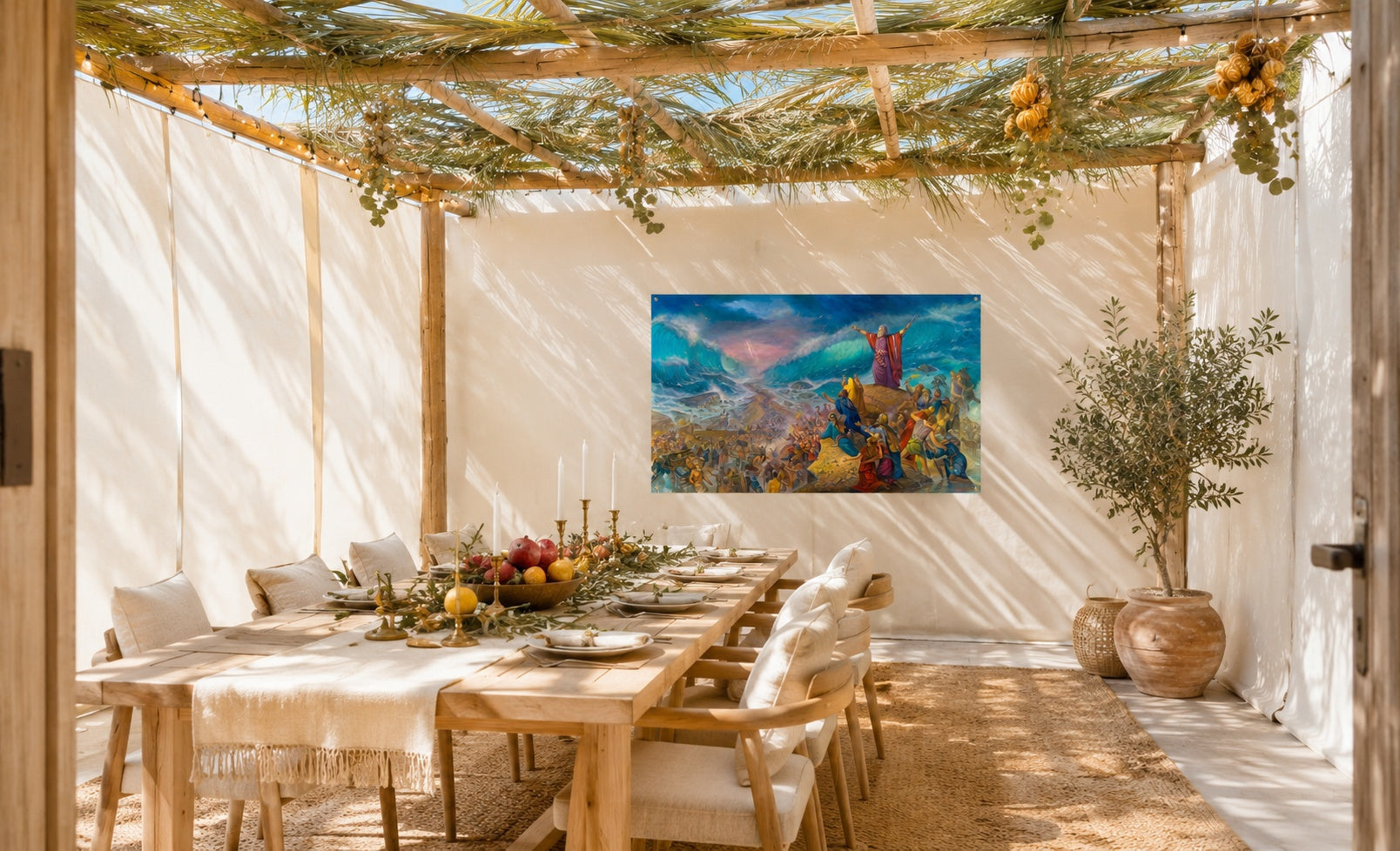
How to Decorate a Sukkah with Art: Meaningful Jewish Prints & Placement
A practical guide to choosing, sizing, hanging, and protecting Jewish art in your sukkah, covering theme, scale, format, and placement for every wall type.
Read more