

Article: How to Decorate a Sukkah with Art: Meaningful Jewish Prints & Placement
,%20match%20the%20format%20to%20your%20climat...)
How to Decorate a Sukkah with Art: Meaningful Jewish Prints & Placement
How to Decorate a Sukkah with Art: Meaningful Jewish Prints & Placement
The short answer to how to decorate a sukkah with art: choose one primary theme, size prints to the wall (18 by 24 inches minimum, 24 by 36 inches for a focal wall), match the format to your climate, and hang at 57 to 60 inches centered. The rest of this guide covers each of those decisions in specific detail, style, placement, durability, and the religious logic behind decoration itself.
Why Art Makes a Sukkah Feel Like a Sacred Space
Paper chains and plastic fruit have their place, especially with young children. But they do not carry the weight of a space meant for reflection, prayer, and hosting guests. A thoughtfully chosen poster or print does something different: it gives the eye a focal point, grounds the room in Jewish meaning, and makes adults feel they have arrived somewhere purposeful.
Think about the sensory experience of walking into a sukkah. The schach overhead filters light in a way that no indoor room can replicate. The walls are usually bare fabric or raw panels, which means art reads more powerfully here than almost anywhere in your home. A single large print on the main wall, where guests enter and look up first, can anchor the entire atmosphere.
Scale matters more outdoors than inside. Typical sukkah panels run five to eight feet tall, which means artwork that feels large in a hallway can look modest on a sukkah wall. Plan for prints no smaller than 18 by 24 inches for secondary walls, and consider 24 by 36 inches or larger for the focal wall opposite the entrance.
Curator's note: The quality of light in a sukkah shifts dramatically between morning and afternoon. If your sukkah faces west, hang your most color-saturated pieces on the east wall so they receive morning light rather than harsh afternoon glare that washes out ink and pigment.

The Tradition Behind Sukkah Decoration and What It Teaches Us
The mitzvah of decorating a sukkah, known in halachic literature as hiddur mitzvah, is the idea of beautifying a commandment beyond its minimum requirements. The Talmud (Shabbat 133b) discusses this principle across multiple mitzvot, sukkah, lulav, tzitzit, Torah scroll, and others, making the act of decoration itself a religious obligation, not merely a personal aesthetic choice.
Historically, communities used locally meaningful imagery: harvest imagery, the four species, scenes of Jerusalem, portraits of sages. These subjects were not random. Each one pointed to a specific layer of the holiday's meaning: the agricultural festival, the protection of the Divine cloud-pillars in the wilderness, the anticipation of the ingathered exiles returning to the Land of Israel.
That history gives us a framework. When you choose art for your sukkah, you are not just filling wall space. You are selecting which themes the holiday will speak through in your home. For a deeper look at how Jewish visual tradition has evolved from these roots into contemporary Judaica, this overview of modern Judaica art traces the line from traditional subjects to today's abstraction and mixed media.
The Ushpizin, the seven mystical guests (Abraham, Isaac, Jacob, Moses, Aaron, Joseph, and David) who are symbolically invited into the sukkah each night, have long inspired a specific category of sukkah art. Posters depicting the nusach of Seder Ushpizin, the order of the invitation, are among the most traditionally rooted pieces you can hang, because reciting the invitation is part of the evening ritual itself.
Choosing the Right Art Style for Your Sukkah
Not every piece of Jewish art belongs in every sukkah. The structure's character matters: a rustic wooden sukkah with an exposed cedar frame reads differently from a sleek aluminum kit covered in clean white fabric panels. Your art choices should respond to what is already there.
Here is a simple three-step method for choosing: start with mood (contemplative, celebratory, or instructional), then match color temperature to the sukkah's materials, and finally settle on scale relative to the wall dimensions you measured.
Mood first. If you want the sukkah to feel like a genuine place of prayer, Hebrew text art and rabbi portraits create that tone. If you want warmth and joy, seek pieces with golds, warm ochres, and imagery of Jerusalem at golden hour. If you want children and guests to engage intellectually, hang the Ushpizin nusach where it will be read aloud.
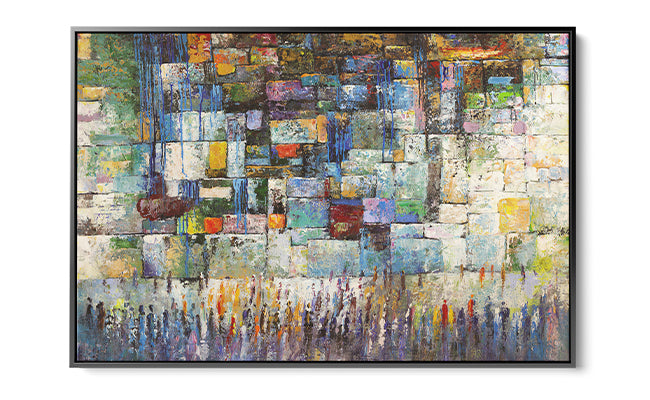
Color temperature second. Fabric sukkah walls are usually off-white or cream. Warm-toned prints, those with gold, amber, or sepia tones, will harmonize. Cool blues and silvers create pleasant contrast but can feel stark on a cold evening. Black-and-white photography, like a powerful image of IDF soldiers praying at the Western Wall, works precisely because its tonal restraint lets the subject carry all the emotional weight.
Scale third. Measure your walls before ordering. A 24 by 24 inch print is the practical minimum for a sukkah wall visible from across a seven-foot-wide structure. For a main focal wall that is eight feet wide, a gallery arrangement of three prints, each 18 by 24 inches or larger, will fill the space without looking sparse.

On the question of style compatibility: contemporary abstract Jewish art suits modern and minimalist sukkah builds. More traditional figurative work, portraits of sages, images of Jerusalem's Old City, and illustrated blessings, reads naturally in a classic wooden sukkah and pairs well with traditional Judaica objects. For households that bridge both aesthetics, look at pieces that use modern composition with traditional Hebrew typography. You can find that balance in contemporary and modern Jewish art that holds both sensibilities without collapsing into either.
Prayers and Blessings as Wall Art: The Most Meaningful Choice for Sukkah Walls
Of all the sukkah wall art ideas available, Hebrew prayer and blessing prints do the most work. They are simultaneously decorative and functional: guests read them, children learn from them, and the words spoken aloud during the holiday are literally present in the room.
The prayer and blessing posters made for sukkah walls in this category typically cover three core texts: the blessing upon entering the sukkah, the Kiddush for Yom Tov, and the Ushpizin invitation. Hanging all three in the same sukkah creates a complete liturgical environment without requiring a siddur at the table.
A few specific pieces worth considering:
- The Sukkah Entry and Exit Prayers with Ushpizin poster (available from 8 by 10 inches up to larger sizes, from $11.99) combines the entrance blessing, the exit prayer, and the Ushpizin invitation in one comprehensive print. It is useful precisely because it keeps the essential texts in one place rather than scattering them across three separate pieces.
- The Sukkot Kiddush poster featuring a portrait of Rabbi Chaim Kanievsky pairs the full Kiddush text with the rav's image, which gives the piece immediate spiritual weight for households that follow his rulings. The rabbi portrait tradition in sukkah art connects directly to the historical practice of honoring leading sages within the sukkah's space. You can explore the broader range of rabbi portraits for spiritual sukkah decor if that tradition resonates with your family.
- The Jewish Prayer of Gratitude poster draws on the themes of Psalm 27 (L'David Hashem Ori, "The Lord is my light"), a psalm of trust and confidence in divine protection recited daily from Elul through Shemini Atzeret. Hanging it in the sukkah during that period creates a visual echo of the daily liturgical calendar, a connection that most guests will recognize and appreciate.
Designer's tip: If you are hanging multiple text-based prints, keep the typographic style consistent. Mixing bold Ashkenazi-style Hebrew fonts with Sephardic calligraphic scripts in adjacent frames creates visual noise that competes with readability. Choose one family's nusach and stick to it throughout the sukkah.
The Entrance Prayer for Sukkot poster is available in a 24 by 24 inch format at $29.99, which is the right size for a sukkah entrance wall. Positioning it at the doorway, so guests see it as they enter, frames the threshold as a deliberate crossing into sacred space rather than just stepping into a tent.

How to Arrange and Hang Art Inside a Sukkah
Sukkah walls present real hanging challenges that indoor walls do not. Most panels lack studs, drywall anchors, or any rigid surface. Knowing your wall type before you buy your art changes which hanging method you use.
Here is a practical breakdown by wall type:
- Fabric panel walls: Use binder clips or S-hooks along the top rod or tension wire that runs along the panel frame. Heavy-duty clip rings, the kind sold for shower curtains, can carry a rolled or flat poster in a lightweight frame without any drilling.
- Wooden or PVC slat walls: Small cup hooks screwed directly into the slats work reliably. For heavier framed prints, use two hooks spaced to match the frame's hanging wire.
- Velcro strips: Command-style Velcro can work on smooth surfaces for lightweight unframed posters or vinyl prints. Check the weight rating; most standard strips hold up to one pound per pair, which is sufficient for a vinyl poster but not for a glass-framed print.
Eye-level placement in a sukkah means centering art at around 57 to 60 inches from the ground, the same standard used in gallery installations. This holds true even though the ceiling is lower and open to the sky. Hanging art too high pushes it into the schach's visual territory and makes text illegible from a seated position at the table.
For a sukkah that seats eight to ten people, a useful arrangement is: one large anchor piece (24 by 36 inches or the 24 by 24 inch Entrance Prayer poster) on the primary wall, two medium pieces (18 by 24 inches) on the side walls, and one smaller accent piece near the entrance. Avoid placing art directly above the table unless the ceiling height allows at least five feet of clearance between the tabletop and the bottom of the frame.
Styling note: Negative space is not wasted space in a sukkah. The exposed schach, the hanging fruit and greenery, and the natural light already provide visual texture. Art that competes with all of that reads as chaotic. Fewer, larger pieces with breathing room around them will always feel more intentional than a crowded arrangement.

Protecting Your Art Pieces in an Outdoor Sukkah
Paper-based prints and outdoor humidity are a poor combination. Before you bring a favorite art print into the sukkah, think carefully about its format and how your specific sukkah is exposed to weather.
The most practical formats for outdoor use, ranked by durability:
- Vinyl poster (PVC): Printed on water-resistant PVC material, vinyl posters are specifically designed for outdoor or semi-outdoor use. Several of the Sukkot posters listed here, including the Seder Ushpizin poster, are available in this format. If your sukkah is open on one or more sides or in a humid climate, vinyl is the format to choose.
- Laminated poster: A laminate layer over standard paper stock adds meaningful moisture resistance without the rigidity of PVC. It handles light humidity and occasional wind-borne moisture well, though prolonged direct rain exposure will eventually compromise the edges.
- Standard paper poster: Reserve this for covered sukkahs in dry climates. Even a heavy dew can cockle paper overnight.
- Canvas print: Canvas is less sensitive to humidity than paper but is vulnerable to prolonged moisture. In a sukkah with a dense schach that provides genuine rain cover, canvas is workable. In an open-sided sukkah, take it inside if rain is forecast.
Wind is the other variable. Lightweight unframed posters should be clipped at the bottom as well as the top to prevent them from flapping, which can tear grommets or bend corners within a day. If your sukkah is in an exposed location, consider the vinyl format and clip all four corners.
One practical rule: anything you value enough to reuse next year deserves proper storage. After Sukkot, roll vinyl posters in a cardboard tube, store laminated prints flat in a sleeve, and keep all sukkah art in a labeled box away from moisture and direct sunlight. Pieces stored this way last many years.

Bringing It All Together: Creating a Sukkah That Tells Your Family's Story
The best sukkahs have a point of view. Not a decorator's showroom aesthetic, but a genuine perspective: this family values certain prayers, honors particular sages, feels connected to specific places in Israel, or holds a tradition of celebrating Sukkot in a particular way. Art is the most efficient vehicle for communicating that perspective to guests.
Practical planning steps for building that coherence:
- Pick one primary theme. It could be Jerusalem (imagery of the Old City, the Western Wall), the Ushpizin (text-based and portrait-based pieces focused on the seven guests), or prayer and gratitude (blessing texts, psalm-inspired prints). Everything else is secondary support.
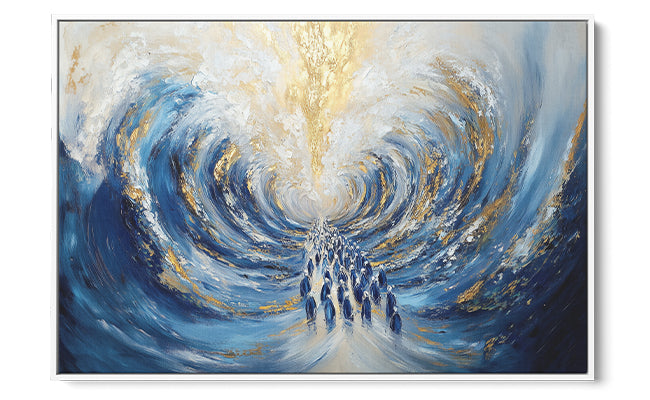
- Choose a palette and commit to it. Two to three coordinating colors across all prints read as deliberate. Four or more colors read as accidental. Gold and deep blue is a classic combination for Sukkot; warm white and sepia works beautifully for a more restrained, contemplative tone.
- Include at least one piece that invites interaction. The Ushpizin nusach poster accomplishes this because guests will read and discuss it. A Kiddush poster means the person leading Kiddush can reference the text directly from the wall. Art that is used during the holiday, not just looked at, justifies its place in the sukkah most fully.
Children's involvement matters too. If your family has a tradition of children making paper crafts, let those hang on a lower section of the wall or from the schach. Handmade and fine art can coexist in a sukkah without competing, as long as they occupy distinct zones rather than being interspersed randomly.
For families who want to extend their Sukkot aesthetic into the home itself, the principles here, scale to the wall, purposeful subject matter, consistent palette, apply equally to permanent Jewish wall art. The article on displaying sacred art with intention in Jewish homes covers that transition in depth.
One angle that rarely appears in sukkah decorating guides: lighting. A sukkah is often used after dark, and the way art reads by candlelight or warm LED string lights differs substantially from how it looks in daylight. Text-heavy prints need stronger, more directional light to remain readable in the evening. Image-based art, landscapes of Jerusalem, figurative portraits, photographic prints, tends to read beautifully in softer, warmer light because the color and form carry the piece even when fine detail is harder to see. If you use your sukkah in the evening, factor this into which pieces you place where.

The range of sukkah decorations available for the holiday is broader than most buyers realize, spanning fabric wall murals, individual art prints, and complete decorative collections that work across different sukkah sizes and styles. Start with the walls that matter most to you and build outward from there.
For families drawn to the history and devotion embedded in images of Israel's holy sites, the sukkah decor inspired by Israel's holy sites brings that geographic and spiritual dimension directly into the structure, which is particularly resonant given Sukkot's connection to pilgrimage and the Temple in Jerusalem.
Frequently Asked Questions
What kind of art is traditionally used to decorate a sukkah?
Traditional sukkah art falls into four main categories: depictions of the seven Ushpizin guests, images of Jerusalem and the Temple, Hebrew blessing and prayer texts (particularly the entrance blessing and Kiddush), and portraits of revered rabbis. These subjects map directly to the holiday's central themes of divine protection, pilgrimage, and the ingathering of the Jewish people. Modern Judaica has expanded that vocabulary considerably, but the underlying subject matter has stayed consistent for centuries.
Can I hang framed prints inside a sukkah outdoors?
Yes, with conditions. Glass-framed prints add weight and fragility that open-air sukkot make genuinely risky. A sudden gust that sways a fabric wall can send a glass frame to the floor. If you want the finished look of a frame, choose lightweight acrylic-fronted frames rather than glass, and clip-mount rather than nail-hang them. In a covered sukkah with solid walls, the risk is lower, and standard framing is fine for the seven-day duration.
What Hebrew blessings are most appropriate for sukkah wall art?
The three texts most specifically associated with the sukkah itself are: the Leishev BaSukkah blessing recited when entering, the Ushpizin invitation recited each night of the holiday, and the Sukkot Kiddush recited on Yom Tov evenings. Psalm 27 (L'David Hashem Ori, "The Lord is my light"), a psalm of trust and confidence in divine protection, is also deeply appropriate because it is recited daily during the entire Tishrei period. Hanging art that contains the text you actually use during the holiday, rather than generic Hebrew phrases, makes the piece genuinely participatory rather than merely decorative.
How do I keep wall art safe from moisture or wind in a sukkah?
Choose a vinyl (PVC) format for any sukkah with open sides or in a humid region. Secure both the top and bottom of unframed posters to prevent wind movement. For laminated prints, keep them away from the schach's drip line. At the end of Sukkot, roll vinyl prints in a tube and store laminated prints flat in an archival sleeve so they are ready to rehang the following year without degradation.
Is it appropriate to use modern or abstract Jewish art in a sukkah?
Absolutely. The hiddur mitzvah principle concerns the quality and intentionality of the beautification, not its stylistic period. A contemporary abstract piece rooted in Jewish symbolism, or a modern photographic print of a holy site, fulfills the mitzvah as fully as a traditional illustrated poster. The more relevant question is whether the piece reads as intentional and meaningful in its context rather than as generic wall filler. Abstract art that references recognizable Jewish imagery, Hebrew letterforms, the shape of Jerusalem's skyline, holds up well in a sukkah setting.
What size art prints work best for sukkah walls?
For a standard sukkah panel that is five to six feet tall, a minimum print size of 18 by 24 inches reads properly from across the structure. On an eight-foot-wide focal wall, aim for 24 by 36 inches as a single anchor piece, or group two to three 18 by 24 inch prints with a few inches of breathing space between them. The 24 by 24 inch format sits right at the threshold for a statement piece on a medium-sized wall. Text-based prints need to be sized generously so Hebrew lettering remains readable from a seated position at the table, roughly six to eight feet away from the wall.
The full range of Sukkot blessing and prayer art is available in the sukkah wall art collection for prayers and blessings, which includes vinyl, laminated, and standard poster formats across sizes from small accent prints to large focal-wall pieces. You will find options organized by text, subject, and Ashkenazi or Sephardic nusach to match your family's tradition.
Read more
How to Decorate Sukkah with Judaica Art and Textiles
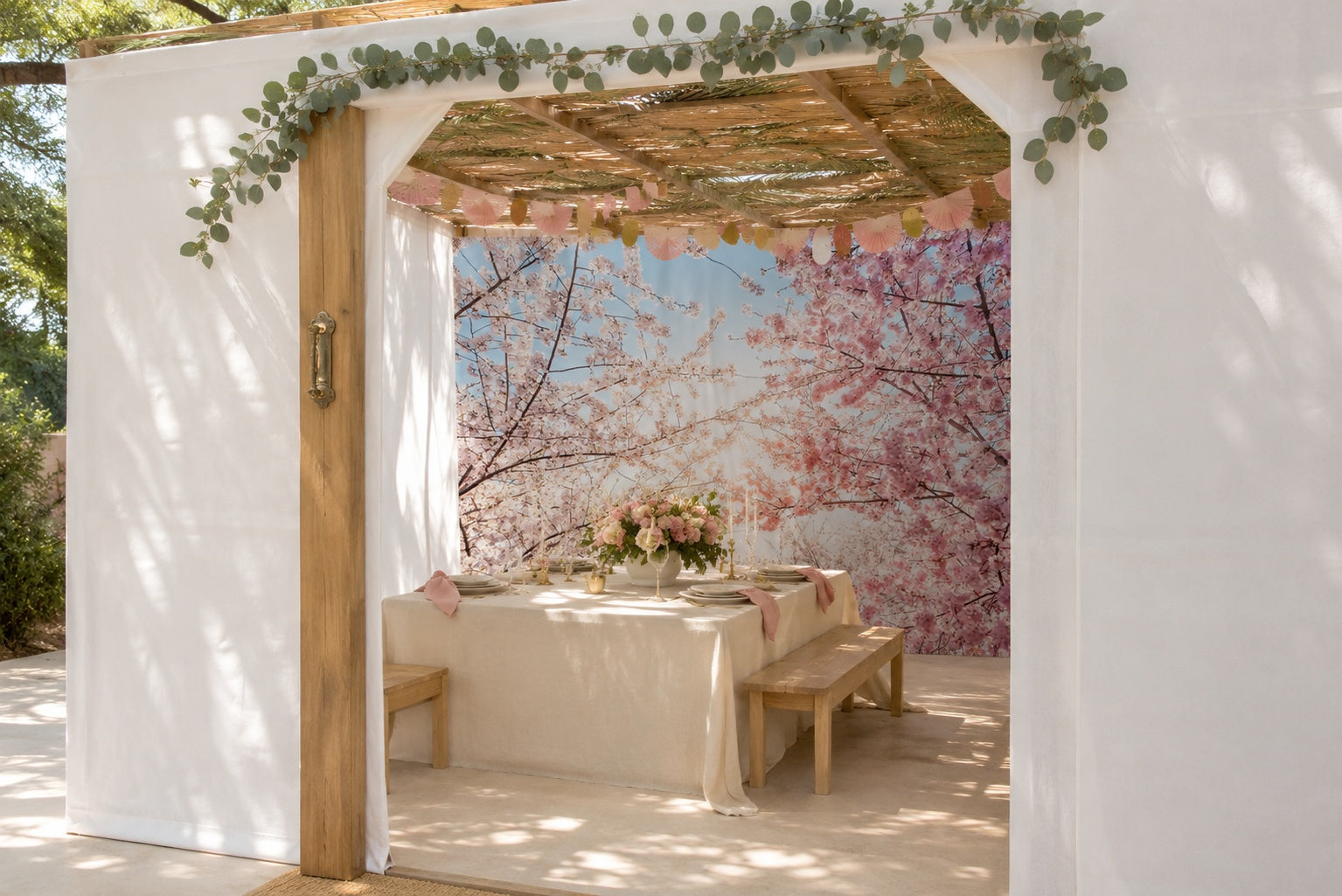
A practical guide to choosing a visual theme, matching colors, and placing Judaica wall art and fabric panels so your sukkah feels intentional from the first wall to the table.
Read more