


Best Sukkah Decoration Ideas for a Meaningful and Beautiful Holiday
Best Sukkah Decoration Ideas for a Meaningful and Beautiful Holiday
The best sukkah decoration ideas balance two things most guides ignore together: visual coherence and Jewish meaning. A well-decorated sukkah is not a collection of random hanging crafts; it is a designed room that happens to sit outdoors for seven days. This article covers specific themes, materials, sizing, lighting, and layout decisions so you can build a sukkah interior that feels intentional every year.
Why Sukkah Decoration Matters Beyond Aesthetics
The mitzvah of hiddur mitzvah, beautifying a commandment, applies directly to the sukkah. Rabbinic tradition encourages us to make the sukkah as beautiful as possible, and many authorities count the decorating itself as part of the holiday's observance. That framing changes how you approach the project: you are not just making a pretty tent, you are fulfilling something.
There is also a practical hospitality dimension. Most families eat every meal in the sukkah for the full holiday. Guests notice the space. Children remember it. The decorations you choose set the emotional register of every conversation that happens inside, from the kiddush on the first night to the informal lunches midweek.
Decoration also creates continuity. Families who invest in quality wall art, fabric panels, and reusable lighting tend to build on the same scheme year after year, adding pieces and refining the palette rather than starting from scratch. That cumulative quality is part of what makes a sukkah feel like home.
For a broader look at how art functions inside Jewish living spaces generally, the article on displaying sacred art with intention covers principles that translate directly to sukkah styling.

Choosing a Visual Theme That Carries Jewish Meaning
The most common mistake in sukkah decoration is mixing too many unrelated motifs: paper chains next to a photo of Jerusalem next to seasonal gourds next to cartoon etrogs. Each element is fine on its own; together they read as chaos. A single organizing theme solves this.
Here are four themes that work well for adults and translate to meaningful Jewish content:
- Jerusalem and the Holy Land. Depictions of the Old City, the Western Wall, and the Israeli landscape connect directly to the sukkah's themes of exile, return, and divine protection. This is the most versatile theme because the palette, warm stone tones, deep blues and ochres, works with natural schach and wooden frames equally well.
- The Twelve Tribes. Each tribe's symbol and color gives you a built-in decorating structure. You can hang a large central Twelve Tribes poster and let individual tribe motifs inform your textile and accessory colors.
- Ushpizin (the seven guests). The mystical practice of welcoming Abraham, Isaac, Jacob, Joseph, Moses, Aaron, and David into the sukkah each night maps naturally onto a decorating theme. Portraits, name plaques, and illustrated blessings all work here.
- Prayers and blessings. Calligraphic or illustrated prints of the Ushpizin invitation, the blessing over the lulav, or prayers for peace create a sukkah that functions almost like a small beit midrash. This suits families who want the space to feel devotional rather than festive.
Once you fix on a theme, choose a color palette of two to three tones and commit to it across walls, tablecloth, and any hanging ornaments. A Jerusalem theme pairs naturally with terracotta, warm ivory, and deep indigo. A blessings theme often works better with cooler tones: sage, soft gold, and white.
Styling note: Pick your wall art first and extract the palette from it. Art is harder to substitute than a tablecloth or napkin rings, so let it anchor the color decisions rather than forcing it to match an existing textile.

Best Sukkah Wall Decoration Ideas: From Prints to Full Fabric Panels
Sukkah walls present a unique challenge: they are often fabric, PVC, or bare wood, none of which behave like drywall. Your hanging method depends on the substrate, and your art format depends on your hanging method.
Poster Prints
Printed posters in the $11.99 to $29.99 range are the most accessible entry into sukkah wall art. They are lightweight, easy to pin or clip-hang, and you can rotate them between years without concern about damage. For a themed scheme, hang a grouping of three to five related prints at consistent height, treating the cluster as a single visual unit rather than scattering them across the wall.
Subject matter matters here. A portrait of a spiritual leader placed near the mizrach wall (the eastern wall facing Jerusalem) carries different weight than the same image placed low near the floor. Portraits of figures like the Baba Sali or the Steipler Rabbi tend to work well centered at eye-level on the wall opposite the entrance, so they are visible the moment guests step in.
For prints on Jewish heritage and landmark sites, the Jewish holy sites art collection offers a range of compositions that translate well to sukkah walls.
Canvas Prints
Stretched canvas holds up better in outdoor conditions than paper-backed posters, provided you protect it from direct rain. A canvas at roughly 18 by 24 inches works as a single focal point on a narrow wall panel; larger canvases, 24 by 36 inches and up, read as statement pieces and work best when they are the only art on that wall. Look for canvases printed with UV-resistant inks, especially if your sukkah catches afternoon sun.
Full Fabric Wall Murals
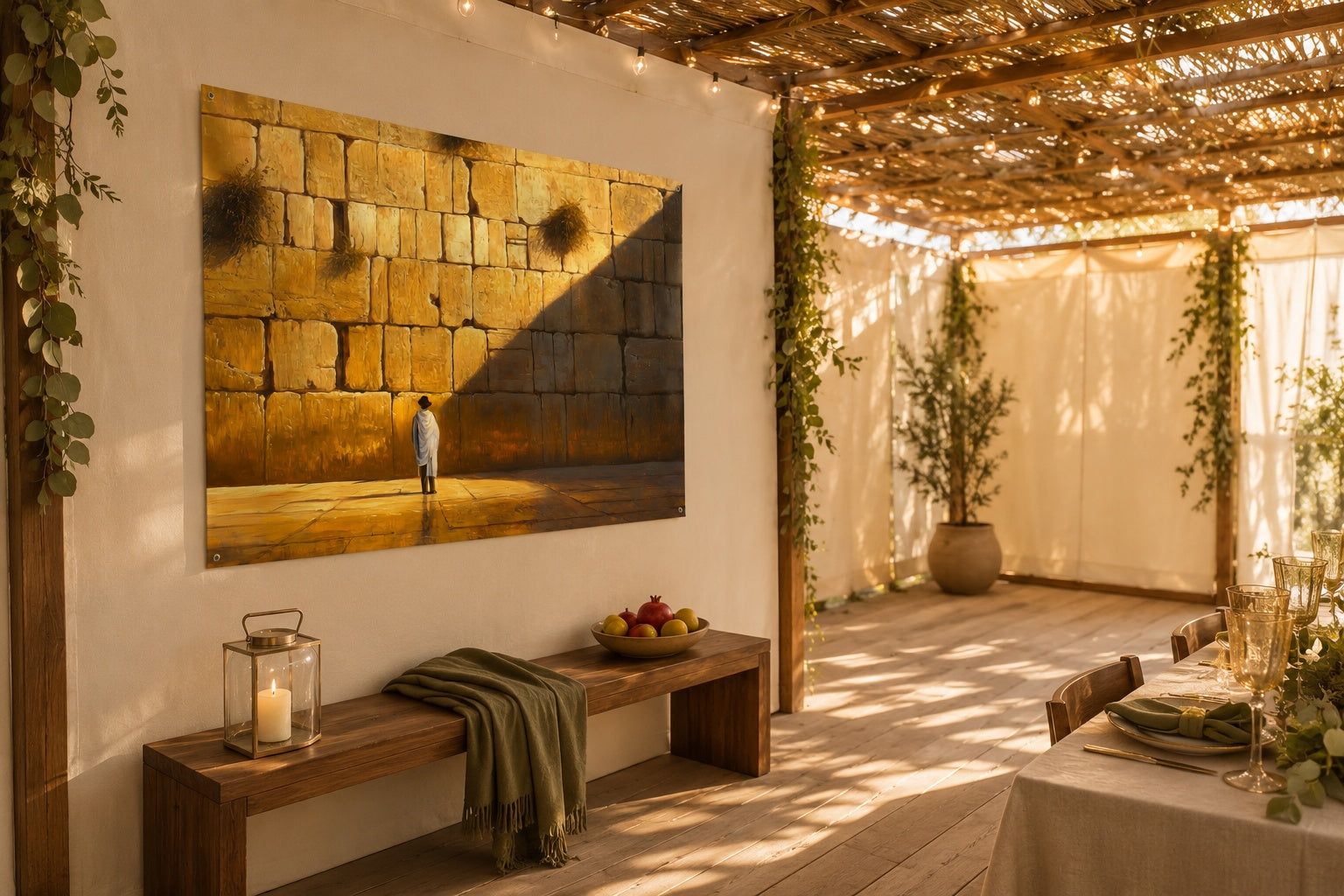
This is the format that changes the experience most dramatically. Full-wall fabric murals replace the plain canvas or bamboo wall with an immersive scene. The artistic sukkah wall fabric collection includes panels like the Old City Jerusalem at Sunset mural, a UV-resistant and waterproof fabric that turns a structural wall into a panoramic view of Jerusalem's skyline. At the $220 to $260 range, a single panel handles an entire wall and stores flat between holidays.
When sizing a fabric panel, measure your sukkah wall to the nearest inch before ordering. Most standard sukkah kits use 10-foot or 8-foot wide wall panels; a fabric mural cut to match eliminates the gap that makes a sukkah look unfinished. Attach with the grommets or velcro strips the panel includes, rather than staples, which damage both the fabric and the frame.
Designer's tip: Install the fabric mural on the wall most visible from the seating area, typically the wall facing the entrance. Leave the side walls for lighter poster groupings or hanging ornaments so the mural reads as the focal point rather than competing with a busy scheme.

A Quick Format Comparison
| Format | Best For | Weather Resistance | Reusability |
|---|---|---|---|
| Paper poster | Flexible, low-commitment decorating | Low (keep under schach) | 2-3 seasons with care |
| Stretched canvas | Single focal-point wall art | Moderate (UV-resistant inks) | 5+ seasons |
| Full fabric panel | Complete wall transformation | High (UV and waterproof) | 10+ seasons |
Ceiling and Schach Decoration Ideas That Add Warmth
The schach, the cut branches or bamboo that form the roof, is both the defining halachic feature of the sukkah and its most atmospheric design element. Most families under-use it.
Hang dried fruit, gourds, and paper lanterns directly from the schach using thin fishing line or natural twine. The key is weight distribution: cluster heavier items, like dried pomegranates or ceramic ornaments, near the structural supports and reserve lighter paper or fabric pieces for the open stretches. This prevents the schach from sagging unevenly.
For a cohesive ceiling layer, choose ornaments that echo your wall theme. If your walls carry a Jerusalem theme with warm stone tones, hanging dried etrog slices and cinnamon bundles reinforces the palette while adding fragrance. For a blessings theme, white fabric butterflies or star shapes in ivory and gold complement calligraphic prints below without competing.
String lights threaded through the schach add warmth after dark. More on that in the next section, but note the placement principle here: run the lights parallel to the wall murals, not perpendicular, so the light wash enhances the art rather than casting uneven shadows across it.
Curator's note: Avoid mixing too many ornament materials in the ceiling plane. Natural (dried botanicals, woven fibers), reflective (small mirrors, CD suncatchers), and fabric pieces each catch light differently. Stick to two material types for a ceiling that reads as composed rather than cluttered.

Table, Lighting, and Accessory Ideas to Complete the Look
The table is where people actually spend their time. A sukkah can have extraordinary walls and a thoughtful ceiling, but if the table is set carelessly it undermines everything.
Table Styling
Use a tablecloth that picks up one of the secondary colors in your wall art, not the dominant tone. If your Jerusalem mural leads with warm ochre, a tablecloth in deep indigo or olive pulls the palette together without making the table compete with the walls. Add a low centerpiece, a cluster of small gourds, fresh herbs, or candle holders, that sits below eye level so it does not block conversation.
Place your lulav and etrog holder at the head of the table as a deliberate decorative object, not an afterthought pushed to a corner. A silver or wooden holder on a small decorative plate reads as an intentional design choice.
Lighting
Lighting is the most underplanned element in most sukkahs. The combination that works best: warm-white string lights in the schach (2700K color temperature, not the cold blue-white of cheaper strands) plus two or three lanterns or pillar candles at table level. This creates depth, the ceiling glows, the table is intimate, and the art on the walls catches ambient light rather than being washed out by a single overhead source.
Battery-operated string lights avoid the extension cord run across the floor. Solar string lights work if your sukkah has southern exposure during the day to charge, but they often fade before the end of the evening meal in early October. Plan a battery backup for the nights when solar charge runs short.
Accessories with Meaning
A small framed blessing or a printed prayer for the IDF soldiers placed on the table near the bentchers adds a layer of intentionality that guests notice. The prayers and blessings sukkah decor collection has prints designed specifically for this kind of placement, with compositions legible at table distance.

How to Decorate a Sukkah When Space Is Limited
A small sukkah, the minimum halachic size is roughly seven by seven tefachim (about 28 by 28 inches), though most families build at least a 6 by 8 foot structure, requires a more disciplined approach than a large one. The instinct to fill every surface works against you in tight quarters.
Three decisions that solve small-sukkah decorating
- One statement wall, three plain walls. Put your full fabric panel or largest canvas on the wall facing the entrance. Leave the other walls bare or use a single small poster grouping on one side wall. The contrast reads as intentional, not sparse.
- Vertical scale, not horizontal spread. In a narrow sukkah, a tall narrow canvas or a banner-format print draws the eye upward and makes the space feel taller. A wide horizontal print emphasizes the width you do not have.
- Table accessories over wall quantity. When wall space is limited, invest in the table: a beautiful tablecloth, quality candlesticks, and a centered etrog holder carry enormous visual weight in a small room.
For renters or anyone using a borrowed or pop-up sukkah frame, damage-free hanging matters. Use binder clips on fabric walls to hang posters without puncturing the material. On wooden frame rails, removable adhesive hooks rated for 3 to 5 pounds hold lightweight framed prints safely. Avoid command strips directly on painted or stained wood if the landlord owns the frame; the adhesive residue can be difficult to remove from unfinished surfaces.
If you want to see how these principles apply to a full sukkah design from scratch, the detailed walkthrough in decorating a sukkah with meaningful Jewish prints covers placement at a room-by-room level.
Bringing It All Together: Planning Your Sukkah Decor Year After Year
The families whose sukkahs look the most considered rarely started with a full scheme. They started with one significant piece, usually a wall mural or a large canvas, and built around it over several years. That evolutionary approach is worth adopting deliberately.
Year one: choose your anchor art. This is the piece with the most visual weight, typically a fabric panel or a 24 by 36 inch canvas print. Everything else in years two and three responds to it.
Year two: add the secondary layer. Poster groupings, ceiling ornaments, and a cohesive table textile that pulls from the anchor piece's palette.
Year three: refine and personalize. This is when you add the pieces with specific family meaning, a portrait of a figure your family venerates, a print of a blessing relevant to the year, or a commemorative piece for a lifecycle event.
Store everything together in a labeled bin immediately after Sukkot. Include a printed photograph of the assembled sukkah interior so you have a reference image when you rebuild the following year. This single habit eliminates the annual re-invention problem most families face.
Curator's note: Buy art that you would also hang in your home. The best sukkah pieces are not disposable holiday decorations; they are works you can rotate into a dining room or study for the rest of the year, which makes the per-year cost much easier to justify.
For the widest range of pieces across styles and formats, the full Sukkot decorations collection brings together prints, posters, and fabric panels in one place, organized by format and theme.

One observation worth making explicitly: the sukkahs that feel the most beautiful are not the most expensive ones. They are the ones with the most coherent decisions. A $12 poster placed at the right height, in the right spot, within a committed color scheme, outperforms a $200 canvas hung without consideration. Decor is a spatial problem, not a spending problem.
If you are working through the question of how modern Judaica art relates to more traditional decorating styles, the piece on modern Judaica versus traditional Jewish decor offers a useful framework for making that call with confidence.
Frequently Asked Questions
What are the most popular themes for sukkah decorations?
Jerusalem and the Land of Israel is consistently the most popular theme, partly because of its direct connection to the holiday's themes of divine shelter and Jewish homeland, and partly because the warm stone palette of Israeli landscapes adapts easily to most sukkah frame colors. The Twelve Tribes of Israel and Ushpizin-based decorating (centering the seven mystical guests: Abraham, Isaac, Jacob, Joseph, Moses, Aaron, and David) are close seconds, especially among families who want the space to feel educational as well as festive.
Can I use canvas art or fabric panels on sukkah walls?
Yes, with one important caveat: not all canvases are printed with outdoor-grade inks. For a covered sukkah or one with good schach coverage, standard canvas works fine for the holiday week. If your sukkah is exposed to direct afternoon sun or has any risk of moisture from rain, look specifically for UV-resistant and waterproof-rated fabric panels. Full-wall fabric murals in this category are designed for sukkah use and outlast standard canvas significantly over multiple seasons.
How do I hang decorations on sukkah walls without damaging them?
The method depends on the wall material. On fabric walls, large binder clips or carabiner-style hooks threaded through the top hem hang posters and small prints without puncturing anything. On PVC or aluminum frame rails, removable adhesive hooks rated for 3 to 5 pounds handle lightweight pieces; for anything heavier, a small S-hook over the rail is more reliable. On bare wood walls, finishing nails removed immediately after Sukkot leave minimal marks. Avoid hot glue and double-sided tape on painted surfaces, since both can lift the finish on removal.
What colors work best for sukkah interior decoration?
Warm neutrals, specifically terracotta, ivory, warm white, and natural wood tones, work with almost any schach color because schach reads as a warm amber-green overhead. Against that backdrop, a deep accent in indigo, forest green, or oxblood gives the space depth without fighting the natural ceiling. Avoid cool grays and stark whites as dominant tones; they look disconnected from the organic materials around them. If your family's sukkah has a specific color scheme from the frame or pre-printed walls, pull one color from that and make it the accent throughout your art, textiles, and accessories.
How early should I start planning and buying sukkah decorations?
Order fabric panels and canvas prints at minimum three weeks before Sukkot. Custom or made-to-measure panels need even more lead time, sometimes four to six weeks depending on the vendor. Posters ship faster, but if you are ordering multiple pieces to build a cohesive scheme, earlier gives you time to assess the palette together before the holiday week arrives. Starting in August, right after Tisha B'Av, is a practical benchmark many experienced decorators use.
Are there sukkah decoration ideas that work for both kids and adults?
The most effective strategy is to separate by layer rather than by surface. Give children ownership of the ceiling ornaments, paper chains, dried fruit, DIY suncatchers, and hanging crafts they make during the weeks before the holiday. Reserve the walls for adult-scale art: framed prints, fabric panels, and calligraphic pieces that benefit from careful placement and consistent hanging height. Children feel invested because their contributions are prominently displayed; adults get a wall plane that reads as designed. This division also means the wall art survives for many years while ceiling pieces can be refreshed or replaced as children's interests change.
The full sukkah wall fabric collection includes panels across a range of Israeli scenes and themes, from the Old City at sunset to open landscape compositions, in UV-resistant and waterproof formats sized for standard sukkah frames. Each panel is designed to anchor a complete decorating scheme and store flat between seasons.
Read more
Best Sukkot Decorating Ideas for a Beautiful and Festive Holiday
Practical, visually specific ideas for decorating your sukkah with meaning, from Hebrew blessing prints and Ushpizin posters to natural elements, lighting, and family-made crafts.
Read more
How to Decorate Sukkah with Judaica Art and Textiles
A practical guide to choosing a visual theme, matching colors, and placing Judaica wall art and fabric panels so your sukkah feels intentional from the first wall to the table.
Read more