


Best Sukkot Decorating Ideas for a Beautiful and Festive Holiday
Best Sukkot Decorating Ideas for a Beautiful and Festive Holiday
What Makes a Sukkah Decoration Meaningful and Festive
The best Sukkot decorating ideas do two things at once: they make the sukkah feel genuinely festive, and they give the space a layer of intention that connects every meal and gathering to the holiday's deeper meaning. A sukkah that achieves both is not a matter of spending more, but of choosing more deliberately.
Sukkot is, at its core, a holiday about impermanence and gratitude. The sukkah's open roof, covered in schach, is a deliberate reminder that shelter is temporary and the sky above is the real canopy. Every decoration you hang there either reinforces that feeling or fights against it. Heavy, indoor-style framing can look incongruous; lightweight prints, natural materials, and warm light work with the structure rather than against it.
There is also a mitzvah dimension here. The concept of hiddur mitzvah, beautifying a commandment, applies directly to the sukkah. Putting care into how the space looks is itself part of the observance, not just interior design. That framing changes how you approach even small decisions, like which print to hang or how to arrange the table.
Practically speaking, a sukkah is an outdoor structure exposed to temperature changes, wind, and often humidity over seven to eight days. Decorations need to hold up. That means thinking about how things are hung, what materials you use, and how the space will look on day seven, not just day one.

How to Set a Decoration Theme for Your Sukkah
A theme does not have to be rigid. Think of it more as a palette decision and a material direction, something that keeps all the individual pieces from competing with each other.
A useful three-step method: start with mood, then decide on color temperature, then consider scale. Do you want the sukkah to feel like a warm harvest gathering, a serene and contemplative space, or a joyful, color-filled environment for children? Each mood points toward different choices.
- Harvest and earthy: Warm terracotta, deep gold, olive green, and natural wood. Dried fruit garlands, gourds, lulav holders in natural wicker. Prints with organic, botanical imagery or Jerusalem landscapes.
- Modern minimalist: White, cream, and a single accent color (deep navy or forest green). Clean-lined posters with Hebrew text in a restrained typeface. No more than three types of decoration so the eye has somewhere to rest.
- Joyful and family-oriented: Bright primary colors, hand-made paper chains, fruit cutouts, and illustrated prints that children recognize and respond to. Layering is fine here; the energy is part of the point.
Once you have a direction, every addition becomes a yes-or-no question: does this fit the mood? That discipline produces a sukkah that looks considered rather than assembled from whatever was on sale.
For a deeper look at how art placement works within a themed Jewish space, the article displaying sacred art with intention covers the principles that translate directly to sukkah styling.
Wall Art and Hanging Prints That Work in a Sukkah
Yes, you can absolutely hang wall art and prints inside a sukkah, and the right pieces do more for the space than any amount of plastic decorations. The key is format: posters on lightweight paper or canvas, protected in a simple frame or left unframed with a clean border, move with the breeze rather than catching it dangerously. Heavy framed glass is a wind risk and an impractical weight for most sukkah walls.
When choosing a print for sukkah use, look for designs that carry legible Hebrew text at medium reading distance (roughly arm's length when seated at the table), because a sukkah is an intimate space. Prints that need to be pressed close to read lose their purpose in a busy gathering.

The Hebrew blessing wall art for your sukkah collection includes several pieces designed with exactly this in mind. The Sukkot Holiday Kiddush Text Poster, for example, presents the complete Kiddush text in an elegant graphic layout, available from $11.99 to $29.99 in multiple sizes, so you can scale it to the wall you have. Position it near the head of the table so the person leading Kiddush can reference it and guests can follow along.
A sukkah with a dedicated "text wall," one wall anchored by a Kiddush poster or Ushpizin print, feels organized and intentional. The other walls can carry lighter, more decorative pieces without the whole space feeling cluttered.
Styling note: For sukkah walls made of fabric panels, use binder clips or S-hooks through the top edge of an unframed poster rather than adhesive. It hangs flat, takes seconds to remove, and leaves no marks on the wall material.
Posters in a consistent style across multiple walls create visual cohesion without requiring identical frames. If you are mixing a Kiddush print with an Ushpizin print, choose versions from the same design series so the typeface and color palette already speak the same language.
Natural Elements, Lights, and Textures That Bring the Sukkah to Life
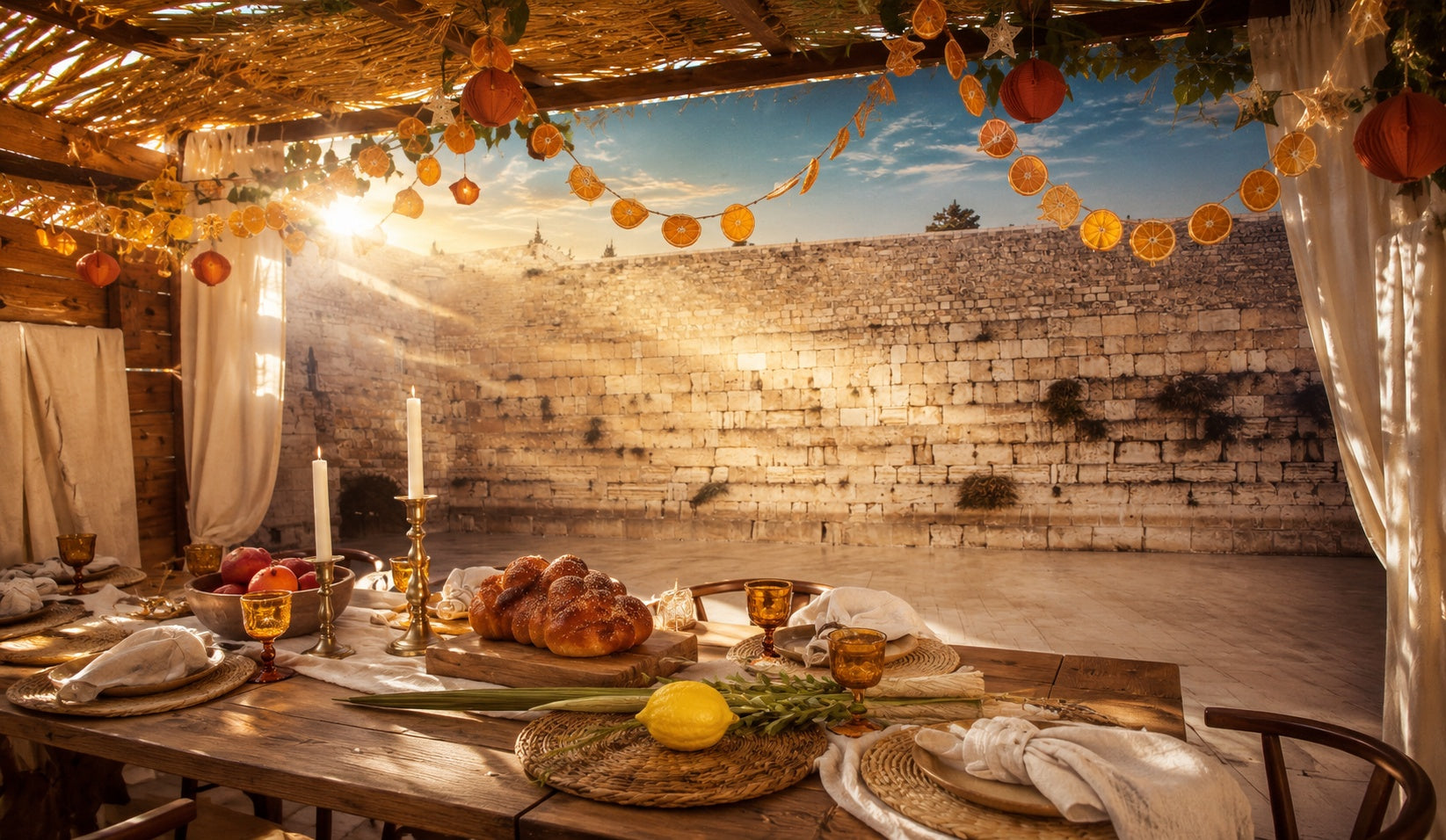
The schach itself is already doing significant visual work: the filtering of light through palm fronds or bamboo poles creates a warmth that no artificial ceiling can replicate. The best decorations work with that natural canopy rather than blocking it.
Hanging elements should be light enough to move slightly in a breeze without tangling. Consider these approaches:
- Dried citrus and spice garlands: Sliced dried etrog or orange rounds threaded on natural twine with cinnamon sticks have a scent as well as visual appeal. Hang them in short strands of 12 to 18 inches so they sway without catching on schach.
- Fresh and dried botanicals: Bundles of eucalyptus, wheat stalks, or dried pomegranate flowers tied with twine and pinned to the sukkah frame add texture. Replace fresh bundles every two to three days if humidity is high.
- Woven and textile elements: A small kilim or woven textile hung on one wall introduces color and warmth without competing with art prints. Keep one wall for text-based prints and use the opposing wall for textiles.
Lighting deserves its own attention. String lights are the single most transformative addition you can make to a sukkah after dark, but the temperature of the bulb matters enormously. Warm white (2700K to 3000K) reads as candlelight and makes food look beautiful; cool white or daylight bulbs flatten the atmosphere and make a sukkah feel like a garage. Solar-charged string lights are practical for structures without an outdoor outlet nearby.
Lanterns at table level, whether battery-operated or traditional candle lanterns with hurricane glass, add a second layer of light and make the gathering feel settled and private. The combination of overhead string lights and low lanterns creates depth that a single light source cannot.

Designer's tip: Hang string lights along the inner perimeter of the sukkah frame first, before adding any art or decorations. Once the light placement is set, every other hanging decision becomes easier because you can see exactly how the light hits each wall.
Ushpizin, Symbols, and Jewish Imagery Worth Displaying
Now, from the atmospheric to the specifically Jewish: the imagery you choose to display is an opportunity to make the sukkah a conversation starter and a teaching space, especially for families with children.
The Ushpizin, the seven mystical guests invited into the sukkah each night (Abraham, Isaac, Jacob, Moses, Aaron, Joseph, and David), are one of the most meaningful traditions to represent visually. A well-designed Ushpizin poster hung at the entrance or on the primary wall gives the custom a physical presence in the space. The Seder Ushpizin Welcoming Tradition poster series from Ben Ari Art Gallery spans multiple artistic editions, so you can select the visual style that fits your sukkah's character, from a more classical rendering to a contemporary graphic approach.
Beyond the Ushpizin, these are the symbols most commonly displayed and why each one earns its place:
- The four species (arba minim): The lulav and etrog are ritual objects, but an illustrated print depicting them works as a reminder of the holiday's agricultural and spiritual roots.
- Jerusalem imagery: The sukkah is connected to the pilgrimage festival tradition, and images of the Old City or the Western Wall carry that resonance. Art depicting Jewish holy sites fits naturally in a sukkah, particularly on the eastern wall if you observe the custom of facing Jerusalem.
- Mizrach signs: A mizrach ("east" in Hebrew) marks the direction of prayer and belongs on the eastern wall of the sukkah just as it does in the home. A printed or hand-lettered mizrach is one of the most functional decorative objects in the space.
- Pomegranates: Symbolizing abundance and the 613 commandments, pomegranate imagery appears throughout Jewish visual tradition. Paper, ceramic, or illustrated versions work in any sukkah theme.
Rabbi portraits occupy a distinct category. A Kiddush poster that incorporates the portrait of Rabbi Ovadia Yosef alongside the traditional Sukkot Kiddush text serves a dual purpose: it honors a revered figure and provides the functional text for the evening's ceremony. For homes where a particular posek or rav holds deep meaning, this kind of combination print carries real personal weight.

For families exploring the range of spiritual art available for the sukkah, the rabbi portraits and spiritual art collection offers a focused view of how portraiture and sacred text can share the same frame.
DIY Sukkot Decoration Ideas the Whole Family Can Make
Handmade decorations belong in the sukkah for the same reason the sukkah itself is built by hand: participation creates connection to the holiday. The goal is not polished craft-store results but meaningful objects made together.
A few ideas that work across age ranges, with enough detail to actually execute them:
- Paper chain garlands: The classic for a reason. Use paper in your sukkah's color palette (not random rainbow unless that is your theme) cut to 1-inch by 8-inch strips. A chain of 60 to 80 links spans roughly six feet, enough to run along one wall's top edge. Younger children can assemble links; older children can cut and decorate strips first with markers or stamps.
- Suncatcher fruit panels: Trace fruit shapes (etrog, pomegranate, grape cluster) onto black card stock, cut out the interior, and fill with tissue paper in layers. Tape to the sukkah walls or hang in front of the schach so light filters through. The etrog shape in yellow tissue paper catches afternoon light beautifully.
- Dried fruit and seed mobiles: Thread dried apple or orange rounds, large seeds, and wooden beads onto fishing line. Hang from the schach in three-to-four-strand clusters at varying lengths. These double as scent elements and move gently in the breeze.
- Hand-lettered Ushpizin place cards: On thick card stock, write the name of one Ushpizin guest per card in Hebrew and English. Place one at each seat each evening to mark that night's invitation. Children who are learning the aleph-bet can practice the letters while contributing something used at the table.
The article Sukkah Decorations Guide: DIY and Judaica Art for Sukkot expands on handmade options and includes templates worth bookmarking before the holiday.
Curator's note: Mix one or two quality printed pieces with the handmade work rather than going entirely DIY. The contrast actually makes the handmade pieces look more special, not less, because the eye has something polished to compare against.

Tips for Keeping Your Sukkah Looking Polished All Week Long
A sukkah that looks beautiful on the first night and bedraggled by Hoshana Raba is a missed opportunity. The week-long nature of the holiday requires a small amount of forward planning.
Before you hang anything: Check the weather forecast for your area during the holiday week. If rain or wind is expected, move paper and unprotected fabric decorations to the interior walls, away from the open sides. Reserve the outer perimeter for weather-resistant elements like string lights and fresh greenery that can be easily replaced.
Three common mistakes that age a sukkah's look quickly:
- Hanging too much too densely: Overcrowding is the fastest way to make a sukkah feel chaotic. Leave breathing room between pieces. A single strong Ushpizin print on one wall reads more powerfully than five competing decorations on the same surface.
- Mixing too many color families: If your garlands are multicolored, your tablecloth is patterned, and your prints are in different palettes, nothing anchors the eye. Choose one dominant color and let everything else support it.
- Using tape directly on sukkah canvas walls: Standard masking tape or painter's tape can pull the surface of fabric walls when removed, especially after days in varying humidity. Use binder clips, clothespins, or S-hooks through grommets instead.
For fresh botanicals (eucalyptus bundles, wheat stalks, fresh flowers), plan to refresh them at mid-week, around Chol HaMoed. Keep a backup bunch of dried elements ready to replace anything that wilts. Dried botanicals, unlike fresh, only improve with time in a low-humidity environment and require no maintenance.
At the end of each day, a quick five-minute walk-through to straighten frames, re-clip any loose garlands, and check string light connections keeps the space looking intentional for every gathering. The sukkah is a hosted space for seven nights. Treat it with the same attention you would give a room before guests arrive, because that is exactly what it is.

For a full range of options in every format, from fabric wall panels to printed posters, the complete Sukkot decoration collection covers both the statement pieces and the layering details. And if modern Judaica art is new to your home, the guide on what modern Judaica art is and why it belongs in a Jewish home gives useful context for how these prints fit into a broader decorating approach.
Frequently Asked Questions
What are the most popular sukkah decoration ideas for families?
Families with children tend to combine handmade paper chains and suncatchers with one or two printed anchor pieces, like an Ushpizin poster or a Kiddush text print, so the space feels both personal and rooted in tradition. String lights are near-universal because they work for every age group and make the evening meals feel special. The most durable family setups keep fragile or paper decorations on interior walls and reserve the outer edges for weather-resistant items.
Can I use wall art or prints inside a sukkah?
Absolutely, with one practical caveat: choose unframed posters or lightweight frames without glass for sukkah use. Glass frames are heavy and a wind hazard. Hang prints using binder clips or S-hooks rather than adhesive, particularly on fabric sukkah walls, so removal at the end of the holiday is clean and quick. Posters sized 18 by 24 inches or 24 by 36 inches work well on standard sukkah wall panels without looking lost.
What Jewish symbols are traditionally displayed in a sukkah?
The most traditional elements are an Ushpizin text (welcoming the seven mystical guests), a mizrach marker on the eastern wall, representations of the arba minim (the four species), and harvest imagery including grapes, pomegranates, figs, and wheat. Kiddush text posters serve a dual function as decoration and liturgical reference. Jerusalem imagery connects the sukkah to the pilgrimage festival origins of Sukkot and is increasingly common in contemporary sukkah decor.
How do I decorate a sukkah on a small budget?
Prioritize one or two quality printed pieces (Kiddush or Ushpizin posters start at $11.99) and fill the rest of the space with handmade and natural elements: paper chains, dried fruit garlands, fresh greenery from the garden, and string lights. Natural elements sourced from your own yard or a farmer's market cost very little and often look more considered than mass-produced plastic decorations. Reusing the same quality prints year after year also spreads the cost over time.
What is the best way to hang decorations inside a sukkah without damaging the walls?
For fabric sukkah walls with grommets, S-hooks and binder clips are the most reliable damage-free options. For wooden sukkah frames, small removable Command strips rated for outdoor use work on smooth surfaces in dry weather, but clip-and-hook systems are safer for anything heavier than a few ounces. Avoid staple guns or nails on fabric panels; the holes weaken the material and reduce the panel's lifespan. For schach beams, natural jute twine tied around the beam and left with a loop gives you a flexible hanging point for garlands and mobiles.
Are there modern or minimalist sukkah decor styles that still feel traditional?
Yes, and this is an area where contemporary Judaica design has made significant progress. A minimalist sukkah can carry full traditional content (Ushpizin text, Kiddush blessing, mizrach) through prints with clean typography and restrained color palettes, typically black text on white or cream, with one accent color. Pairing those prints with warm Edison-style string lights, a single linen tablecloth, and fresh greenery produces a sukkah that reads as modern without losing any of its Jewish specificity. The key is treating the Hebrew text itself as the visual element rather than surrounding it with ornament.
The Sukkot blessings and prayers art collection brings together Kiddush text prints, Ushpizin posters, and blessing-based wall art designed to work in both traditional and contemporary sukkah settings, with multiple artistic editions so you can find the style that fits how your space feels.
Read more
What Is Sukkah Decoration History and How Has It Evolved
From Talmudic hanging fruits to full-wall UV-rated fabric murals, sukkah decoration history spans millennia of Jewish law, diaspora craft traditions, and contemporary design thinking.
Read more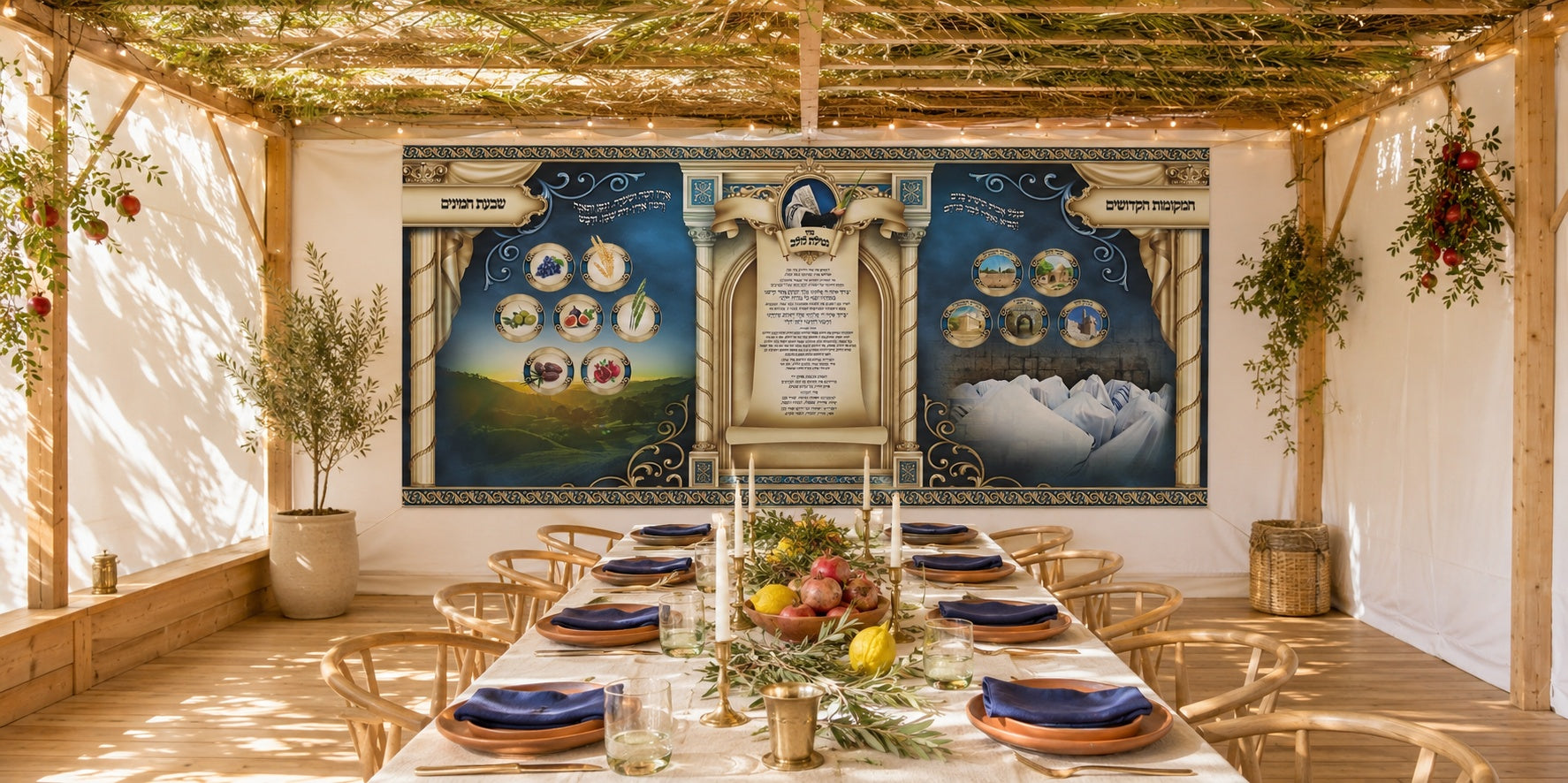
Best Sukkah Decoration Ideas for a Meaningful and Beautiful Holiday
Practical guidance on sukkah decoration themes, wall art formats, lighting, and layout, from poster prints to full fabric murals, so your sukkah feels intentional every year.
Read more