


Best 20th Century Israeli Artists: An Israeli Art Gallery Guide
Best 20th Century Israeli Artists: An Israeli Art Gallery Guide
The most influential Israeli artists of the 20th century include Reuven Rubin, Nahum Gutman, Anna Ticho, and the Bezalel School founders led by Boris Schatz. They built a visual language out of Mediterranean light, biblical landscape, and a young nation's search for identity, moving from European academic training toward a distinctly local style. Their work still shapes how Jewish and Israeli themes are painted today.
If you are exploring an Israeli art gallery to understand where this tradition comes from, it helps to know the people who started it. This is a practical map of the major figures, the themes and styles that defined their work, and how that heritage carries into the pieces you can hang in your home now.
The Birth of Israeli Art in the Early 20th Century
Israeli art did not begin with a manifesto. It began with arrivals: painters trained in Paris, Vienna, and the Russian academies who came to a landscape unlike anything they had painted before. The light was harder. The hills were bare and gold. The European palette of muted grays and browns looked wrong here, and the first generation knew it.
That tension defined early Israeli painting. Artists carried the technical discipline of the European studio but had to invent a vocabulary for orange groves, white-stone Jerusalem, and the flat heat of the coastal plain. The result was a style that prized clear color and simplified form over fussy detail.
You can trace a direct line from these early decisions to the bright, narrative work sold in galleries today. The history of Israeli art is short by European standards, barely more than a century, which is part of why it feels so cohesive: the founders and their students often knew each other personally.
Reuven Rubin, Nahum Gutman, and the Bezalel School Pioneers
The institutional heart of early Israeli art was the Bezalel Academy, founded in Jerusalem in 1906 by the sculptor Boris Schatz. Its goal was to fuse European craft with Jewish and Middle Eastern motifs, producing everything from silverwork to painting. Many of the country's first serious painters either taught or trained within its orbit.
Reuven Rubin is the artist most people picture first. His canvases of Jaffa, fishermen, and flowering almond trees use flat, glowing color and a deliberate naivety, figures slightly stylized, perspective gently flattened. He wanted his paintings to feel rooted rather than sophisticated, and that warmth is exactly why his images remain so reproducible and so loved.
Nahum Gutman took the storytelling further. Best known later as a children's book illustrator, he painted Tel Aviv in its sandy infancy with a light, almost playful line. Anna Ticho, working mostly in charcoal and wash, gave the Jerusalem hills a quieter, more meditative treatment, all texture and restraint.
These famous Jewish artists were not painting in isolation. They argued about direction, exhibited together, and effectively decided what Israeli art would look like for the next fifty years. To see how their narrative instinct survives in current work, the Jewish life scenes in modern Judaica follow the same storytelling impulse Gutman pioneered.

Themes That Defined 20th Century Israeli Painting
Across very different personalities, a handful of themes recur so often they read like a shared language. Recognizing them makes any Israeli artists paintings collection far easier to navigate, because you start seeing the lineage behind a given image.
- Landscape and place: Jerusalem stone, Galilee hills, the Mediterranean coast. Place was never just scenery; it was a claim of belonging.
- Religious life and ritual: prayer, festival, the synagogue, the home table. These subjects connect Israeli painting to centuries of Jewish art history.
- The pioneer and the worker: figures planting, building, and farming, painted with quiet dignity rather than propaganda.
- Memory and longing: a current of yearning runs through the work, the pull between exile and homecoming.
That last theme, longing, is the one a generic overview tends to miss. It is why so much Israeli devotional art feels emotionally charged rather than merely decorative. A poster like Ke'ayal Ta'arog, which renders the soul's thirst for divine connection, sits squarely in that tradition of yearning the pioneers established. It anchors a quiet reading corner or bedroom wall where you want introspection rather than energy.
Curator's note: When a piece references a specific verse or prayer, hang it where you naturally pause, a hallway you walk slowly or beside a favorite chair, so the meaning has room to land.
Styles and Movements: From Realism to Abstraction
Israeli painting styles moved roughly along the same arc as Western art, only compressed into fewer decades. Knowing the sequence helps you place any piece you are considering and judge whether it suits your room's mood.
The first wave was figurative and lyrical: recognizable scenes, glowing color, gentle stylization. By mid-century, a group called New Horizons pushed hard toward abstraction, stripping away the storybook quality in favor of structure, texture, and pure color relationships. Later still, lyrical abstraction softened those hard edges into atmosphere and light.
For a home, the practical question is how literal you want the image to be:
| Approach | What it looks like | Mood it sets | Best room |
|---|---|---|---|
| Lyrical figurative | Recognizable scenes, warm color, soft outlines | Welcoming, narrative | Living room, dining room |
| Devotional / symbolic | Ritual objects, verses, sacred sites | Reflective, grounded | Study, bedroom, sukkah |
| Abstraction | Color fields, texture, no clear subject | Calm or energetic by palette | Modern open plan, entry |
Most buyers gravitate toward the lyrical figurative end, because it carries the emotional readability of the pioneers while still feeling like art rather than illustration. If your interior leans modern or minimalist, you can hold that warmth and still keep clean lines: the contemporary Jewish masterworks collection shows how figurative subjects translate into a more graphic, present-day frame.

How These Artists Shaped Jewish Visual Identity Worldwide
The influence of these 20th century Jewish painters reached far past Israel's borders. Reproductions of Rubin and Gutman hung in Jewish homes across North America and Europe, and for many families these images were the first art they associated with their own heritage. That gave the diaspora a shared visual shorthand: a way to picture Jerusalem, prayer, and homeland that felt modern rather than antique.
Before this generation, Jewish visual culture leaned heavily on ritual objects and manuscript decoration. The pioneers added something new: large-format, color-forward painting that treated Jewish life as a living subject worthy of a serious canvas. If you want the broader context on how symbolism and style intersect, our guide to Jewish painting styles and symbolism traces those threads in detail.
This is also why Jerusalem became the single most painted subject in the canon. The city carries memory, faith, and homecoming in one frame, which is the same emotional density the founders chased. For a deeper look at how painters handle the city specifically, our piece on how artists capture Jerusalem is a useful companion.
The Western Wall sits at the center of that fascination. A piece like the Prayer at Western Wall poster, showing a figure wrapped in a tallit at the stones, continues the devotional realism the early painters used to dignify everyday faith. It belongs on a wall you see as you enter or leave, a daily touchstone rather than a background.
The Lasting Influence on Contemporary Israeli Art Today
Walk into any serious Israeli art gallery now and you will see the founders' fingerprints, even on work that looks nothing like theirs. The bright, confident color is still there. So is the willingness to paint Jewish ritual head-on, without irony. Contemporary artists have simply widened the toolkit, layering graphic design, bolder palettes, and mixed media onto the same emotional foundation.
The thread you can see most clearly is celebration. Where Gutman painted Tel Aviv's streets, today's painters render festival joy with the same generous color. A work like the Vibrant Jewish Dancing with the Torah poster carries that lineage of motion and delight, and it brings real energy to a dining room or a child's space where you want the room to feel alive.
For collectors who want to follow a single living artist rather than a theme, the Avigdor Ben Ari modern Judaica body of work shows how a contemporary painter sustains the pioneers' color sense while updating the subject matter. If you are new to today's names, our roundup of the contemporary Jewish artists worth knowing is a good place to orient yourself.

Bringing This Legacy Home: How to Choose the Right Piece
Now the shift from history to your actual walls. The principles below come straight from how the masters worked, translated into buying decisions.
Use a simple three-step method: mood first, then color temperature, then scale. Decide what you want the room to feel like (reflective, celebratory, grounded), choose warm or cool tones to match the existing light, and only then size the piece to the wall.
- Mood: Devotional and longing themes suit bedrooms, studies, and prayer corners. Celebratory festival scenes belong where people gather.
- Color temperature: Rubin-style warm golds and terracottas flatter rooms with cool north light. Cooler blues and stone grays calm a room that already runs warm.
- Scale: A single piece above a sofa should span roughly two-thirds the width of the furniture below it. Center artwork so its midpoint sits about 57 to 60 inches from the floor, gallery hanging height.
On format: paper posters here run from $11.99 to $29.99 depending on size, which makes them an easy way to test a theme before committing to a larger statement wall. Acrylic blocks read more sculptural and catch light from the side, so they suit a shelf or console where a frame would feel flat. The acrylic block format gives festival and Jerusalem subjects a luminous depth that flat paper cannot.
Styling note: Hang devotional and celebratory pieces in separate sightlines. A prayer scene and a dancing scene fight each other on the same wall because they pull the eye in opposite emotional directions.
Building a gallery wall the way the pioneers grouped subjects
The founders rarely mixed everything at once; they let a subject dominate. Apply that to a gallery wall by choosing one anchor image, usually the largest and most narrative, then surrounding it with smaller pieces that share its palette. Jerusalem and the Western Wall make natural anchors because their stone tones tie disparate frames together. Our walkthrough on building a Kotel-anchored gallery wall sets out the spacing in full.
For a fuller study of one sacred subject, the Western Wall art for the Jewish home gives you several treatments of the same site, which is the easiest way to keep a grouping coherent.

Renter-safe hanging without drilling
If you cannot put holes in the wall, you still have good options. Lightweight paper posters in slim frames hang well on adhesive strips rated for the frame's weight; check the package limit and stay under it. For acrylic blocks and heavier pieces, lean them on a picture ledge or a wide shelf instead of mounting, which most landlords allow and which lets you rotate pieces by season. Avoid hanging anything heavy from a single adhesive hook, and keep artwork off bathroom and kitchen walls where steam and grease shorten its life.
Mistakes to Avoid
- Going too small: a single postcard-scale frame on a large wall looks lost. Size up or group several pieces.
- Ignoring the room's light: a warm-toned painting under cool LED lighting can look muddy. Match temperature or adjust your bulbs.
- Mixing too many themes: three sacred sites, a festival, and an abstract piece on one wall read as clutter, not collection.
- Hanging too high: art creeping toward the ceiling disconnects from the furniture and the people in the room.
- Treating frame color as an afterthought: a heavy black frame can overpower a soft lyrical painting; let the frame serve the image.
One question buyers always raise: is this style timeless? The lyrical figurative tradition has held its appeal for a century precisely because it is built on emotion and place rather than trend. A well-chosen Rubin-inspired scene will not look dated in five years the way a fashion-driven print might.

Pieces That Carry the Tradition Forward
A few recommendations, each tied back to something the masters established, so your wall reflects the heritage and not just a mood.
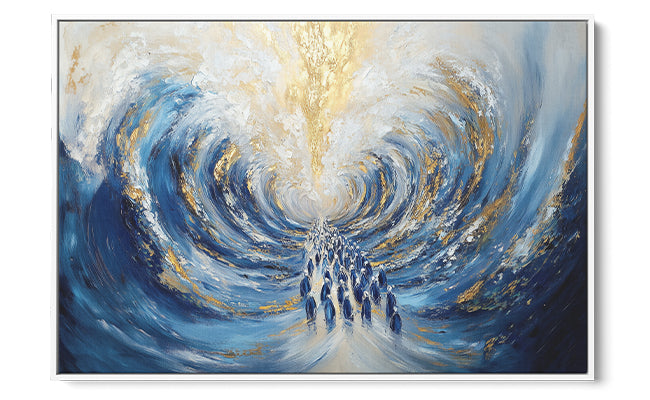
For the theme of longing that ran through the early painters, the Torah and Red Sea Crossing poster fuses two pivotal moments of Jewish history into one image, the kind of layered narrative Gutman would recognize. It rewards a wall you study rather than glance at.
For ritual and hospitality, the Seder Ushpizin poster renders the welcoming of the guests, a subject that connects directly to the founders' interest in Jewish life at the table. It earns its place in a dining room or sukkah, and you will find more of that festival spirit in the prayers and blessings sukkah decor.
For festival color and structure, the Four Species Harmony Sukkot poster organizes the etrog, lulav, hadas, and arava into a clean composition that suits a modern or Scandinavian interior where you want warmth without visual noise.
And for place as belonging, the founders' central theme, the Western Wall poster brings Jerusalem stone into the room with the quiet gravity the pioneers gave the city. To see the full range of city subjects in one place, the Jerusalem modern Jewish art grouping is where I would start.

Frequently Asked Questions
Who are the most famous Israeli artists of the 20th century?
Reuven Rubin and Nahum Gutman are the best known for lyrical figurative painting, alongside Anna Ticho for her Jerusalem landscapes and Boris Schatz as the founder of the Bezalel Academy. The mid-century New Horizons group, which moved toward abstraction, produced several major names as well, including Yosef Zaritsky.
What is the Bezalel School and why is it important to Israeli art?
The Bezalel Academy is the art school founded in Jerusalem in 1906 that trained the first generation of Israeli artists across painting, sculpture, and craft. Its importance is institutional: it gave a scattered group of immigrant artists a shared base and a stated goal of blending European technique with Jewish and Middle Eastern motifs, which set the direction for everything that followed.
What themes are common in 20th century Israeli paintings?
Landscape and place, religious life and ritual, the pioneer worker, and an undercurrent of longing for homeland. A detail many overviews miss is how often these themes overlap in a single canvas, a prayer scene set against recognizable Jerusalem stone, for example, so the image carries faith and place at once.
How did Israeli artists influence Jewish art around the world?
Through reproductions that reached diaspora homes, these painters gave Jewish families a modern, color-forward way to picture their heritage, where earlier visual culture leaned on ritual objects and manuscripts. They effectively established a shared image bank of Jerusalem, prayer, and homecoming that contemporary Jewish artists still draw on.
Where can I see or buy art inspired by these Israeli masters?
You can find poster, acrylic, and fabric versions of these themes in a dedicated Israeli art gallery online, where festival scenes, Jerusalem views, and devotional subjects are grouped by theme. If you want to start small and test a wall, paper posters are the low-commitment way in before you invest in a larger format.
How is contemporary Israeli art connected to the 20th century pioneers?
Today's painters keep the founders' bright palette and their willingness to paint Jewish ritual directly, then add graphic design, bolder color, and mixed media on top. The emotional through-line, celebration, place, and longing, is unbroken; what has changed is the surface, not the soul of the work.
If you want to see how this century-long tradition reads on a real wall, spend a few minutes with our diverse Jewish artistry collection, where festival, Jerusalem, and devotional pieces sit side by side. You will find the founders' color and feeling carried into formats sized for a modern home.
Read more
What Is a Pasuk in Jewish Tradition and Why It Powers Jewish Name Art
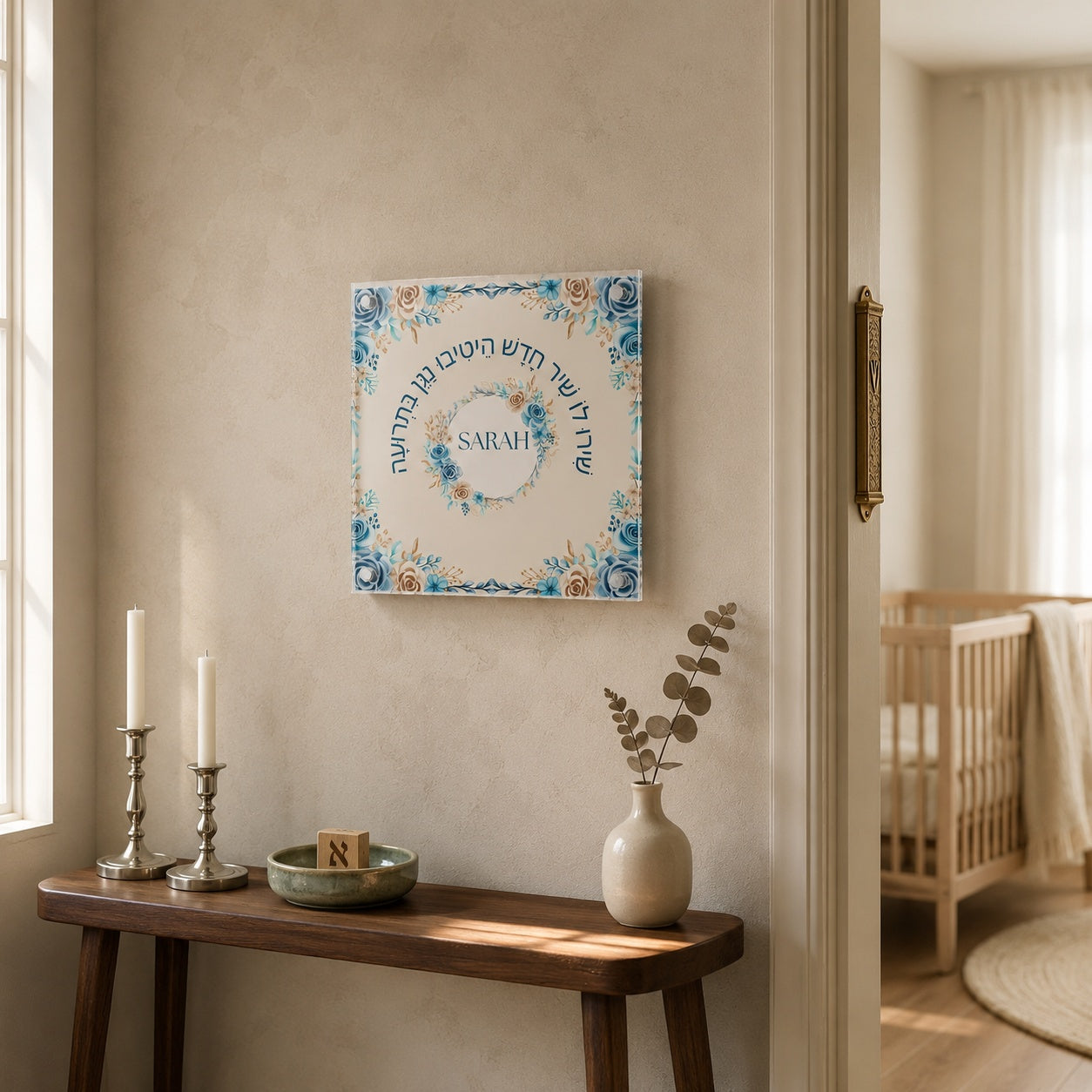
A pasuk is a single Hebrew scripture verse whose root means 'to divide', and the Jewish tradition of matching every name to its corresponding verse is the foundation of the most meaningful personal...
Read more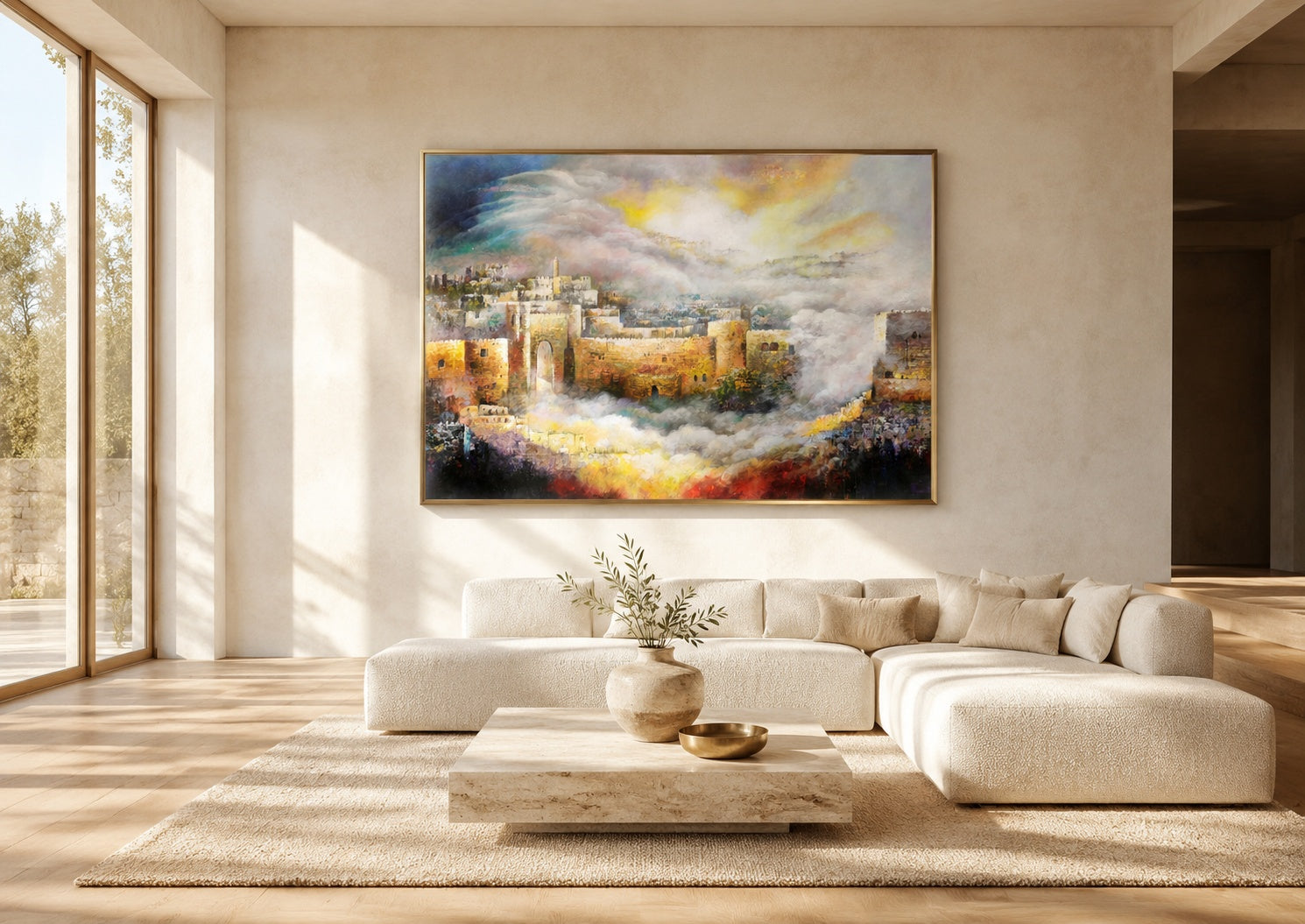
Ancient Jerusalem in Modern Painting: Why It Endures
No city carries more concentrated meaning in a single skyline. This guide explains what painters find in ancient Jerusalem, how they render it, and how to choose the right piece for your home.
Read more