
Article: Best Jewish Art Gift for Newborn: How to Choose

Best Jewish Art Gift for Newborn: How to Choose
Best Jewish Art Gift for Newborn: How to Choose
The best jewish art gift for newborn celebrations is a personalized piece that ties the child's Hebrew name to a verse of Torah, giving the family something sacred, singular, and designed to grow with the child for decades. Unlike a onesie or a toy, a well-chosen piece of Jewish wall art occupies the nursery from day one and carries meaning the parents will explain again and again as the child grows. This guide covers exactly how to choose one: what symbols matter, how personalization works, what sizes fit a nursery wall, and how to present the gift at a brit milah or baby naming.
Why Jewish Art Makes a Meaningful Gift for a Newborn
Most newborn gifts are functional for a few months, then outgrown. Wall art is different. A piece hung above the crib on day one can move to the child's bedroom at age five, then to a first apartment at twenty-two. That arc of longevity is what makes it one of the most considered gifts a parent or grandparent can give.
There is also a long tradition within Jewish culture of marking a new life with sacred imagery and text. From the Shema to birkat habanim, Jewish homes have always used words and symbols to hold space for what matters. A piece of art that carries the baby's Hebrew name alongside a pasuk chosen specifically for that name is not decoration: it is a statement about identity, belonging, and the family's connection to tradition.
Practically speaking, new parents are making hundreds of decisions about the nursery. A meaningful, aesthetically resolved piece of wall art removes one of those decisions and replaces it with something they could never quite buy for themselves, because personalized art is always more resonant when it comes from someone else.

Understanding the Jewish Symbols and Themes That Honor a New Life
Not every piece of Jewish art belongs in a nursery. Some symbols are better suited to a home office or a dining room. For a newborn's space, the most resonant themes are protection, blessing, and identity.
Symbols of protection
The hamsa, while popular, is more of a folk symbol than a liturgical one. For a newborn gift, consider art that centers on text-based blessing rather than amulet imagery. The Shema and Birkat Habanim (the Friday-night blessing of children) are both liturgically appropriate and visually adaptable to modern design. They communicate protection through meaning, not iconography.
Hebrew names and their verses
In the Name by Pasuk tradition, a specific Torah verse whose first and last letters match the first and last letters of the Hebrew name becomes the visual anchor of the piece. This is a genuinely Jewish approach to personalization: the art is not just labeled with a name, it is built around a verse selected through that letter-matching principle, which means even two babies named Miriam may receive different artwork if different qualifying verses are used. That specificity is what separates this tradition from generic monogram art.
Jerusalem and sacred landscape
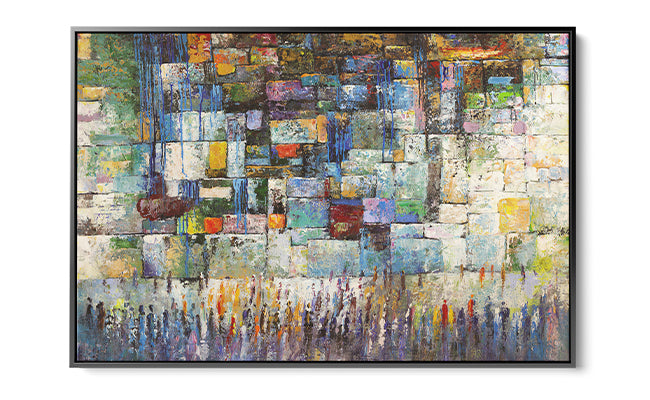
For families with a strong connection to Israel, imagery of the Kotel or Jerusalem carries enormous weight as a visual backdrop in a child's early environment. Browse the Jerusalem-inspired Jewish art collection if the family has Israel ties, though for a primary nursery piece, name-and-pasuk art tends to be the more personal first choice.
Avoid symbols associated with mourning or themes of exile when choosing for a newborn. This is a moment of joy, and the art should hold that register clearly.

How to Choose the Right Style of Jewish Art for a Baby Gift
Style matters here for two reasons: it has to suit the nursery's existing palette, and it needs to age gracefully as the room changes. The biggest mistake givers make is choosing art that is too theme-park-cute, something with cartoon animals or bubble lettering that the parents will quietly remove in three years.
Think instead about pieces that use clean design principles: limited color palettes, legible Hebrew script, and compositions that feel balanced rather than busy. A good rule of thumb: if the art would look at home in a Scandinavian-modern living room, it will work in a nursery today and in a child's bedroom at ten.
Matching the room's color temperature
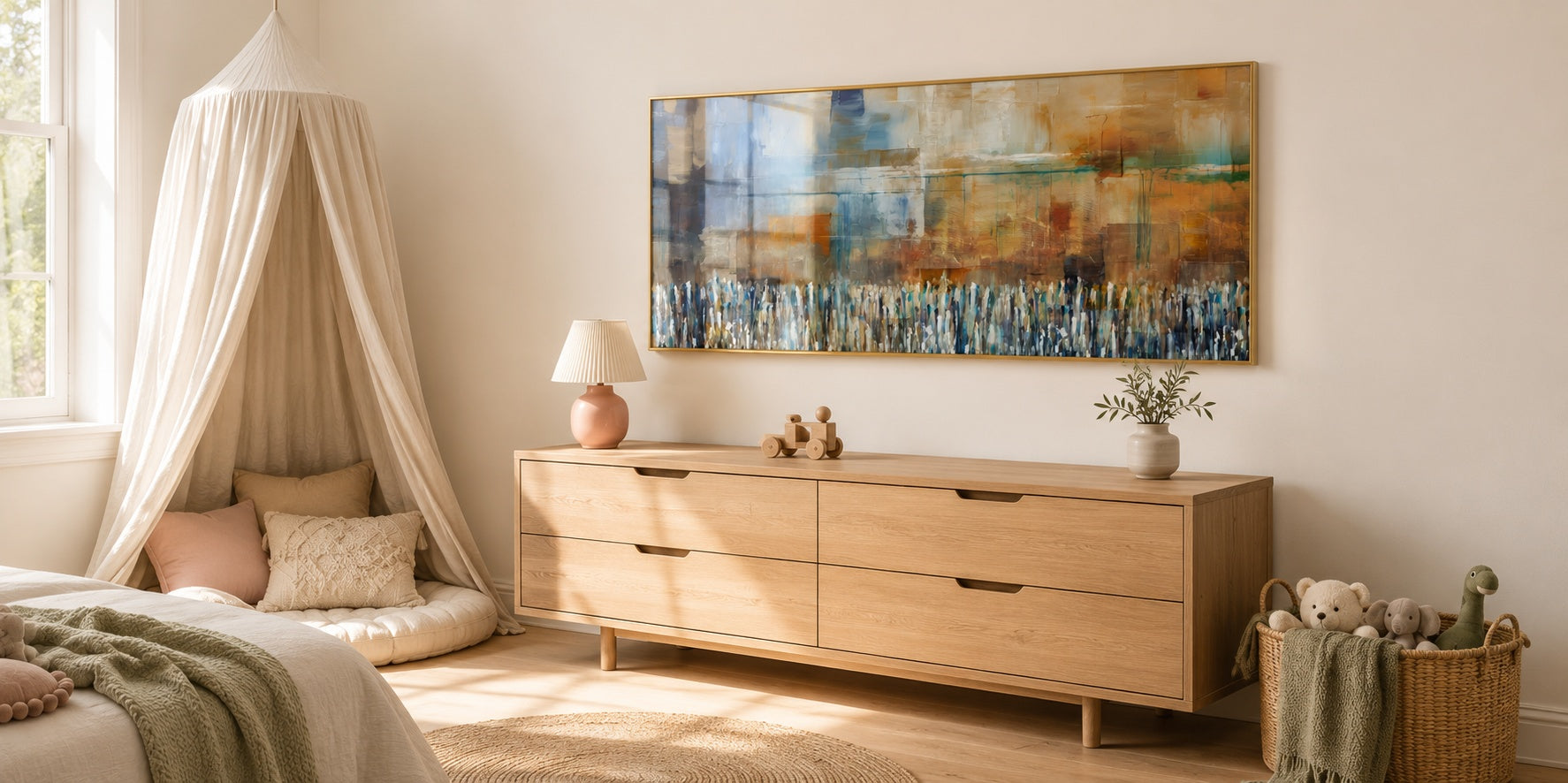
Nurseries tend to run either warm (creams, terra cottas, natural wood) or cool (whites, soft grays, sage greens). Before choosing a piece, ask the parents or observe photos of the nursery if you can. The Name by Pasuk: Harmonic Grace series uses calming, muted hues that read naturally in cool-toned rooms, while the Joyful Echoes version uses brighter, more saturated colors that energize warmer, more playful spaces.
Modern versus traditional aesthetics
Contemporary Jewish art has moved well past the heavy-framed, deep-burgundy aesthetic of an earlier generation. Most design-conscious parents today are looking for something that fits a modern or minimalist interior. The pieces in the Name by Pasuk line are built on this premise: modern typography, clean compositions, and Hebrew script that functions as a graphic element rather than as religious ornamentation. For families who prefer something more classically ornate, pieces from the contemporary Jewish wall art collection offer a wider range of visual registers.
Styling note: If you do not know the nursery's color palette, choose a piece with a neutral or white background. It integrates into almost any scheme and puts the focus on the Hebrew text, which is the real visual centerpiece.

The Power of Personalization: Hebrew Name Art and Pasuk Prints
Personalization is the single factor that most reliably turns a nice gift into a keepsake. A Hebrew name rendered in thoughtful typography, paired with its corresponding pasuk, creates a piece the parents genuinely cannot buy off a shelf, and one their child will one day be able to read and understand.
The custom Hebrew name prints for new babies in the Name by Pasuk collection are built on exactly this principle. Each piece is personalized with the baby's Hebrew name and a Torah verse selected according to the traditional letter-matching practice, so the artwork is theologically coherent, not just decorative. The collection spans multiple visual styles, which means you can match the art to the nursery's mood while keeping the underlying concept consistent.
Practically, the ordering process requires knowing the baby's Hebrew name. If you are gifting before the name is formally given (at a baby naming or brit milah), you can order after the ceremony and present a card in the interim. Most parents appreciate the gesture and the promise of what is coming. For more context on why the pasuk tradition carries such weight in Jewish culture, this deep-dive on what a pasuk is and why it powers Jewish name art is worth reading before you order.
Curator's note: When you know the baby's name, ask the gallery which qualifying verse is being used. Some names have more than one eligible verse, and occasionally the family has a specific one in mind, perhaps the one associated with a grandparent who shares the name. Asking adds a layer of care that makes the gift considerably more meaningful.
Price for Name by Pasuk pieces runs $99 to $149, depending on the configuration, which places them squarely in the range parents associate with a serious, considered gift rather than a token one.

How Size, Format, and Display Location Shape Your Choice
Wall art fails most often not because of style, but because of scale. A piece that is too small on a large wall reads as an afterthought. A piece that is too large crowds a small room and overwhelms the furniture below it.
Sizing for a nursery wall
The standard rule: art hung above a piece of furniture should span roughly 60 to 75 percent of that furniture's width. A standard crib is approximately 28 inches wide and 52 inches long, so a print in the range of 17 to 21 inches wide looks proportional above it. Single prints in the 16x20 to 20x24 inch range are the most common for nurseries, and they sit comfortably within that target zone.
Hanging height matters too. Center the art at approximately 57 inches from the floor as a default, then adjust down by a few inches if the crib is positioned directly below, so the art reads as connected to the furniture rather than floating on its own.
Canvas, print, or acrylic
| Format | Best for | Durability note | Style fit |
|---|---|---|---|
| Giclée print (framed) | Traditional or classic interiors | Frame protects edges | Traditional, transitional |
| Canvas wrap | Modern, minimal spaces | No glass, child-safe in this sense | Modern, Scandinavian |
| Acrylic block | Small accent pieces, shelves | Very durable, no frame needed | Contemporary, minimalist |
For nurseries specifically, canvas wraps and acrylic formats have a practical advantage: no glass to worry about. The acrylic block format also works beautifully as a smaller complementary piece on a nursery shelf or bookcase, pairing with a larger name print on the wall above.
Renter-safe hanging
Many new parents are in apartments where drilling is restricted. For canvas prints up to about 5 pounds, adhesive picture-hanging strips rated for that weight (Command Large Picture Strips, for example) hold reliably on painted drywall. Anything heavier should use a proper anchor or stud. If the nursery's wall situation is uncertain, lean toward a smaller format that keeps the piece within that safe weight range, and mention the adhesive option when you present the gift.
Designer's tip: Measure the wall above the crib before ordering, then note the measurement on the gift card. Parents are almost always grateful for that one piece of practical information, and it removes the anxiety of guessing.

Where to Find the Best Jewish Art Gifts for Newborns
The market for Jewish baby gifts is noisy with products that are charming in the short term but not built to last: novelty bibs with Hebrew text, board books, kippot. All of those have their place, but none of them occupy a wall for twenty years.
For lasting Jewish wall art with genuine personalization, the Name by Pasuk collection is the most direct answer. The pieces are designed specifically to work in a child's early environment, using color palettes and typographic compositions that suit nursery and bedroom spaces equally. The Harmonic Grace version, with its soothing tones, suits families who want a quieter, more meditative mood in the nursery. Joyful Echoes, with its bolder palette, fits rooms designed for energy and play. Both carry the same personalized pasuk structure discussed earlier.
Beyond personalized prints, families who want to build a broader aesthetic in a Jewish home can find further inspiration in the Jewish life and modern Judaica collection, which covers a wider range of subjects and moods. For thinking about how to arrange multiple pieces over time, the guidance in displaying sacred Jewish art with intention is practically useful for any family building out a home.
One genuinely underused angle: gifting two pieces as a set rather than one. A name print paired with a small blessing print in the same color family creates an instant, cohesive wall arrangement that the parents do not have to curate themselves. It signals real thought about how a space is put together, not just about the gift itself.

Tips for Presenting and Gifting Jewish Art at a Baby Naming or Brit Milah
Presentation shapes how a gift lands, and with personalized art, a bit of context makes all the difference.
- Include the pasuk in writing. Print out or hand-write the Hebrew verse along with its English translation and the specific reference (book, chapter, verse). Frame this as a separate card that travels with the gift. Many parents will frame or keep the card alongside the art.
- Explain the tradition briefly. Not every family is deeply familiar with the Name by Pasuk concept. A sentence or two in the card explaining that this verse was selected because its first and last letters match the first and last letters of the baby's Hebrew name turns the gift from a pretty print into a learning moment.
- For a brit milah, order early. Personalized art typically requires a production lead time, so place your order as soon as the name is announced, or order the piece immediately after the ceremony if you want to present it at the seudat mitzvah.
- Pack it properly. Art shipped flat or in a sturdy tube survives better than art rolled into a gift bag. If you are presenting it in person, a simple linen wrap is more appropriate than balloon-covered paper and signals that this is an object worth treating carefully.
At a baby naming or brit milah, the art has natural contextual resonance: everyone is thinking about the meaning of the name. Presenting a piece that is literally built around that name's Torah verse fits the moment with unusual precision.
Best for: Families who already have a well-designed nursery and do not need more small objects. A name print is the gift that requires a nail in the wall, which is a way of saying: this gift is meant to stay.
Mistakes to Avoid When Choosing Jewish Art for a Newborn
A few patterns consistently lead to gifts that end up in a closet rather than on a wall:
- Choosing novelty over longevity. Art with cartoon animals or themed nursery characters feels timely at birth and dated at four. Choose compositions built around Hebrew text and clean design, and the piece ages with the child rather than against the room.
- Ordering without the Hebrew name confirmed. Personalized art requires the correct Hebrew spelling. If you are uncertain, ask a family member rather than guessing, or wait until after the naming ceremony.
- Picking a size without checking the wall. A piece that is out of proportion to the furniture below it reads as careless, however beautiful the design. When in doubt, go slightly larger rather than smaller: art that is slightly bold is easier to live with than art that reads as a postage stamp on a nursery wall.
- Ignoring the room's color story. Hebrew text art in black and white can feel stark in a warm, natural-toned nursery. Matching the art's color temperature to the room's existing palette is a small step that makes a large difference in how the gift is received.
Frequently Asked Questions
What is the most meaningful Jewish art gift for a newborn?
A personalized piece built around the baby's Hebrew name and a Torah verse selected through the traditional letter-matching practice. This format, known as Name by Pasuk, creates art that is theologically coherent and completely unique to that specific child. No two babies receive the same piece unless they share both the same Hebrew name and the same chosen verse.
What Hebrew blessing is traditionally used for a new baby?
Birkat Habanim, the parental blessing recited on Friday nights, is one of the most traditional blessings for children. For boys, it invokes Ephraim and Menashe; for girls, it invokes the Matriarchs Sarah, Rivkah, Rachel, and Leah. The Shema is also used frequently in nursery contexts, often as a bedtime ritual. Either can serve as the textual basis for a wall art piece if the family prefers a blessing format over a name-pasuk format.
Is a personalized Hebrew name print a good baby gift?
Yes, with one practical caveat: confirm the Hebrew spelling of the name before ordering. Some names have multiple accepted Hebrew spellings, and families often have strong preferences. A quick message to a family member removes any ambiguity and ensures the piece is exactly right from the first day it is hung.
What Jewish symbols are appropriate for a newborn nursery?
Hebrew text-based art (name-and-pasuk prints, blessings) is the most universally appropriate. The Star of David in a clean, graphic form works well in modern interiors. Avoid symbols with strong mourning associations (such as imagery tied to Tisha B'Av themes) and amulet imagery if the family skews more traditional or is unfamiliar with its folk origins. When in doubt, let the text lead and the visual design support it.
How do I choose the right size wall art for a baby nursery?
Use the 60 to 75 percent rule: the art should span that share of the furniture width beneath it. A standard crib is approximately 28 inches wide and 52 inches long, so a 16x20 or 20x24 inch piece hits the target well above it. When hanging above a crib, center the art slightly lower than the standard 57-inch hanging height so it reads as connected to the furniture below it.
Can I give Jewish art as a gift for a non-Jewish newborn celebration?
A Hebrew name print is built specifically for a child with a Hebrew name, so it is most naturally a Jewish gift. For interfaith families where the child is being given a Hebrew name alongside an English one, a Name by Pasuk piece can be profoundly meaningful even if the family is not practicing Jews. The art honors the name, not membership in a community. For a completely non-Jewish celebration, a piece from the broader modern Jewish wall art collection with purely visual, non-text-based design may translate more comfortably as a general gift.
For families ready to order, the Name by Pasuk collection at Ben Ari Art Gallery brings together every style and color palette discussed here, each piece personalized with the baby's Hebrew name and its Torah verse. You will find options suited to quiet, neutral nurseries and bolder, more colorful rooms alike.
Read more
Meaningful Jewish Artwork Gift Ideas: A Buyer's Guide
The most meaningful Jewish artwork gift ideas connect the recipient to something larger than the occasion, a sacred text, a family name, or a place of deep spiritual significance. This guide covers...
Read more